Orchidaceae
Miltassia orchid: Perfect Indoor Houseplant
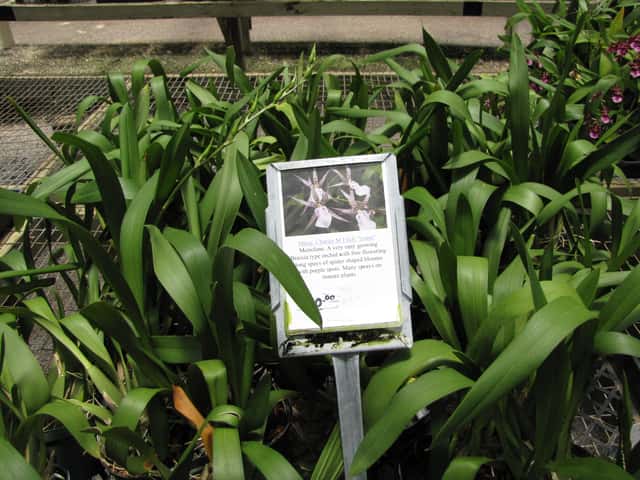
Bratonia Charles M. Fitch
This orchid thrives in intermediate temperatures with bright, indirect light and high humidity. It requires a well-draining orchid bark medium and should be watered just as the substrate begins to dry out.
Every 7 days
Partial shade
16° - 28°C
50% - 80%
Categories
What is Miltassia orchid?
Miltassia orchid (Bratonia Charles M. Fitch) is a medium-care plant from the Orchidaceae family. Bratonia Charles M. Fitch is a popular intergeneric orchid hybrid, a cross between Brassia verrucosa and Miltonia spectabilis. It is celebrated for its large, star-shaped flowers that resemble spiders, featuring striking lavender and purple hues with olive-green or brown spotting. The plant produces...
Miltassia orchid grows up to 60cm, spread of 40cm, watering every 7 days, 16°C – 28°C, 50–80% humidity. It is suitable for indoor environments and safe for pets.
Unlike many popular species, Miltassia orchid is safe to keep around pets. Without adequate drainage, root rot can develop within 14 days.
How to Care for Miltassia orchid?
TLDR: Miltassia orchid needs Partial shade, watering every 7 days, and temperatures between 16-28°C with 50-80% humidity.
How Often Should You Water Miltassia orchid?
Water thoroughly until it runs out of the drainage holes, then allow the medium to become almost dry before watering again. Avoid letting the plant sit in standing water.
How Much Light Does Miltassia orchid Need?
Provide bright, filtered light. If the leaves turn dark green, it needs more light; if they turn yellow or red, it is getting too much sun.
What Is the Best Soil for Miltassia orchid?
Use a medium-grade orchid bark mix containing perlite and charcoal to ensure maximum drainage and aeration for the roots.
What Pot Should You Use for Miltassia orchid?
Clear plastic orchid pots with side ventilation to monitor root health and ensure airflow.
Care Schedule
Fertilize
Every 14 days
Misting
Every 2 days
Rotate
Every 7 days
Repot
Every 730 days
What Is Miltassia orchid and Where Does It Come From?
Bratonia Charles M. Fitch is a popular intergeneric orchid hybrid, a cross between Brassia verrucosa and Miltonia spectabilis. It is celebrated for its large, star-shaped flowers that resemble spiders, featuring striking lavender and purple hues with olive-green or brown spotting. The plant produces long, arching sprays of blooms that can last for several weeks, emerging from pseudobulbs with strap-like evergreen leaves.
How to Propagate Miltassia orchid?
Pseudobulb Division
- Avoid watering for the first few days after division to allow cuts to callous.
- Keep humidity high during the recovery period.
- 1 Wait for New Growth
Ensure the plant has at least 6-8 healthy pseudobulbs and is showing signs of new growth at the base.
- 2 Separate the Rhizome
Carefully remove the plant from its pot and cut the rhizome with a sterile blade, ensuring each division has at least 3 healthy pseudobulbs.
- 3 Pot Separately
Pot each division into fresh orchid bark mix, keeping the base of the pseudobulbs at the surface level.
Materials needed:
How Big Does Miltassia orchid Grow?
TLDR: Miltassia orchid can reach up to 60cm tall with Medium growth rate.
Max height
60cm
Spread
40cm
Growth rate
Medium
Foliage
Evergreen
Plant Uses
Ornamental
Great for decoration
Is your plant showing symptoms?
Click on the symptom to discover possible causes:
What Diseases Commonly Affect Miltassia orchid?
TLDR: Miltassia orchid is susceptible to 10 known diseases. Monitor regularly for early detection.
Root Rot
Root rot is a serious fungal disease that affects the root system of plants, causing them to decay and die. It is primarily caused by overwatering, poor drainage, or soil-borne fungi such as Pythium, Phytophthora, Rhizoctonia, and Fusarium. The disease thrives in waterlogged conditions where roots are deprived of oxygen, making them susceptible to fungal infection.
Overwatering
Overwatering occurs when plants receive too much water, depriving roots of oxygen and causing root rot. This environmental stress is one of the most common causes of houseplant death, as waterlogged soil prevents roots from breathing and functioning properly.
Crown Rot
Crown rot is a serious fungal disease that attacks the crown (base) of the plant where the stem meets the soil. It is caused by various fungal pathogens including Phytophthora, Fusarium, and Rhizoctonia. The disease thrives in waterlogged conditions and can quickly spread to kill the entire plant if not addressed promptly.
Gray Mold (Botrytis Blight)
Gray mold, caused by the fungus Botrytis cinerea, is one of the most common fungal diseases in plants. It affects over 200 plant species, including ornamentals, vegetables, fruits, and houseplants. The disease thrives in cool, humid conditions with poor air circulation, causing grayish spots and soft rot on infected tissues.
Meaning & Symbolism
Orchids generally symbolize love, luxury, and strength; the spider-like shape of Bratonia specifically represents exotic beauty.
Compare with similar plants
| Attribute | Difficulty | Light | Watering | Pet Safe |
|---|---|---|---|---|
| Azalea | Medium | Partial shade | 3d | ⚠️ |
| Wild Lettuce | Medium | Direct sun | 7d | ⚠️ |
| Cape Primrose | Medium | Partial shade | 7d | ✓ |
| Honey Locust | Medium | Direct sun | 14d | ✓ |