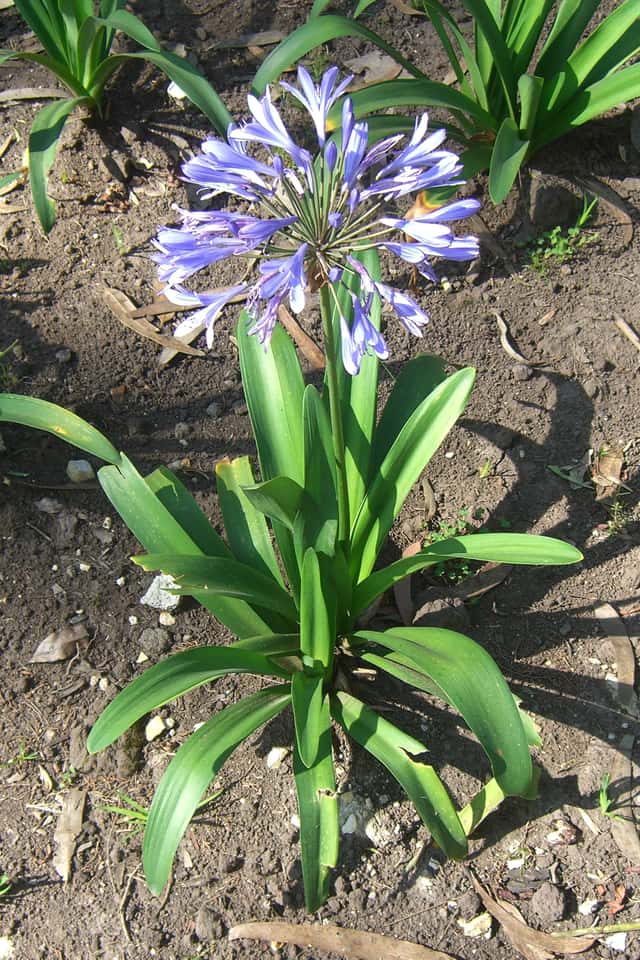
Amaryllidaceae
Oriental Agapanthus Care Guide: Agapanthus orientalis
Agapanthus orientalis
Grow in full sun with well-draining, moderately fertile soil. Water deeply about once a week during the growing season, letting the top of the soil dry out between waterings, and cut back in fall and winter. Feed lightly twice a year and deadhead spent blooms to encourage a tidy look.
Every 7 days
Bright indirect
-7° - 35°C
% - %
Categories
What is Oriental Agapanthus?
Oriental Agapanthus (Agapanthus orientalis) is a easy-care plant from the Amaryllidaceae family. Agapanthus orientalis is an evergreen, clump-forming perennial native to South Africa, prized for its tall, sturdy flower stalks topped with large spherical umbels of trumpet-shaped blooms in blue, lavender, purple, or white. Its strap-like, glossy dark-green leaves form a dense mound at the base, m...
Oriental Agapanthus grows up to 90cm, spread of 60cm, watering every 7 days, -7°C – 35°C. It is not suitable for indoor environments and not safe for pets.
Unlike many tropical plants, Oriental Agapanthus tolerates watering mistakes. Best for beginners. Without precautions, ingestion can cause irritation in pets. Keep out of reach of cats and dogs.
How to Care for Oriental Agapanthus?
TLDR: Oriental Agapanthus needs Bright indirect, watering every 7 days, and temperatures between -7-35°C with 40-70% humidity.
How Often Should You Water Oriental Agapanthus?
Water deeply once a week during spring and summer, allowing the top 2-5 cm of soil to dry out between waterings. Reduce watering in fall and winter to let the plant rest, and never let it sit in soggy soil.
How Much Light Does Oriental Agapanthus Need?
Provide full sun for the best flowering; it tolerates light partial shade but blooms will be sparser.
What Is the Best Soil for Oriental Agapanthus?
Use rich, well-draining soil with a slightly acidic to neutral pH (6.0-7.0). In containers, agapanthus actually flowers best when slightly pot-bound.
What Pot Should You Use for Oriental Agapanthus?
Terracotta or plastic pot with drainage holes, slightly smaller than expected (agapanthus blooms best when root-bound)
Care Schedule
Fertilize
Every 180 days
Repot
Every 900 days
What Is Oriental Agapanthus and Where Does It Come From?
Agapanthus orientalis is an evergreen, clump-forming perennial native to South Africa, prized for its tall, sturdy flower stalks topped with large spherical umbels of trumpet-shaped blooms in blue, lavender, purple, or white. Its strap-like, glossy dark-green leaves form a dense mound at the base, making it a popular border and container plant in warm climates.
How to Propagate Oriental Agapanthus?
Clump Division
Divide every 3-4 years when clumps become congested; use a clean, sharp spade to avoid damaging roots.
- 1 Lift the clump after flowering has finished, in spring or early fall
- 2 Gently pull or cut the rootball into sections, each with several healthy roots and shoots
- 3 Replant divisions immediately at the same depth in well-draining soil
- 4 Water thoroughly after planting to settle the soil
Materials needed:
Seed Propagation
Seed-grown plants take 2-3 years to flower and may not come true to the parent cultivar.
- 1 Collect ripe black seeds from dried seed pods after flowering
- 2 Sow seeds shallowly in well-draining seed compost
- 3 Keep moist and in a warm, bright spot until germination
- 4 Transplant seedlings once large enough to handle
Materials needed:
How Big Does Oriental Agapanthus Grow?
TLDR: Oriental Agapanthus can reach up to 90cm tall with Medium growth rate.
Max height
90cm
Spread
60cm
Growth rate
Medium
Foliage
Evergreen
Warning: Toxic Plant
This plant can be toxic if ingested. Keep out of reach of:
Plant Uses
Ornamental
Great for decoration
Ground Cover
Soil coverage
Medicinal
Medicinal properties
Medicinal Uses
- Traditionally used in Zulu and Xhosa medicine for heart ailments, coughs, and to support pregnancy, though all plant parts are considered poisonous and self-medication is not recommended
Is your plant showing symptoms?
Click on the symptom to discover possible causes:
What Diseases Commonly Affect Oriental Agapanthus?
TLDR: Oriental Agapanthus is susceptible to 10 known diseases. Monitor regularly for early detection.
Root Rot
Root rot is a serious fungal disease that affects the root system of plants, causing them to decay and die. It is primarily caused by overwatering, poor drainage, or soil-borne fungi such as Pythium, Phytophthora, Rhizoctonia, and Fusarium. The disease thrives in waterlogged conditions where roots are deprived of oxygen, making them susceptible to fungal infection.
Grey Mould
Anthracnose
Anthracnose is a fungal disease caused by fungi in the genus Colletotrichum that affects many plants, including vegetables, fruits, and trees. The disease thrives in cool, wet conditions, causing dark, sunken lesions on leaves, stems, flowers, and fruits.
Rust
Rust is a common fungal disease caused by fungi in the order Pucciniales that affects a wide variety of plants. The disease gets its name from the characteristic orange, yellow, or reddish-brown pustules that appear on leaves, resembling metal rust. This obligate fungal parasite requires living plants to survive and can cause significant economic losses in agricultural crops.
Meaning & Symbolism
Named from the Greek "agape" (love) and "anthos" (flower), it is known as the "Flower of Love" and is traditionally linked to fertility, protection, and safe childbirth in South African folklore.
Fun Facts
The name Agapanthus comes from the Greek words for "love" and "flower", giving it the nickname "Flower of Love"
A single flower head can contain up to 100 individual trumpet-shaped blooms
It blooms best when its roots are slightly crowded in a container
Frequently asked questions
How often should I water Agapanthus orientalis?
Is Agapanthus toxic to cats and dogs?
Why is my Agapanthus not flowering?
How do I propagate Agapanthus orientalis?
Compare with similar plants
| Attribute | Difficulty | Light | Watering | Pet Safe |
|---|---|---|---|---|
| Field Maple | Easy | Bright indirect | 14d | ✓ |
| Silver Birch | Easy | Direct sun | 14d | ✓ |
| Common Blanketflower | Easy | Direct sun | 10d | ✓ |
| Cushion Bush | Easy | Direct sun | 14d | ✓ |
Choose & Compare
Sources & References
- Agapanthus Care: A Complete Guide
- Common Agapanthus Diseases
- How to Identify and Treat Agapanthus Diseases
- How to Plant, Grow, and Care for Agapanthus
- How to grow agapanthus / RHS Growing Guide
- Agapanthus - UF/IFAS Extension
- Is Agapanthus Navy Blue Toxic to Cats & Dogs?
- Fertilizing Agapanthus
- How to Grow Agapanthus in Containers
- Amazing Agapanthus: The Flower of Love
- Agapanthus praecox - PlantZAfrica





