Crassulaceae
Green Dunce Cap: Ground Cover Plant
Orostachys malacophylla
Orostachys malacophylla is easy to care for but requires plenty of direct sunlight and very sparse watering. It thrives in sandy, well-drained soil and is highly tolerant of drought and cold, but sensitive to overwatering and high humidity.
Every 12 days
Direct sun
-34° - °C
% - %
Categories
What is Green Dunce Cap?
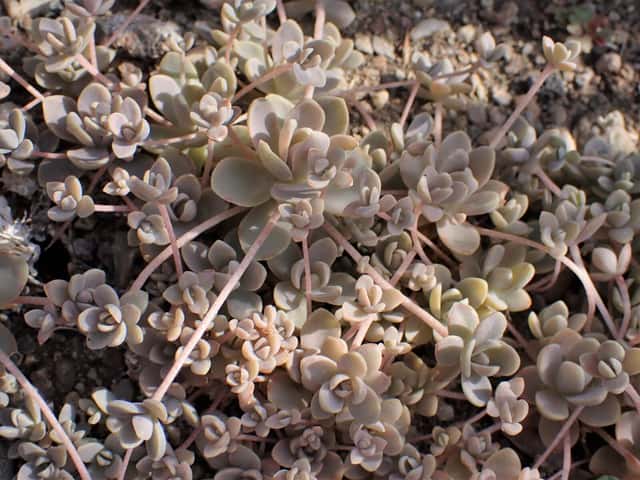
Green Dunce Cap (Orostachys malacophylla) is a easy-care plant from the Crassulaceae family. Orostachys malacophylla is a hardy, monocarpic succulent from the Crassulaceae family (the same family as stonecrops and sedums). The plant forms dense rosettes of fleshy, bluish-green to green leaves with a diameter of 4-15 cm and spreads via runners (stolons), forming dense mats of rosettes. In th...
Green Dunce Cap grows up to 20cm, spread of 30cm, watering every 12 days. It is suitable for indoor environments and safe for pets.
Unlike many tropical plants, Green Dunce Cap tolerates watering mistakes. Best for beginners. Unlike many popular species, Green Dunce Cap is safe to keep around pets. Without adequate drainage, root rot can develop within 24 days.
How to Care for Green Dunce Cap?
TLDR: Green Dunce Cap needs Direct sun, watering every 12 days, and temperatures between -34-30°C with 40-70% humidity.
How Often Should You Water Green Dunce Cap?
Allow the soil to dry out completely between waterings—water only about every 12-14 days, and avoid getting water into the rosette itself, as this increases the risk of rot.
How Much Light Does Green Dunce Cap Need?
Place the plant in a spot with plenty of direct sunlight, such as near a south-facing window or outdoors in full sun. Insufficient light results in elongated, stretched rosettes.
What Is the Best Soil for Green Dunce Cap?
Use a sandy, very well-draining soil—preferably a pre-mixed cactus/succulent soil. The plant does well in nutrient-poor soil as long as the drainage is good.
What Pot Should You Use for Green Dunce Cap?
Choose a wide, shallow pot with good drainage holes so the many offsets have room to spread—preferably in a porous material like terracotta, which helps the soil dry out quickly.
Care Schedule
Fertilize
Every 30 days
Repot
Every 365 days
What Is Green Dunce Cap and Where Does It Come From?
Orostachys malacophylla is a hardy, monocarpic succulent from the Crassulaceae family (the same family as stonecrops and sedums). The plant forms dense rosettes of fleshy, bluish-green to green leaves with a diameter of 4-15 cm and spreads via runners (stolons), forming dense mats of rosettes. In the autumn, mature rosettes produce a conical inflorescence up to approximately 20 cm with white to greenish flowers and yellow stamens—after which the specific flowering rosette dies, while the numerous offsets ensure the colony lives on. The species is very hardy (USDA zones 3a-8b) and tolerates heavy frost, and the plant is not considered toxic to humans or pets.
How Big Does Green Dunce Cap Grow?
TLDR: Green Dunce Cap can reach up to 20cm tall with Slow growth rate.
Max height
20cm
Spread
30cm
Growth rate
Slow
Foliage
Semi-evergreen
Plant Uses
Ornamental
Great for decoration
Ground Cover
Soil coverage
Is your plant showing symptoms?
Click on the symptom to discover possible causes:
What Diseases Commonly Affect Green Dunce Cap?
TLDR: Green Dunce Cap is susceptible to 5 known diseases. Monitor regularly for early detection.
Root Rot
Root rot is a serious fungal disease that affects the root system of plants, causing them to decay and die. It is primarily caused by overwatering, poor drainage, or soil-borne fungi such as Pythium, Phytophthora, Rhizoctonia, and Fusarium. The disease thrives in waterlogged conditions where roots are deprived of oxygen, making them susceptible to fungal infection.
Mealybugs
Mealybugs are small, soft-bodied insects covered with a white, waxy, cottony material. They are common pests of houseplants and outdoor plants in mild climates. These sap-sucking insects feed on plant tissue, causing damage, stunted growth, and can lead to plant death if left untreated. They produce sticky honeydew which attracts sooty mold.
Aphids
Aphids are small, soft-bodied, pear-shaped insects (1/16 to 1/8 inch long) that feed by sucking nutrient-rich sap from plants. They reproduce rapidly and can quickly weaken plants, causing distorted growth and transmitting plant viruses. Aphids come in various colors including green, black, red, yellow, brown, and gray. They secrete honeydew, a sticky substance that attracts ants and encourages sooty mold growth.
Spider Mites
Spider mites are tiny arachnids (less than 1/20 inch long) related to spiders and ticks that feed on plant sap. They thrive in hot, dry conditions and can cause significant damage to ornamental and vegetable plants. During severe infestations, crop losses can reach 14% or higher as these pests disrupt vital plant processes including photosynthesis, carbon dioxide absorption, and transpiration.
Meaning & Symbolism
Like many hardy succulents, Orostachys is often associated with endurance and survival, as the colony lives on through its numerous offsets even after the mother rosette dies after flowering.
Compare with similar plants
| Attribute | Difficulty | Light | Watering | Pet Safe |
|---|---|---|---|---|
| Field Maple | Easy | Bright indirect | 14d | ✓ |
| Silver Birch | Easy | Direct sun | 14d | ✓ |
| Common Blanketflower | Easy | Direct sun | 10d | ✓ |
| Cushion Bush | Easy | Direct sun | 14d | ✓ |
Choose & Compare
Sources & References
- Orostachys malacophylla (Green Duncecap) care guide - Greg
- Orostachys malacophylla (Green Duncecap) - World of Succulents
- Orostachys: Elegant, Winter-Hardy Succulents - The Succulent Eclectic
- Orostachys - Wikipedia
- Orostachys malacophylla (Green Duncecap) - Plant Delights
- How and When to Fertilize Succulents - OC Succulents





