Lamiaceae
Russian Sage: Aromatic Plant
Perovskia atriplicifolia
Russian sage is an easy-to-grow plant that primarily requires full sun and well-drained soil. Once established, it handles drought well but cannot tolerate excess moisture at the roots. Annual hard pruning in spring ensures a compact habit and abundant flowering.
Every 10 days
Direct sun
15° - 27°C
30% - 60%
Categories
What is Russian Sage?
Russian Sage (Perovskia atriplicifolia) is a easy-care plant from the Lamiaceae family. Russian sage (Perovskia atriplicifolia), sometimes botanically classified as Salvia yangii, is a perennial subshrub in the Lamiaceae family, native to Central Asia, Afghanistan, and western China. It is characterized by silvery-gray, deeply lobed leaves with an intense, sage-like scent and numerous...
Russian Sage grows up to 1.5m, spread of 100cm, watering every 10 days, 15°C – 27°C, 30–60% humidity. It is not suitable for indoor environments and safe for pets.
Unlike many tropical plants, Russian Sage tolerates watering mistakes. Best for beginners. Unlike many popular species, Russian Sage is safe to keep around pets.
How to Care for Russian Sage?
TLDR: Russian Sage needs Direct sun, watering every 10 days, and temperatures between 15-27°C with 30-60% humidity.
How Often Should You Water Russian Sage?
Water regularly only during the first season after planting to help the plant develop a deep root system. Afterward, water sparingly but deeply—only when the soil has dried out significantly. Excess water leads to root rot.
How Much Light Does Russian Sage Need?
Provide a full sun location with at least 6-8 hours of direct sunlight daily. In the shade, the stems tend to stretch and flop over, and flowering is significantly reduced.
What Is the Best Soil for Russian Sage?
Plant in light, well-drained soil with a neutral to slightly alkaline pH. Avoid fertile, heavy, and overly wet soils—good drainage is crucial for winter survival.
What Pot Should You Use for Russian Sage?
If growing Russian sage in a pot, choose a wide, heavy container (preferably unglazed ceramic or terracotta) with large drainage holes to prevent waterlogging. Ultimately, it is better to transplant the plant into the ground, where it can more easily develop a deep root system.
What Is Russian Sage and Where Does It Come From?
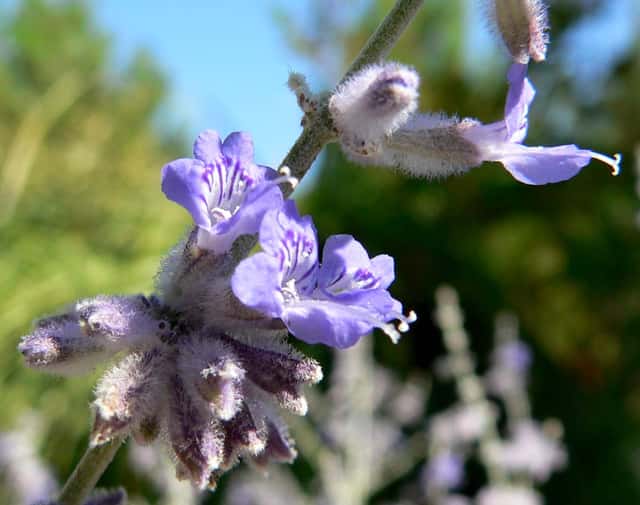
Russian sage (Perovskia atriplicifolia), sometimes botanically classified as Salvia yangii, is a perennial subshrub in the Lamiaceae family, native to Central Asia, Afghanistan, and western China. It is characterized by silvery-gray, deeply lobed leaves with an intense, sage-like scent and numerous small flowers in shades of purple and blue that appear from July to September on upright, woody stems. Reaching 80-150 cm in height, the plant is extremely drought and heat tolerant, and its airy, misty habit makes it a perfect addition to flower beds and gravel gardens.
How to Propagate Russian Sage?
How Big Does Russian Sage Grow?
TLDR: Russian Sage can reach up to 1.5m tall with Medium growth rate.
Max height
1.5m
Spread
1.0m
Growth rate
Medium
Foliage
Deciduous
Plant Uses
Ornamental
Great for decoration
Medicinal
Medicinal properties
Aromatic
Pleasant fragrance
Edible
Can be consumed
Medicinal Uses
- Traditionally used for stomach ailments and indigestion
- An infusion of leaves and flower clusters is used as an expectorant for colds
- Studies confirm its anti-inflammatory and antimicrobial properties
Culinary Uses
- Edible flowers with a sweet-peppery flavor, used as a garnish for salads and desserts
- Flowers are used to flavor vodka and other spirits
- Leaves are considered toxic and unfit for consumption—despite the name 'sage', it is not a typical culinary herb
Is your plant showing symptoms?
Click on the symptom to discover possible causes:
What Diseases Commonly Affect Russian Sage?
TLDR: Russian Sage is susceptible to 6 known diseases. Monitor regularly for early detection.
Powdery Mildew
Powdery mildew is a common fungal disease caused by various fungi species including Erysiphe, Podosphaera, Oïdium, and Leveillula. It affects over 10,000 plant species worldwide. The disease thrives in warm, dry climates with high humidity and appears as a distinctive white powdery coating on plant surfaces.
Root Rot
Root rot is a serious fungal disease that affects the root system of plants, causing them to decay and die. It is primarily caused by overwatering, poor drainage, or soil-borne fungi such as Pythium, Phytophthora, Rhizoctonia, and Fusarium. The disease thrives in waterlogged conditions where roots are deprived of oxygen, making them susceptible to fungal infection.
Leaf Spot
Leaf spot is a common fungal disease caused by various pathogens including Alternaria, Ascochyta, Colletotrichum, Septoria, and Venturia. It primarily affects leaves, causing discolored spots that can lead to premature leaf drop if left untreated.
Spider Mites
Spider mites are tiny arachnids (less than 1/20 inch long) related to spiders and ticks that feed on plant sap. They thrive in hot, dry conditions and can cause significant damage to ornamental and vegetable plants. During severe infestations, crop losses can reach 14% or higher as these pests disrupt vital plant processes including photosynthesis, carbon dioxide absorption, and transpiration.
Meaning & Symbolism
Russian sage symbolizes perseverance and the strength to survive in harsh conditions—it can bloom despite drought and heat. It is also associated with wisdom and longevity, and in the language of flowers, it is often considered a symbol of health and peace of mind.
Compare with similar plants
| Attribute | Difficulty | Light | Watering | Pet Safe |
|---|---|---|---|---|
| Field Maple | Easy | Bright indirect | 14d | ✓ |
| Silver Birch | Easy | Direct sun | 14d | ✓ |
| Cushion Bush | Easy | Direct sun | 14d | ✓ |
| Peruvian peppertree | Easy | Direct sun | 14d | ⚠️ |
Choose & Compare
Sources & References
- Salvia yangii (Russian Sage): Uses, Design Ideas, Care Guide - Gardenia.net
- Russian sage, Salvia yangii (Perovskia atriplicifolia) - Wisconsin Horticulture
- Russian Sage Plant Care & Growing Guide - Get Busy Gardening
- Perovskia atriplicifolia (Russian Sage) - UC Agriculture and Natural Resources
- Which Popular Fall Plants Are Safe for Pets? - ASPCA
- Salvia yangii - Wikipedia
- All About Perovskia - Longfield Gardens
- Russian Sage - healing herbs
- Perowskia łobodolistna - opis, wymagania, uprawa i pielęgnacja - zielonyogrodek.pl





