Orchidaceae
Philippine Ground Orchid (Spathoglottis plicata): Complete Care Guide
Spathoglottis plicata
Keep soil consistently moist but never waterlogged. Provide bright indirect to partial direct sun for 4-6 hours daily. Fertilize regularly with a balanced orchid fertilizer every 2 months. Maintain high humidity (60-80%) and temperatures between 18-35°C. Repot every 18 months in well-draining loamy orchid mix.
Every 4 days
Bright indirect
18° - 35°C
60% - 80%
Categories
What is Philippine Ground Orchid?
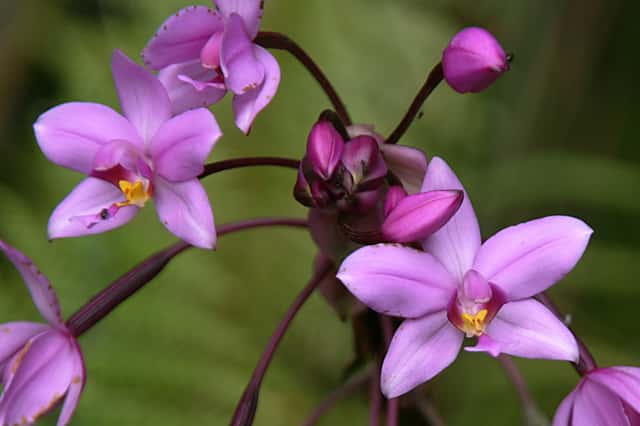
Philippine Ground Orchid (Spathoglottis plicata) is a medium-care plant from the Orchidaceae family. Spathoglottis plicata, commonly known as the Philippine Ground Orchid, is a stunning terrestrial orchid native to Southeast Asia and the Pacific islands. Unlike most orchids that grow on trees, this species thrives in the ground, forming lush clumps of pleated, strap-like leaves topped by tall flowe...
Philippine Ground Orchid grows up to 1.0m, spread of 60cm, watering every 4 days, 18°C – 35°C, 60–80% humidity. It is suitable for indoor environments and safe for pets.
Unlike many popular species, Philippine Ground Orchid is safe to keep around pets. Without adequate drainage, root rot can develop within 8 days.
How to Care for Philippine Ground Orchid?
TLDR: Philippine Ground Orchid needs Bright indirect, watering every 4 days, and temperatures between 18-35°C with 60-80% humidity.
How Often Should You Water Philippine Ground Orchid?
Water every 3-5 days, allowing the top layer of soil to dry slightly before rewatering. In hot or dry weather, increase watering frequency. Avoid waterlogging — root rot is the most common killer of ground orchids.
How Much Light Does Philippine Ground Orchid Need?
Place in bright indirect light or partial sun — ideally receiving 4-6 hours of morning sun. Avoid harsh midday direct sun which can scorch the pleated leaves. Indoors, a bright east or west-facing window is ideal.
What Is the Best Soil for Philippine Ground Orchid?
Use a rich, well-draining loamy mix. A blend of loam, perlite, and coarse bark or peat works well. Slightly acidic pH between 5.5 and 6.5 is preferred. Good drainage is essential to prevent root rot.
What Pot Should You Use for Philippine Ground Orchid?
Use a wide, shallow pot with ample drainage holes. Unglazed terracotta or breathable plastic pots work best, allowing airflow to the roots. Avoid deep narrow pots.
Care Schedule
Fertilize
Every 60 days
Misting
Every 3 days
Rotate
Every 7 days
Repot
Every 548 days
What Is Philippine Ground Orchid and Where Does It Come From?
Spathoglottis plicata, commonly known as the Philippine Ground Orchid, is a stunning terrestrial orchid native to Southeast Asia and the Pacific islands. Unlike most orchids that grow on trees, this species thrives in the ground, forming lush clumps of pleated, strap-like leaves topped by tall flowering spikes bearing up to 40 vibrant pink to purple blooms. It is one of the most accessible and rewarding orchids for tropical and subtropical gardens.
How Big Does Philippine Ground Orchid Grow?
TLDR: Philippine Ground Orchid can reach up to 1.0m tall with Medium growth rate.
Max height
1.0m
Spread
60cm
Growth rate
Medium
Foliage
Evergreen
Plant Uses
Ornamental
Great for decoration
Is your plant showing symptoms?
Click on the symptom to discover possible causes:
What Diseases Commonly Affect Philippine Ground Orchid?
TLDR: Philippine Ground Orchid is susceptible to 15 known diseases. Monitor regularly for early detection.
Anthracnose
Anthracnose is a fungal disease caused by fungi in the genus Colletotrichum that affects many plants, including vegetables, fruits, and trees. The disease thrives in cool, wet conditions, causing dark, sunken lesions on leaves, stems, flowers, and fruits.
Gray Mold (Botrytis Blight)
Gray mold, caused by the fungus Botrytis cinerea, is a widespread necrotrophic pathogen affecting over 1,400 plant species. It thrives in cool, humid conditions and attacks weakened or aging plant tissues, causing soft rot and characteristic gray fuzzy growth.
Southern Blight
Southern blight is a devastating soilborne fungal disease caused by Athelia rolfsii (formerly Sclerotium rolfsii), affecting over 500 plant species including vegetables, ornamentals, and fruit crops. The fungus survives in soil through resting structures called sclerotia that resemble mustard seeds and can remain viable for years.
Cercospora Leaf Spot
Cercospora leaf spot is a common fungal disease caused by Cercospora species that affects many plant types, particularly beets, roses, and leafy vegetables. The disease thrives in warm, humid conditions and can cause significant defoliation, reducing plant vigor and yield. It spreads rapidly through water splash, wind, and contaminated tools.
Meaning & Symbolism
In Southeast Asian and Pacific Island cultures, this orchid symbolizes beauty, elegance, and resilience. In the Philippines it is a source of national botanical pride. The flowering of ground orchids is often associated with celebration and good fortune in tropical folk traditions.
Fun Facts
Spathoglottis plicata can bloom almost year-round in tropical climates, with peak flowering in spring and summer.
The species was first described botanically by Carl Ludwig Blume in 1825 from specimens collected in the Philippines.
Ground orchids are one of the few orchids commonly planted as garden borders and ground covers in tropical landscaping.
The species has naturalized far beyond its native range and can be found growing wild in Florida, Hawaii, and parts of the Caribbean.
Frequently asked questions
How often should I water my Philippine Ground Orchid?
Why are my ground orchid leaves turning yellow?
Can I grow Philippine Ground Orchid indoors?
When does the Philippine Ground Orchid bloom?
Compare with similar plants
| Attribute | Difficulty | Light | Watering | Pet Safe |
|---|---|---|---|---|
| Azalea | Medium | Partial shade | 3d | ⚠️ |
| Wild Lettuce | Medium | Direct sun | 7d | ⚠️ |
| Cape Primrose | Medium | Partial shade | 7d | ✓ |
| Honey Locust | Medium | Direct sun | 14d | ✓ |
Choose & Compare
Sources & References
- Spathoglottis plicata care and culture - Travaldo blog
- Ground Orchids for South Florida
- Spathoglottis Orchids: Complete Care Guide - Orchideria
- How to Plant, Grow, and Care For Spathoglottis Orchids - Epic Gardening
- Philippine ground orchid Plant Care & Growing Basics - PlantIn
- Spathoglottis plicata - Wikipedia