Orchidaceae
Christmas Orchid: The Complete Care Guide
Cattleya trianae
Needs bright indirect light, high humidity (50-70%) and good air circulation. Water every 3 days allowing medium to partially dry. Fertilize every 15 days during growing season. Repot every 2 years in coarse orchid bark.
Every 3 days
Bright indirect
13° - 28°C
50% - 70%
Categories
What is Christmas Orchid?
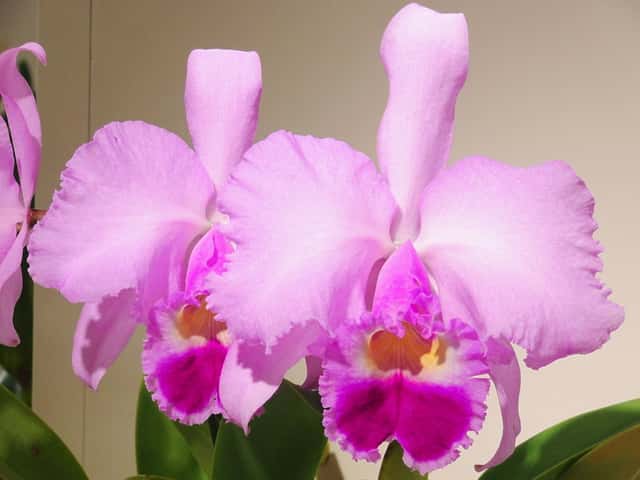
Christmas Orchid (Cattleya trianae) is a medium-care plant from the Orchidaceae family. Cattleya trianae, the Christmas Orchid or Winter Cattleya, is the national flower of Colombia. This epiphytic orchid from the Andean cloud forests produces spectacular blooms in shades of purple, white, and pink with a distinctive lip, flowering from late December through early spring.
Christmas Orchid grows up to 60cm, spread of 30cm, watering every 3 days, 13°C – 28°C, 50–70% humidity. It is suitable for indoor environments and safe for pets.
Unlike many popular species, Christmas Orchid is safe to keep around pets. Without adequate drainage, root rot can develop within 7 days.
How to Care for Christmas Orchid?
TLDR: Christmas Orchid needs Bright indirect, watering every 3 days, and temperatures between 13-28°C with 50-70% humidity.
How Often Should You Water Christmas Orchid?
Water every 3 days, allowing the potting medium to dry 60-70% between waterings. Avoid standing water at the base of the pot. Use room-temperature filtered or rainwater for best results.
How Much Light Does Christmas Orchid Need?
Provide bright indirect light, equivalent to 21,500-37,700 lux. An east or west-facing windowsill with filtered sun is ideal. Avoid direct midday sun which can scorch the leaves.
What Is the Best Soil for Christmas Orchid?
Use a well-draining orchid mix: coarse fir or pine bark (70%), charcoal (20%), and perlite (10%). Never use regular potting soil. Good drainage and airflow around the roots is essential.
What Pot Should You Use for Christmas Orchid?
Clear plastic or ceramic pot with drainage holes. Transparent pots allow monitoring root health. Size appropriately — leave only 2-3 cm between roots and the pot edge.
Care Schedule
Fertilize
Every 15 days
Misting
Every 2 days
Rotate
Every 30 days
Repot
Every 730 days
What Is Christmas Orchid and Where Does It Come From?
Cattleya trianae, the Christmas Orchid or Winter Cattleya, is the national flower of Colombia. This epiphytic orchid from the Andean cloud forests produces spectacular blooms in shades of purple, white, and pink with a distinctive lip, flowering from late December through early spring.
How to Propagate Christmas Orchid?
Rhizome Division
Divide only when the plant has at least 6 pseudobulbs. Sterilize tools with 70% alcohol before cutting to prevent virus transmission.
- 1 Remove the plant carefully from its pot
- 2 Identify healthy pseudobulbs with at least one active growth point
- 3 Cut the rhizome between groups using a sterilized cutting tool
- 4 Plant each division in fresh coarse orchid bark
- 5 Keep in a humid, shaded location until the plant establishes
Materials needed:
How Big Does Christmas Orchid Grow?
TLDR: Christmas Orchid can reach up to 60cm tall with Slow growth rate.
Max height
60cm
Spread
30cm
Growth rate
Slow
Foliage
Evergreen
Plant Uses
Ornamental
Great for decoration
Is your plant showing symptoms?
Click on the symptom to discover possible causes:
What Diseases Commonly Affect Christmas Orchid?
TLDR: Christmas Orchid is susceptible to 6 known diseases. Monitor regularly for early detection.
Root Rot
Root rot is a serious fungal disease that affects the root system of plants, causing them to decay and die. It is primarily caused by overwatering, poor drainage, or soil-borne fungi such as Pythium, Phytophthora, Rhizoctonia, and Fusarium. The disease thrives in waterlogged conditions where roots are deprived of oxygen, making them susceptible to fungal infection.
Gray Mold (Botrytis Blight)
Gray mold, caused by the fungus Botrytis cinerea, is one of the most common fungal diseases in plants. It affects over 200 plant species, including ornamentals, vegetables, fruits, and houseplants. The disease thrives in cool, humid conditions with poor air circulation, causing grayish spots and soft rot on infected tissues.
Bacterial Soft Rot
Bacterial soft rot is a destructive plant disease caused primarily by bacteria from the genera Pectobacterium (formerly Erwinia) and Dickeya. These bacteria produce enzymes that break down plant cell walls, causing rapid and foul-smelling tissue decomposition. It mainly affects succulent tissues such as tubers, fruits, stems, and bulbs, being especially problematic in warm and humid conditions.
Spider Mites
Spider mites are tiny arachnids (less than 1/20 inch long) related to spiders and ticks that feed on plant sap. They thrive in hot, dry conditions and can cause significant damage to ornamental and vegetable plants. During severe infestations, crop losses can reach 14% or higher as these pests disrupt vital plant processes including photosynthesis, carbon dioxide absorption, and transpiration.
Meaning & Symbolism
As Colombia's national flower since 1936, the Christmas Orchid symbolizes elegance, rarity, and the exuberant beauty of the Andean tropical forests.
Fun Facts
It has been Colombia's national flower since 1936, a symbol of the country's cultural identity
Its blooms can last 2 to 5 weeks, making it one of the longest-flowering orchids
The species name 'trianae' honors Colombian botanist José Jerónimo Triana
Under ideal conditions, it can bloom twice per year
Frequently asked questions
How often should I water the Christmas Orchid?
Is Cattleya trianae toxic to pets?
Why is my Christmas Orchid not blooming?
When should I repot Cattleya trianae?
What is the best potting mix for Christmas Orchid?
Compare with similar plants
| Attribute | Difficulty | Light | Watering | Pet Safe |
|---|---|---|---|---|
| Dark Fieldcap | Medium | Low light | 2d | ⚠️ |
| Azalea | Medium | Partial shade | 3d | ⚠️ |
| Bougainvillea | Medium | Direct sun | 7d | ⚠️ |
| Wild Lettuce | Medium | Direct sun | 7d | ⚠️ |



