Sapindaceae
Boxelder (Acer negundo): The Complete Guide to This Hardy Native Tree
Acer negundo
Hardy tree that thrives in full sun to partial shade. Needs moderate watering when young; drought-tolerant once established. Formative pruning every two years in late winter is recommended. Adapts to clay, sandy, and loamy soils.
Every 14 days
Bright indirect
-40° - 35°C
30% - 70%
Categories
What is Boxelder?
Boxelder (Acer negundo) is a medium-care plant from the Sapindaceae family. Boxelder (Acer negundo) is a fast-growing, deciduous tree native to North America, belonging to the family Sapindaceae. It can reach up to 21 meters (70 feet) in height and is renowned for its exceptional cold hardiness and adaptability to a wide range of soil types and climatic conditions. The tree...
Boxelder grows up to 21.0m, spread of 1500cm, watering every 14 days, -40°C – 35°C, 30–70% humidity. It is not suitable for indoor environments and safe for pets.
Unlike many popular species, Boxelder is safe to keep around pets.
How to Care for Boxelder?
TLDR: Boxelder needs Bright indirect, watering every 14 days, and temperatures between -40-35°C with 30-70% humidity.
How Often Should You Water Boxelder?
Water regularly during the first growing season to establish a deep root system. Once established, the tree is drought-tolerant; deep watering every 10-14 days during dry summers is sufficient.
How Much Light Does Boxelder Need?
Prefers full sun (at least 6 hours of direct light daily). Tolerates partial shade but growth may be reduced. Avoid deep shade conditions.
What Is the Best Soil for Boxelder?
Adapts to loamy, clay, and sandy soils. Prefers fertile, deep, well-drained substrate with a pH between 5.5 and 7.5. Tolerates occasional flooding and wet soils.
What Pot Should You Use for Boxelder?
Young specimens can be grown in large, deep containers (minimum 60 cm diameter) with good drainage. Terracotta or sturdy plastic pots work well. However, Boxelder is best suited for open ground planting where its root system can develop freely.
Care Schedule
Fertilize
Every 180 days
What Is Boxelder and Where Does It Come From?
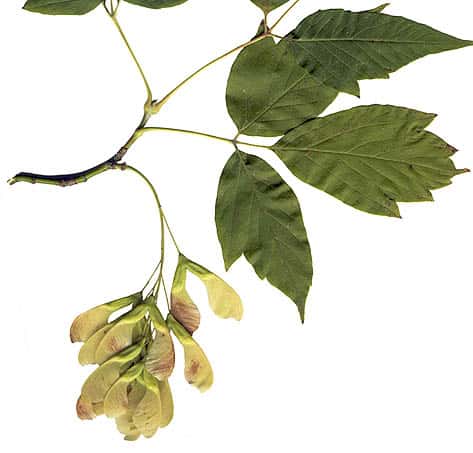
Boxelder (Acer negundo) is a fast-growing, deciduous tree native to North America, belonging to the family Sapindaceae. It can reach up to 21 meters (70 feet) in height and is renowned for its exceptional cold hardiness and adaptability to a wide range of soil types and climatic conditions. The tree features pinnately compound leaves with 3 to 5 leaflets and produces inconspicuous green-yellow flowers in spring before the leaves emerge. It is dioecious, with male and female flowers on separate trees.
How to Propagate Boxelder?
Seed Propagation
Cold stratification significantly improves germination rates. Use deep containers from the start to accommodate the taproot.
- 1 Collect ripe seeds in autumn
- 2 Cold stratify for 3 months in the refrigerator
- 3 Sow in well-draining substrate in spring
- 4 Keep soil moist until germination
Materials needed:
Softwood Cuttings
Use sterilized tools. Maintain high humidity around the cutting during rooting using a plastic bag or humidity dome.
- 1 Take young shoot cuttings of 15-20 cm in June-July
- 2 Remove lower leaves
- 3 Apply rooting hormone to the base
- 4 Plant in moist substrate and keep in semi-shaded location
Materials needed:
How Big Does Boxelder Grow?
TLDR: Boxelder can reach up to 21.0m tall with Fast growth rate.
Max height
21.0m
Spread
15.0m
Growth rate
Fast
Foliage
Deciduous
Plant Uses
Ornamental
Great for decoration
Edible
Can be consumed
Medicinal Uses
- Inner bark tea was used as an emetic in traditional Native American medicine
Culinary Uses
- Sap can be processed into a maple-like syrup; young leaves and buds are edible
Is your plant showing symptoms?
Click on the symptom to discover possible causes:
What Diseases Commonly Affect Boxelder?
TLDR: Boxelder is susceptible to 8 known diseases. Monitor regularly for early detection.
Verticillium Wilt
Verticillium wilt is a soil-borne fungal disease caused primarily by the fungi Verticillium dahliae and V. albo-atrum. These pathogens infect plant roots and grow within the vascular tissues, blocking water and nutrient transport, resulting in wilting and eventual plant death. The disease affects over 350 plant species including vegetables, fruits, ornamental flowers, and trees. The fungi can survive in soil for more than 10 years as resistant structures called microsclerotia.
Anthracnose
Anthracnose is a fungal disease caused by fungi in the genus Colletotrichum that affects many plants, including vegetables, fruits, and trees. The disease thrives in cool, wet conditions, causing dark, sunken lesions on leaves, stems, flowers, and fruits.
Powdery Mildew
Powdery mildew is a common fungal disease caused by various fungi species including Erysiphe, Podosphaera, Oïdium, and Leveillula. It affects over 10,000 plant species worldwide. The disease thrives in warm, dry climates with high humidity and appears as a distinctive white powdery coating on plant surfaces.
Canker
Canker is a disease caused by various fungi and bacteria that create necrotic, sunken areas on bark of branches, stems, and trunks. Pathogens enter through wounds and natural openings, especially when plants are stressed. Canker can gradually weaken or kill branches by disrupting water and nutrient flow.
Meaning & Symbolism
For Native American peoples, the Boxelder held ceremonial significance and symbolized resilience and survival. The sap was a valued food source, symbolizing the sustaining gifts of nature.
Fun Facts
Boxelder is the most widely distributed maple species in North America
Its sap can be tapped to make maple syrup, though with lower sugar content than Sugar Maple
It is one of the coldest-hardy maples, surviving temperatures as low as -40°C
Boxelder is dioecious — male and female flowers grow on separate trees
Frequently asked questions
How often should I water a Boxelder tree?
Is Boxelder toxic to pets?
When does Boxelder bloom?
How tall does a Boxelder tree grow?
What pests affect Boxelder?
Compare with similar plants
| Attribute | Difficulty | Light | Watering | Pet Safe |
|---|---|---|---|---|
| Dark Fieldcap | Medium | Low light | 2d | ⚠️ |
| Azalea | Medium | Partial shade | 3d | ⚠️ |
| Field Maple | Easy | Bright indirect | 14d | ✓ |
| Bougainvillea | Medium | Direct sun | 7d | ⚠️ |




