Burseraceae
Bursera: the copal and palo santo tree
Bursera
Grow in full sun to partial shade with well-draining soil and infrequent watering, allowing the soil to dry out nearly completely between waterings. Tolerates drought and goes dormant, dropping its leaves, during the dry season.
Every 14 days
Bright indirect
10° - 35°C
30% - 50%
Categories
What is Bursera?
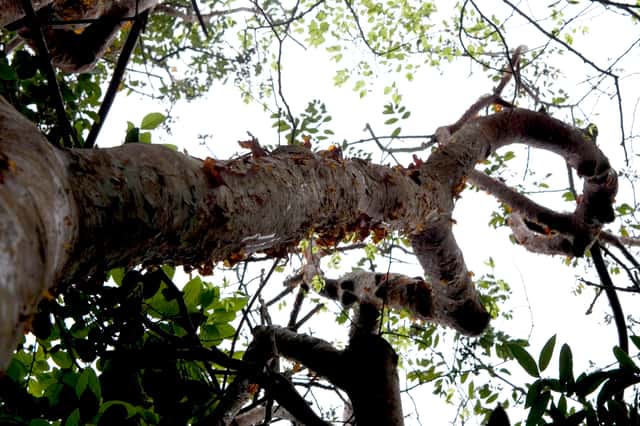
Bursera (Bursera) is a medium-care plant from the Burseraceae family. Bursera is a genus of about 100 species of trees and shrubs in the family Burseraceae, native to tropical and subtropical regions of the Americas, from Mexico to Argentina. They are known for their thin, papery, peeling bark and aromatic resin (copal), used for centuries in incense and purification...
Bursera grows up to 25.0m, spread of 600cm, watering every 14 days, 10°C – 35°C, 30–50% humidity. It is not suitable for indoor environments and safe for pets.
Unlike many popular species, Bursera is safe to keep around pets.
How to Care for Bursera?
TLDR: Bursera needs Bright indirect, watering every 14 days, and temperatures between 10-35°C with 30-50% humidity.
How Often Should You Water Bursera?
Water only when the soil is almost completely dry; avoid overwatering, as roots are sensitive to excess moisture.
How Much Light Does Bursera Need?
Prefers full sun to very bright light; indoors, place near a well-lit window.
What Is the Best Soil for Bursera?
Use a well-draining substrate, such as a mix of garden loam, organic compost, and coarse sand or perlite.
What Pot Should You Use for Bursera?
Terracotta or clay pot with good drainage, suited to drought-tolerant deciduous species.
What Is Bursera and Where Does It Come From?
Bursera is a genus of about 100 species of trees and shrubs in the family Burseraceae, native to tropical and subtropical regions of the Americas, from Mexico to Argentina. They are known for their thin, papery, peeling bark and aromatic resin (copal), used for centuries in incense and purification rituals. Representative species include Bursera simaruba (gumbo-limbo) and Bursera graveolens (palo santo).
How to Propagate Bursera?
Seed propagation
Fresh seeds germinate best. Avoid excess moisture to prevent rot.
- 1 Collect ripe seeds from the fruit
- 2 Soak seeds in water for 24 hours
- 3 Sow in a well-draining, lightly moist substrate
- 4 Keep warm with indirect light until germination
Materials needed:
Stem cutting
Use clean tools and let the cut callus over to prevent rot.
- 1 Cut a healthy semi-hardwood stem segment
- 2 Let the cutting callus for a few days before planting
- 3 Plant in a sandy, well-draining substrate
- 4 Water sparingly until roots establish
Materials needed:
How Big Does Bursera Grow?
TLDR: Bursera can reach up to 25.0m tall with Medium growth rate.
Max height
25.0m
Spread
6.0m
Growth rate
Medium
Foliage
Deciduous
Plant Uses
Ornamental
Great for decoration
Medicinal
Medicinal properties
Aromatic
Pleasant fragrance
Medicinal Uses
- Resin used as incense (copal and palo santo) in purification rituals and aromatherapy; traditionally used to relieve stomach aches, inflammation, and as a topical rub for rheumatism.
Is your plant showing symptoms?
Click on the symptom to discover possible causes:
What Diseases Commonly Affect Bursera?
TLDR: Bursera is susceptible to 4 known diseases. Monitor regularly for early detection.
Leaf Spot
Leaf spot is a common fungal disease caused by various pathogens including Alternaria, Ascochyta, Colletotrichum, Septoria, and Venturia. It primarily affects leaves, causing discolored spots that can lead to premature leaf drop if left untreated.
Scale Insects
Scale insects are small sap-sucking pests that appear as brown, shell-like bumps on plant stems and leaves. There are over 25 species, divided into armored (hard) and unarmored (soft) scales. They feed by piercing plant tissue and extracting sap, which weakens the plant and can lead to yellowing, stunted growth, and even death if left untreated. They also excrete honeydew, which attracts ants and promotes sooty mold growth.
Caterpillars
Caterpillars are the larval stage of moths and butterflies that feed voraciously on plant foliage, stems, flowers, and fruits. Common species include cabbage loopers, tomato hornworms, armyworms, and cutworms. These pests can cause extensive damage by consuming large amounts of plant tissue in a short time. They vary in size from small (1/4 inch) to large (5 inches), with colors ranging from green to brown, often featuring stripes or spots. Caterpillars are highly mobile and can quickly spread throughout gardens, making them one of the most destructive common pests.
Sooty Mold
Sooty mold is a fungal disease that develops on surfaces coated with honeydew, a sticky sweet substance secreted by sap-sucking insects like aphids, scale insects, and whiteflies. While it does not directly infect plant tissue, it reduces photosynthetic capacity by blocking sunlight and diminishes the plant's aesthetic appearance.
Meaning & Symbolism
Resilience and purification; the resin (copal) is used in smudging and spiritual purification rituals in Mesoamerican and Andean traditions.
Fun Facts
Bursera bark peels off in thin, colorful strips, earning B. simaruba the nickname "tourist tree" for resembling sunburned, peeling skin.
The resin of several species is the source of the famous palo santo incense.
Frequently asked questions
Is Bursera easy to grow?
Does Bursera resin have medicinal uses?
Does Bursera lose its leaves?
Compare with similar plants
| Attribute | Difficulty | Light | Watering | Pet Safe |
|---|---|---|---|---|
| Dark Fieldcap | Medium | Low light | 2d | ⚠️ |
| Azalea | Medium | Partial shade | 3d | ⚠️ |
| Bougainvillea | Medium | Direct sun | 7d | ⚠️ |
| Wild Lettuce | Medium | Direct sun | 7d | ⚠️ |



