Araceae
Flask Philodendron (Philodendron martianum): Complete Care Guide
Philodendron martianum
Thrives in bright indirect light. Water every 7-10 days, allowing the top 2-3 inches of soil to dry between waterings. Prefers 50-70% humidity and temperatures of 15-35°C. Use a well-draining organic mix. Fertilize every 30 days during spring and summer.
Every 8 days
Partial shade
15° - 35°C
50% - 70%
Categories
What is Flask Philodendron?
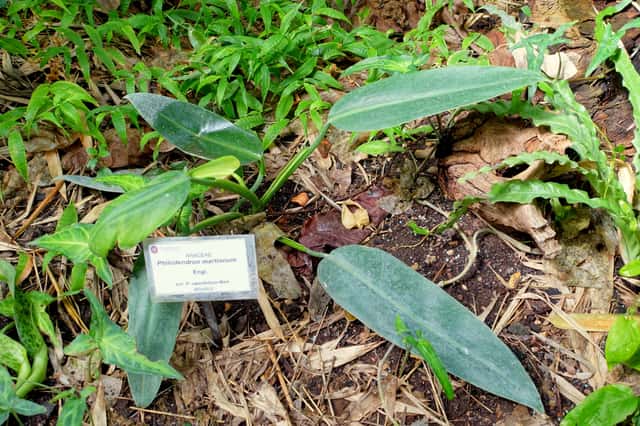
Flask Philodendron (Philodendron martianum) is a easy-care plant from the Araceae family. Philodendron martianum, commonly known as the Flask Philodendron or Fat Boy Philodendron, is a species native to the Brazilian Atlantic Forest. It is distinguished by its uniquely swollen, flask-shaped petioles that store water, and its large, glossy, solid dark-green leaves. A robust and ornamental...
Flask Philodendron grows up to 1.0m, spread of 80cm, watering every 8 days, 15°C – 35°C, 50–70% humidity. It is suitable for indoor environments and not safe for pets.
Unlike many tropical plants, Flask Philodendron tolerates watering mistakes. Best for beginners. Without precautions, ingestion can cause irritation in pets. Keep out of reach of cats and dogs. Without adequate drainage, root rot can develop within 16 days.
How to Care for Flask Philodendron?
TLDR: Flask Philodendron needs Partial shade, watering every 8 days, and temperatures between 15-35°C with 50-70% humidity.
How Often Should You Water Flask Philodendron?
Water every 7 to 10 days using the soak-and-dry method — let the top 2-3 inches of soil dry out before watering again. Philodendron martianum is highly susceptible to root rot from overwatering; ensure the pot has drainage holes.
How Much Light Does Flask Philodendron Need?
Place in bright, indirect light near an east or west-facing window. Avoid harsh direct sunlight, which can scorch the leaves. It tolerates lower light but grows best with good ambient brightness.
What Is the Best Soil for Flask Philodendron?
Use a well-draining mix of potting soil, organic matter (worm castings), coconut coir, and perlite. Aim for a pH of 6.0–7.0. Avoid dense, water-retaining soils that can lead to root rot.
What Pot Should You Use for Flask Philodendron?
Terracotta or ceramic pots with drainage holes are ideal. Avoid pots without drainage. Choose a medium to large pot to accommodate the plant's robust root system.
Care Schedule
Fertilize
Every 30 days
Misting
Every 7 days
Repot
Every 730 days
What Is Flask Philodendron and Where Does It Come From?
Philodendron martianum, commonly known as the Flask Philodendron or Fat Boy Philodendron, is a species native to the Brazilian Atlantic Forest. It is distinguished by its uniquely swollen, flask-shaped petioles that store water, and its large, glossy, solid dark-green leaves. A robust and ornamental houseplant, it thrives in bright indirect light and is well-suited for indoor cultivation.
How to Propagate Flask Philodendron?
Stem Cutting
Keep sterilized tools to prevent infection. Maintain consistent moisture without waterlogging. A clear plastic bag over the cutting creates a humidity tent to speed rooting.
- 1 Cut a healthy stem with at least 2 nodes and 1-2 leaves using sterilized scissors
- 2 Allow the cut end to callous for 30 minutes
- 3 Plant in a moist 50/50 peat and perlite mix
- 4 Keep in a warm, humid spot with bright indirect light
- 5 Roots will develop in 3-5 weeks
Materials needed:
Root Division
Perform division in early spring for the best recovery rate.
- 1 Remove the plant from its pot carefully
- 2 Gently separate root sections, each with at least 2 leaves
- 3 Plant each division in fresh, well-draining potting mix
- 4 Water moderately and place in bright indirect light
Materials needed:
How Big Does Flask Philodendron Grow?
TLDR: Flask Philodendron can reach up to 1.0m tall with Medium growth rate.
Max height
1.0m
Spread
80cm
Growth rate
Medium
Foliage
Evergreen
Warning: Toxic Plant
This plant can be toxic if ingested. Keep out of reach of:
Plant Uses
Ornamental
Great for decoration
Is your plant showing symptoms?
Click on the symptom to discover possible causes:
What Diseases Commonly Affect Flask Philodendron?
TLDR: Flask Philodendron is susceptible to 10 known diseases. Monitor regularly for early detection.
Root Rot
Root rot is a serious fungal disease that affects the root system of plants, causing them to decay and die. It is primarily caused by overwatering, poor drainage, or soil-borne fungi such as Pythium, Phytophthora, Rhizoctonia, and Fusarium. The disease thrives in waterlogged conditions where roots are deprived of oxygen, making them susceptible to fungal infection.
Overwatering
Overwatering occurs when plants receive too much water, depriving roots of oxygen and causing root rot. This environmental stress is one of the most common causes of houseplant death, as waterlogged soil prevents roots from breathing and functioning properly.
Bacterial Blight
Bacterial blight is a serious plant disease caused by pathogenic bacteria that enters plants through wounds or natural openings. It spreads rapidly in warm, wet conditions and can cause significant damage to leaves, stems, and flowers. The bacteria are transmitted by water splash, contaminated tools, and insects.
Leaf Spot
Leaf spot is a common fungal disease caused by various pathogens including Alternaria, Ascochyta, Colletotrichum, Septoria, and Venturia. It primarily affects leaves, causing discolored spots that can lead to premature leaf drop if left untreated.
Meaning & Symbolism
A symbol of tropical resilience and lush exuberance, representing the rich biodiversity of the Brazilian Atlantic Forest.
Fun Facts
Philodendron martianum is endemic to the Atlantic Forest, one of the world's most biodiverse and threatened ecosystems
Its swollen, flask-like petioles store water — a unique adaptation among philodendrons
The species was first described botanically in the 19th century from Brazilian specimens
In its natural habitat, it grows as a hemi-epiphyte, beginning life on the forest floor before climbing trees
Frequently asked questions
How often should I water the Flask Philodendron?
Is Philodendron martianum toxic to cats and dogs?
What light does the Fat Boy Philodendron need?
Why are my Flask Philodendron leaves turning yellow?
How do I propagate Philodendron martianum?
Compare with similar plants
| Attribute | Difficulty | Light | Watering | Pet Safe |
|---|---|---|---|---|
| Field Maple | Easy | Bright indirect | 14d | ✓ |
| Silver Birch | Easy | Direct sun | 14d | ✓ |
| Cushion Bush | Easy | Direct sun | 14d | ✓ |
| Peruvian peppertree | Easy | Direct sun | 14d | ⚠️ |





