Amaryllidaceae
Paintbrush Lily (Haemanthus albiflos): Complete Care Guide
Haemanthus albiflos
Easy-care shade-tolerant bulb from South Africa. Water every 14 days, reducing to monthly in winter. Prefers bright indirect light. Well-draining soil is essential. WARNING: all parts are toxic if ingested — keep away from pets and children.
Every 14 days
Partial shade
5° - 27°C
40% - 60%
Categories
What is Paintbrush Lily?
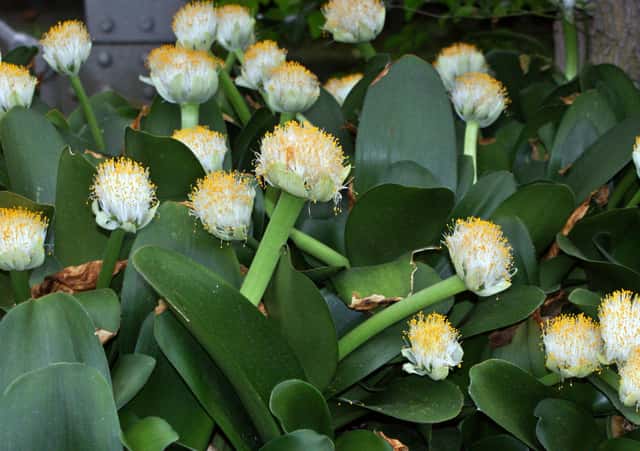
Paintbrush Lily (Haemanthus albiflos) is a easy-care plant from the Amaryllidaceae family. Haemanthus albiflos, the Paintbrush Lily, is an evergreen bulbous perennial native to coastal South Africa. It produces distinctive white shaving-brush flowers with prominent yellow-tipped stamens in autumn and winter. One of the most shade-tolerant and low-maintenance bulbs available, it thrives in...
Paintbrush Lily grows up to 30cm, spread of 45cm, watering every 14 days, 5°C – 27°C, 40–60% humidity. It is suitable for indoor environments and not safe for pets.
Unlike many tropical plants, Paintbrush Lily tolerates watering mistakes. Best for beginners. Without precautions, ingestion can cause irritation in pets. Keep out of reach of cats and dogs. Without adequate drainage, root rot can develop within 28 days.
How to Care for Paintbrush Lily?
TLDR: Paintbrush Lily needs Partial shade, watering every 14 days, and temperatures between 5-27°C with 40-60% humidity.
How Often Should You Water Paintbrush Lily?
Water every 14 days in spring and summer, allowing the top 2 inches of soil to dry between waterings. In winter, reduce to once a month. Never let the bulb sit in waterlogged soil as root rot is the primary risk.
How Much Light Does Paintbrush Lily Need?
Place in bright indirect light — an east or north-facing window is ideal. Avoid intense direct sun which causes leaf scorch. It tolerates lower light than most flowering bulbs, making it excellent for shaded indoor spots.
What Is the Best Soil for Paintbrush Lily?
Use a well-draining loam-based mix: combine potting soil with coarse sand or perlite (2:1 ratio). Leave the top half of the bulb exposed above the soil surface. Never use heavy clay-based soil.
What Pot Should You Use for Paintbrush Lily?
Terracotta or ceramic pot with drainage hole. Choose a pot only slightly larger than the bulb — this plant blooms best when mildly pot-bound.
Care Schedule
Fertilize
Every 30 days
Repot
Every 730 days
What Is Paintbrush Lily and Where Does It Come From?
Haemanthus albiflos, the Paintbrush Lily, is an evergreen bulbous perennial native to coastal South Africa. It produces distinctive white shaving-brush flowers with prominent yellow-tipped stamens in autumn and winter. One of the most shade-tolerant and low-maintenance bulbs available, it thrives indoors for decades with minimal care.
How to Propagate Paintbrush Lily?
Offset Division
Offsets take 2-3 years to flower. Divide only every 7-8 years as the plant blooms best when slightly pot-bound.
- 1 In spring, carefully remove the plant from its pot
- 2 Locate the small offset bulbs (pups) at the base of the mother bulb
- 3 Gently separate offsets by hand or with a clean knife
- 4 Plant each offset in its own pot with well-draining mix
- 5 Water lightly and place in bright indirect light
Materials needed:
Seed Propagation
Use fresh seeds for best germination rates. Seed propagation is slow but allows producing many plants at once.
- 1 Harvest ripe red berries after flowering
- 2 Extract seeds and sow in moist, well-draining seed mix
- 3 Keep in a warm location with indirect light
- 4 Germination may take several months
- 5 Seedlings take approximately 2 years to flower
Materials needed:
How Big Does Paintbrush Lily Grow?
TLDR: Paintbrush Lily can reach up to 30cm tall with Slow growth rate.
Max height
30cm
Spread
45cm
Growth rate
Slow
Foliage
Evergreen
Warning: Toxic Plant
This plant can be toxic if ingested. Keep out of reach of:
Plant Uses
Ornamental
Great for decoration
Medicinal
Medicinal properties
Medicinal Uses
- Traditional Zulu medicine for chronic cough treatment; protective charm against lightning
Is your plant showing symptoms?
Click on the symptom to discover possible causes:
What Diseases Commonly Affect Paintbrush Lily?
TLDR: Paintbrush Lily is susceptible to 6 known diseases. Monitor regularly for early detection.
Root Rot
Root rot is a serious fungal disease that affects the root system of plants, causing them to decay and die. It is primarily caused by overwatering, poor drainage, or soil-borne fungi such as Pythium, Phytophthora, Rhizoctonia, and Fusarium. The disease thrives in waterlogged conditions where roots are deprived of oxygen, making them susceptible to fungal infection.
Overwatering
Overwatering occurs when plants receive too much water, depriving roots of oxygen and causing root rot. This environmental stress is one of the most common causes of houseplant death, as waterlogged soil prevents roots from breathing and functioning properly.
Caterpillars
Caterpillars are the larval stage of moths and butterflies that feed voraciously on plant foliage, stems, flowers, and fruits. Common species include cabbage loopers, tomato hornworms, armyworms, and cutworms. These pests can cause extensive damage by consuming large amounts of plant tissue in a short time. They vary in size from small (1/4 inch) to large (5 inches), with colors ranging from green to brown, often featuring stripes or spots. Caterpillars are highly mobile and can quickly spread throughout gardens, making them one of the most destructive common pests.
Powdery Mildew
Powdery mildew is a common fungal disease caused by various fungi species including Erysiphe, Podosphaera, Oïdium, and Leveillula. It affects over 10,000 plant species worldwide. The disease thrives in warm, dry climates with high humidity and appears as a distinctive white powdery coating on plant surfaces.
Meaning & Symbolism
In South African Zulu tradition, used as a protective charm against lightning and medicinally to treat chronic coughs.
Fun Facts
The name albiflos means 'white flower' in Latin, perfectly describing its distinctive blooms.
Zulu traditional healers use this plant medicinally for chronic cough and as a protective charm against lightning strikes.
Despite its slow growth, it can live for decades in the same pot and flower reliably every autumn and winter.
Its bulb contains the alkaloid montanine, currently being researched for potential antiviral and anticancer properties.
Frequently asked questions
How often should I water my Paintbrush Lily?
Is the Paintbrush Lily toxic to cats and dogs?
Why is my Paintbrush Lily not flowering?
Can I grow Paintbrush Lily in full sun?
How often should I repot the Paintbrush Lily?
Compare with similar plants
| Attribute | Difficulty | Light | Watering | Pet Safe |
|---|---|---|---|---|
| Field Maple | Easy | Bright indirect | 14d | ✓ |
| Silver Birch | Easy | Direct sun | 14d | ✓ |
| Cushion Bush | Easy | Direct sun | 14d | ✓ |
| Peruvian peppertree | Easy | Direct sun | 14d | ⚠️ |