Asparagaceae
Spanish Dagger: Edible Plant
Yucca gloriosa
A very low-maintenance plant. It prefers full sun and well-drained soil. Water sporadically (only during prolonged dry spells once established). It does not tolerate waterlogging—proper drainage is essential to prevent crown rot.
Every 21 days
Direct sun
-12° - 40°C
30% - 60%
Categories
What is Spanish Dagger?
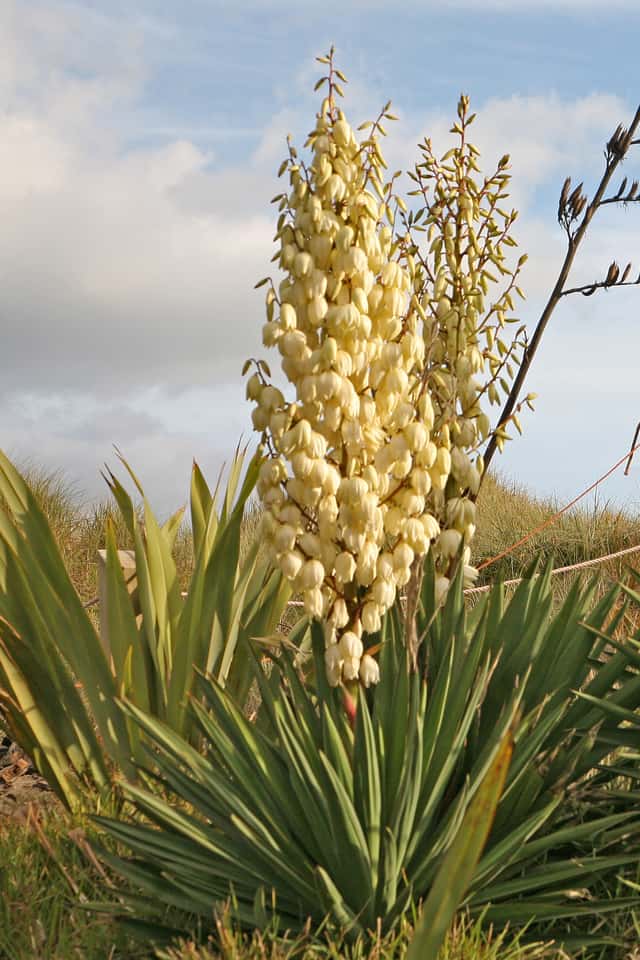
Spanish Dagger (Yucca gloriosa) is a easy-care plant from the Asparagaceae family. Yucca gloriosa, commonly known as the Spanish Dagger, is an evergreen shrub native to the southeastern United States. Its stiff, sword-shaped leaves form imposing basal rosettes, and its flower stalk can reach up to 16 feet in height with bell-shaped white flowers. It is an extremely hardy plant, to...
Spanish Dagger grows up to 4.9m, spread of 244cm, watering every 21 days, -12°C – 40°C, 30–60% humidity. It is not suitable for indoor environments and not safe for pets.
Unlike many tropical plants, Spanish Dagger tolerates watering mistakes. Best for beginners. Without precautions, ingestion can cause irritation in pets. Keep out of reach of cats and dogs.
How to Care for Spanish Dagger?
TLDR: Spanish Dagger needs Direct sun, watering every 21 days, and temperatures between -12-40°C with 30-60% humidity.
How Often Should You Water Spanish Dagger?
Once established, water only during prolonged dry spells (at most every 3 weeks). Never leave the soil waterlogged. It prefers soil that dries out completely between waterings.
How Much Light Does Spanish Dagger Need?
Full sun is ideal. It tolerates partial shade, but in deep shade, the plant loses its compactness and flowers less. Place in a location with at least 6 hours of direct sunlight per day.
What Is the Best Soil for Spanish Dagger?
Very well-drained soil is essential: sandy, rocky, or with plenty of perlite. Avoid clayey or damp soils. In garden beds with questionable drainage, raise the planting level or use mounds.
What Pot Should You Use for Spanish Dagger?
Terracotta or cement pots with large drainage holes. Avoid plastic pots that retain moisture. Ideal for gardens; not recommended for indoor environments.
Care Schedule
Fertilize
Every 90 days
Repot
Every 730 days
What Is Spanish Dagger and Where Does It Come From?
Yucca gloriosa, commonly known as the Spanish Dagger, is an evergreen shrub native to the southeastern United States. Its stiff, sword-shaped leaves form imposing basal rosettes, and its flower stalk can reach up to 16 feet in height with bell-shaped white flowers. It is an extremely hardy plant, tolerating drought, heat, wind, and salt spray.
How to Propagate Spanish Dagger?
Division of basal offsets
Wait until the offset is at least 6 inches tall before separating. Avoid overwatering in the first few weeks.
- 1 Identify healthy offsets at the base of the plant
- 2 Carefully dig to expose the offset's roots
- 3 Separate the offset with a clean, sharp knife
- 4 Let the cut dry for 1-2 days to callus
- 5 Plant in sandy, well-drained soil
Materials needed:
Seed propagation
Germination is slow and irregular. The offset method is much more reliable.
- 1 Collect mature seeds after fruiting (November-December)
- 2 Lightly scarify with fine sandpaper
- 3 Sow 0.4 inches deep in moist sandy substrate
- 4 Keep in a warm, well-lit location
Materials needed:
How Big Does Spanish Dagger Grow?
TLDR: Spanish Dagger can reach up to 4.9m tall with Slow growth rate.
Max height
4.9m
Spread
2.4m
Growth rate
Slow
Foliage
Evergreen
Warning: Toxic Plant
This plant can be toxic if ingested. Keep out of reach of:
Plant Uses
Ornamental
Great for decoration
Edible
Can be consumed
Culinary Uses
- Young flowers can be consumed raw or cooked
- Fruits, roots, and stalks are also edible in small quantities
Is your plant showing symptoms?
Click on the symptom to discover possible causes:
What Diseases Commonly Affect Spanish Dagger?
TLDR: Spanish Dagger is susceptible to 7 known diseases. Monitor regularly for early detection.
Root Rot
Root rot is a serious fungal disease that affects the root system of plants, causing them to decay and die. It is primarily caused by overwatering, poor drainage, or soil-borne fungi such as Pythium, Phytophthora, Rhizoctonia, and Fusarium. The disease thrives in waterlogged conditions where roots are deprived of oxygen, making them susceptible to fungal infection.
Crown Rot
Crown rot is a serious fungal disease that attacks the crown (base) of the plant where the stem meets the soil. It is caused by various fungal pathogens including Phytophthora, Fusarium, and Rhizoctonia. The disease thrives in waterlogged conditions and can quickly spread to kill the entire plant if not addressed promptly.
Leaf Spot
Leaf spot is a common fungal disease caused by various pathogens including Alternaria, Ascochyta, Colletotrichum, Septoria, and Venturia. It primarily affects leaves, causing discolored spots that can lead to premature leaf drop if left untreated.
Spider Mites
Spider mites are tiny arachnids (less than 1/20 inch long) related to spiders and ticks that feed on plant sap. They thrive in hot, dry conditions and can cause significant damage to ornamental and vegetable plants. During severe infestations, crop losses can reach 14% or higher as these pests disrupt vital plant processes including photosynthesis, carbon dioxide absorption, and transpiration.
Meaning & Symbolism
Resilience and protection. The pointed leaves symbolize strength and defense, and the plant is often used as a natural barrier in coastal and xeriscape gardens.
Compare with similar plants
| Attribute | Difficulty | Light | Watering | Pet Safe |
|---|---|---|---|---|
| Field Maple | Easy | Bright indirect | 14d | ✓ |
| Silver Birch | Easy | Direct sun | 14d | ✓ |
| Cushion Bush | Easy | Direct sun | 14d | ✓ |
| Peruvian peppertree | Easy | Direct sun | 14d | ⚠️ |