Arecaceae
Mexican Fan Palm (Washingtonia robusta): Complete Care Guide
Washingtonia robusta
An extremely tough, low-maintenance palm. Thrives in full sun and well-drained soil. Highly drought tolerant once established. Water weekly in summer, minimal watering in winter. Fertilize every 3 months during the growing season.
Every 7 days
Direct sun
-5° - 45°C
30% - 60%
Categories
What is Mexican Fan Palm?
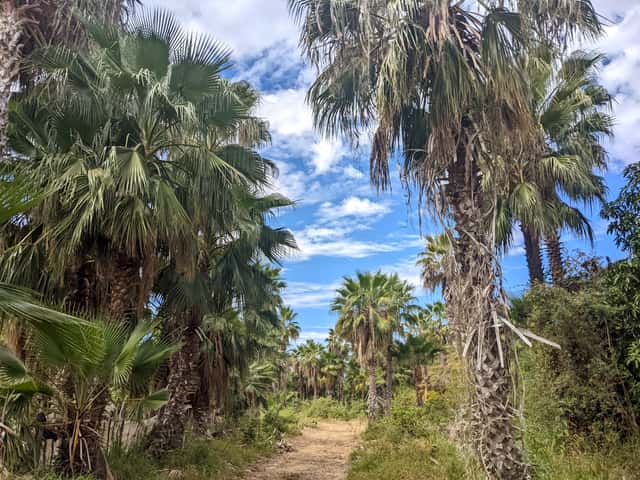
Mexican Fan Palm (Washingtonia robusta) is a easy-care plant from the Arecaceae family. Washingtonia robusta, commonly known as the Mexican Fan Palm or Skyduster, is a fast-growing palm native to Baja California and Sonora, Mexico. Prized for its slender towering trunk and large fan-shaped fronds, it can reach up to 30 meters tall and is widely planted along boulevards, in parks, and i...
Mexican Fan Palm grows up to 30.0m, spread of 300cm, watering every 7 days, -5°C – 45°C, 30–60% humidity. It is not suitable for indoor environments and safe for pets.
Unlike many tropical plants, Mexican Fan Palm tolerates watering mistakes. Best for beginners. Unlike many popular species, Mexican Fan Palm is safe to keep around pets.
How to Care for Mexican Fan Palm?
TLDR: Mexican Fan Palm needs Direct sun, watering every 7 days, and temperatures between -5-45°C with 30-60% humidity.
How Often Should You Water Mexican Fan Palm?
Water once a week during summer. In fall and winter, significantly reduce watering — mature palms tolerate extended dry periods. Avoid waterlogged soil to prevent root rot.
How Much Light Does Mexican Fan Palm Need?
Requires full sun for at least 6 hours per day. Does not tolerate heavy shade. Best suited for open spaces, boulevards, and sunny gardens.
What Is the Best Soil for Mexican Fan Palm?
Adapts to most soil types including sandy, clay, and calcareous soils. Good drainage is essential. Avoid compacted or permanently wet soils which promote fungal root diseases.
What Pot Should You Use for Mexican Fan Palm?
Open ground or large garden bed. Not suitable for long-term container growing due to size.
Care Schedule
Fertilize
Every 90 days
What Is Mexican Fan Palm and Where Does It Come From?
Washingtonia robusta, commonly known as the Mexican Fan Palm or Skyduster, is a fast-growing palm native to Baja California and Sonora, Mexico. Prized for its slender towering trunk and large fan-shaped fronds, it can reach up to 30 meters tall and is widely planted along boulevards, in parks, and in warm-climate gardens worldwide.
How to Propagate Mexican Fan Palm?
Seed Propagation
Use a light, well-draining mix. Keep consistently moist until germination. Transplant seedlings when they reach 30 cm tall.
- 1 Collect ripe seeds from black fruits
- 2 Remove the pulp and rinse seeds thoroughly
- 3 Soak seeds in warm water for 24 hours
- 4 Sow in sandy, moist growing medium at 1 cm depth
- 5 Keep in a warm location above 20°C
- 6 Germination occurs within 2 to 4 weeks
Materials needed:
How Big Does Mexican Fan Palm Grow?
TLDR: Mexican Fan Palm can reach up to 30.0m tall with Fast growth rate.
Max height
30.0m
Spread
3.0m
Growth rate
Fast
Foliage
Evergreen
Plant Uses
Ornamental
Great for decoration
Is your plant showing symptoms?
Click on the symptom to discover possible causes:
What Diseases Commonly Affect Mexican Fan Palm?
TLDR: Mexican Fan Palm is susceptible to 6 known diseases. Monitor regularly for early detection.
Fusarium Wilt
Fusarium wilt is a serious fungal disease caused by the soil-borne fungus Fusarium oxysporum. The fungus invades roots and blocks the water-conducting vessels (xylem) of the plant, causing progressive wilting and eventual death. Host-specific forms of the pathogen exist that attack different plant species.
Root Rot
Root rot is a serious fungal disease that affects the root system of plants, causing them to decay and die. It is primarily caused by overwatering, poor drainage, or soil-borne fungi such as Pythium, Phytophthora, Rhizoctonia, and Fusarium. The disease thrives in waterlogged conditions where roots are deprived of oxygen, making them susceptible to fungal infection.
Spider Mites
Spider mites are tiny arachnids (less than 1/20 inch long) related to spiders and ticks that feed on plant sap. They thrive in hot, dry conditions and can cause significant damage to ornamental and vegetable plants. During severe infestations, crop losses can reach 14% or higher as these pests disrupt vital plant processes including photosynthesis, carbon dioxide absorption, and transpiration.
Scale Insects
Scale insects are small sap-sucking pests that appear as brown, shell-like bumps on plant stems and leaves. There are over 25 species, divided into armored (hard) and unarmored (soft) scales. They feed by piercing plant tissue and extracting sap, which weakens the plant and can lead to yellowing, stunted growth, and even death if left untreated. They also excrete honeydew, which attracts ants and promotes sooty mold growth.
Meaning & Symbolism
Symbol of resilience and tropical elegance, iconic in Mediterranean and coastal landscapes worldwide.
Fun Facts
Can reach 30 meters tall, making it one of the tallest palms used in urban landscaping.
Native to Mexico, it now lines iconic boulevards across Los Angeles, the Mediterranean, and beyond.
Dead fronds hang down around the trunk forming a distinctive 'petticoat', earning it the nickname Petticoat Palm.
Its small black fruits are edible and were historically consumed by indigenous peoples of the Sonoran Desert.
Frequently asked questions
How often should I water a Mexican Fan Palm?
Can I grow a Mexican Fan Palm in a container?
Is the Mexican Fan Palm toxic to pets?
How fast does a Mexican Fan Palm grow?
Compare with similar plants
| Attribute | Difficulty | Light | Watering | Pet Safe |
|---|---|---|---|---|
| Field Maple | Easy | Bright indirect | 14d | ✓ |
| Silver Birch | Easy | Direct sun | 14d | ✓ |
| Cushion Bush | Easy | Direct sun | 14d | ✓ |
| Peruvian peppertree | Easy | Direct sun | 14d | ⚠️ |