Asteraceae
Bietou: Edible Plant
Osteospermum moniliferum
Bietou is a very hardy and low-maintenance shrub. It requires full sun and well-drained soil, and it handles long periods of drought well. Water sparingly—allow the soil to dry out between waterings. Fertilize moderately during the spring and summer. Prune back after flowering to maintain a compact shape. It is excellent as a hedge, pioneer plant, or for coastal landscaping.
Every 14 days
Direct sun
-5° - 35°C
30% - 70%
Categories
What is Bietou?
Bietou (Osteospermum moniliferum) is a easy-care plant from the Asteraceae family. Bietou (Osteospermum moniliferum) is a fast-growing, evergreen shrub in the Asteraceae family, native to the coastal regions of southern Africa—from the Cape Peninsula through KwaZulu-Natal to Mozambique and Zimbabwe. The plant grows up to 2 meters tall and equally wide, forming a compact, rounded g...
Bietou grows up to 2.0m, spread of 200cm, watering every 14 days, -5°C – 35°C, 30–70% humidity. It is not suitable for indoor environments and safe for pets.
Unlike many tropical plants, Bietou tolerates watering mistakes. Best for beginners. Unlike many popular species, Bietou is safe to keep around pets.
How to Care for Bietou?
TLDR: Bietou needs Direct sun, watering every 14 days, and temperatures between -5-35°C with 30-70% humidity.
How Often Should You Water Bietou?
Bietou is drought-tolerant and prefers the soil to dry out between waterings. Water thoroughly approximately every 14 days during summer dry spells. Avoid standing water around the roots—overwatering is the most common mistake. Significantly reduce watering during the winter.
How Much Light Does Bietou Need?
The plant thrives best in full sun (at least 6 hours of direct sunlight daily). It tolerates light shade, but flowering will be less profuse. Avoid heavy shade, as this significantly inhibits growth and flowering.
What Is the Best Soil for Bietou?
Use well-drained, sandy soil with moderate nutrient content. A mixture of sand and loam works well. The soil pH should be between 6.0 and 7.5. Heavy clay or waterlogging must be avoided. The plant performs well in nutrient-poor, coastal soils.
What Pot Should You Use for Bietou?
Bietou is best suited as an outdoor shrub, but it can be grown in large pots (at least 40 liters) with a good drainage layer at the bottom. Use terracotta pots or other porous materials that promote drainage. Always ensure there are drainage holes.
Care Schedule
Fertilize
Every 30 days
What Is Bietou and Where Does It Come From?
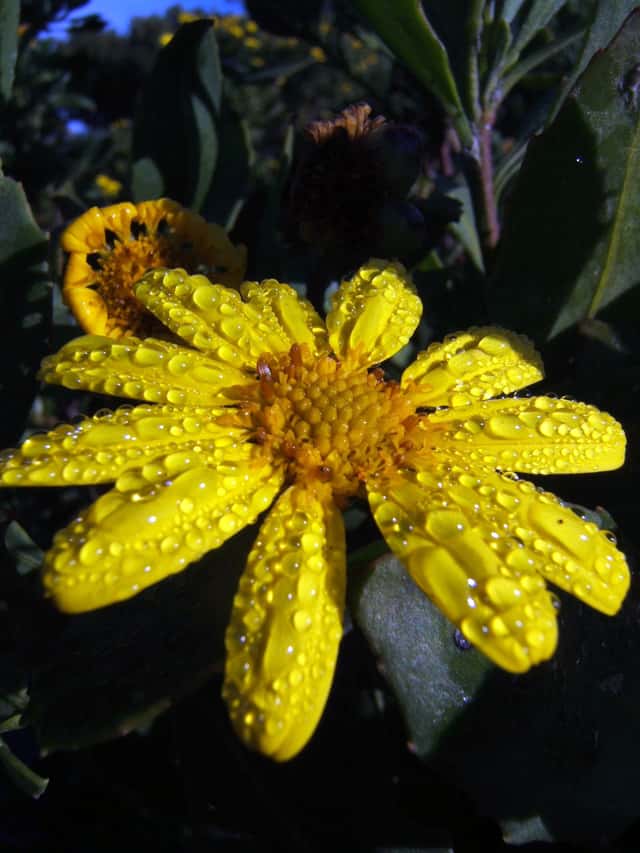
Bietou (Osteospermum moniliferum) is a fast-growing, evergreen shrub in the Asteraceae family, native to the coastal regions of southern Africa—from the Cape Peninsula through KwaZulu-Natal to Mozambique and Zimbabwe. The plant grows up to 2 meters tall and equally wide, forming a compact, rounded growth habit with dark green, slightly serrated leaves. The characteristic yellow flower heads, with a diameter of up to 40 mm, bloom primarily in late autumn and winter, and are highly attractive to bees and other pollinators. After flowering, berry-like fruits develop that ripen into dark brown or black spheres, which are a favorite for birds. The plant is extremely drought-tolerant due to its semi-succulent nature and thrives in well-drained, sandy soil in full sun. It is easy to grow, grows rapidly, and has a lifespan of 8–12 years.
How to Propagate Bietou?
Seed
- 1 Harvest ripe, dark berries and remove the pulp
- 2 Mechanically scarify the seeds (gently scratch with sandpaper) or use chemical methods to break dormancy
- 3 Sow seeds 1 cm deep in well-drained seed-starting mix in spring
- 4 Maintain soil temperature between 18–22 °C (64–72 °F) and keep lightly moist until germination after 2–4 weeks
Cuttings
- 1 Take 10–15 cm cuttings from semi-hardwood growth in late summer or autumn
- 2 Remove the lower leaves and dip the cut surface in rooting hormone
- 3 Plant in a well-drained rooting medium (sand and perlite)
- 4 Keep in partial shade with consistent moisture until roots are established after 4–6 weeks
How Big Does Bietou Grow?
TLDR: Bietou can reach up to 2.0m tall with Fast growth rate.
Max height
2.0m
Spread
2.0m
Growth rate
Fast
Foliage
Evergreen
Plant Uses
Ornamental
Great for decoration
Edible
Can be consumed
Medicinal
Medicinal properties
Medicinal Uses
- Leaves used by the Khoi and San people as a fever reducer in decoctions
- Traditional use against fever and infections in South Africa
Culinary Uses
- The fruits are edible for birds and have historically been used as food by the Khoi people
- The berries can cause mild digestive upset in humans if consumed in large quantities
Is your plant showing symptoms?
Click on the symptom to discover possible causes:
What Diseases Commonly Affect Bietou?
TLDR: Bietou is susceptible to 9 known diseases. Monitor regularly for early detection.
Botrytis
Pythium Root Rot
Pythium root rot is a serious fungal disease caused by various Pythium species including P. aphanidermatum, P. ultimum, and P. irregulare. These water molds are present in practically all cultivated soils and attack plant roots under wet conditions, causing rapid wet rot that can extend into the stem. The disease is favored by poor drainage, overwatering, and specific temperatures depending on the species.
Phytophthora Blight
Devastating fungal disease caused by Phytophthora species (primarily P. capsici and P. infestans), famously responsible for the Irish Potato Famine in the 1840s. Affects all plant parts including roots, stems, leaves, and fruits in warm, wet conditions. The pathogen is technically an oomycete (water mold) that thrives in saturated soils and can survive in soil for 5+ years.
Aphids
Aphids are small, soft-bodied, pear-shaped insects (1/16 to 1/8 inch long) that feed by sucking nutrient-rich sap from plants. They reproduce rapidly and can quickly weaken plants, causing distorted growth and transmitting plant viruses. Aphids come in various colors including green, black, red, yellow, brown, and gray. They secrete honeydew, a sticky substance that attracts ants and encourages sooty mold growth.
Compare with similar plants
| Attribute | Difficulty | Light | Watering | Pet Safe |
|---|---|---|---|---|
| Field Maple | Easy | Bright indirect | 14d | ✓ |
| Silver Birch | Easy | Direct sun | 14d | ✓ |
| Cushion Bush | Easy | Direct sun | 14d | ✓ |
| Wild Lettuce | Medium | Direct sun | 7d | ⚠️ |





