Poaceae
Bahiagrass (Paspalum notatum): Complete Care Guide
Paspalum notatum
Very low maintenance grass. Requires full sun, tolerates drought and poor soils. Mow regularly to keep at 3–7 cm height. Fertilize twice a year with a balanced NPK.
Every 3 days
Direct sun
5° - 40°C
40% - 80%
Categories
What is Bahiagrass?
Bahiagrass (Paspalum notatum) is a easy-care plant from the Poaceae family. Bahiagrass (Paspalum notatum) is a warm-season perennial grass native to South America, widely used for lawns, pastures, roadsides, and erosion control. Known for its exceptional drought tolerance, deep root system, and low maintenance requirements, it thrives in full sun and adapts to poor, sandy s...
Bahiagrass grows up to 75cm, spread of 150cm, watering every 3 days, 5°C – 40°C, 40–80% humidity. It is not suitable for indoor environments and safe for pets.
Unlike many tropical plants, Bahiagrass tolerates watering mistakes. Best for beginners. Unlike many popular species, Bahiagrass is safe to keep around pets.
How to Care for Bahiagrass?
TLDR: Bahiagrass needs Direct sun, watering every 3 days, and temperatures between 5-40°C with 40-80% humidity.
How Often Should You Water Bahiagrass?
Water every 2–3 days during hot, dry periods. Deep, infrequent watering is preferred over frequent shallow irrigation. Avoid prolonged waterlogging.
How Much Light Does Bahiagrass Need?
Requires full sun — at least 6 hours of direct sunlight per day. Does not tolerate shade.
What Is the Best Soil for Bahiagrass?
Adapts to sandy, loamy, or clay soils. Prefers slightly acidic pH (5.5–6.5). Tolerates low-fertility, well-drained soils.
What Pot Should You Use for Bahiagrass?
Not applicable — outdoor ground-cover grass planted directly in soil.
Care Schedule
Fertilize
Every 180 days
What Is Bahiagrass and Where Does It Come From?
Bahiagrass (Paspalum notatum) is a warm-season perennial grass native to South America, widely used for lawns, pastures, roadsides, and erosion control. Known for its exceptional drought tolerance, deep root system, and low maintenance requirements, it thrives in full sun and adapts to poor, sandy soils.
How to Propagate Bahiagrass?
Seeding
Sow in spring or early summer when soil temperatures exceed 20°C. Avoid covering seeds too deeply.
- 1 Prepare soil by tilling and leveling the surface
- 2 Spread seeds evenly (2–4 kg per 100 m²)
- 3 Cover lightly with fine soil and press down
- 4 Keep soil moist until germination
Materials needed:
Sod or plug planting
Keep soil moist for the first 2 weeks. Avoid heavy foot traffic before rooting.
- 1 Cut sod pieces or plugs from healthy grass
- 2 Plant in prepared soil at 30 cm spacing
- 3 Press firmly to ensure soil contact
- 4 Water thoroughly after planting
Materials needed:
How Big Does Bahiagrass Grow?
TLDR: Bahiagrass can reach up to 75cm tall with Fast growth rate.
Max height
75cm
Spread
1.5m
Growth rate
Fast
Foliage
Semi-evergreen
Plant Uses
Ground Cover
Soil coverage
Ornamental
Great for decoration
Is your plant showing symptoms?
Click on the symptom to discover possible causes:
What Diseases Commonly Affect Bahiagrass?
TLDR: Bahiagrass is susceptible to 6 known diseases. Monitor regularly for early detection.
Root Rot
Root rot is a serious fungal disease that affects the root system of plants, causing them to decay and die. It is primarily caused by overwatering, poor drainage, or soil-borne fungi such as Pythium, Phytophthora, Rhizoctonia, and Fusarium. The disease thrives in waterlogged conditions where roots are deprived of oxygen, making them susceptible to fungal infection.
Pythium Root Rot
Pythium root rot is a serious fungal disease caused by various Pythium species including P. aphanidermatum, P. ultimum, and P. irregulare. These water molds are present in practically all cultivated soils and attack plant roots under wet conditions, causing rapid wet rot that can extend into the stem. The disease is favored by poor drainage, overwatering, and specific temperatures depending on the species.
Leaf Spot
Leaf spot is a common fungal disease caused by various pathogens including Alternaria, Ascochyta, Colletotrichum, Septoria, and Venturia. It primarily affects leaves, causing discolored spots that can lead to premature leaf drop if left untreated.
Southern Blight
Southern blight is a devastating soilborne fungal disease caused by Athelia rolfsii (formerly Sclerotium rolfsii), affecting over 500 plant species including vegetables, ornamentals, and fruit crops. The fungus survives in soil through resting structures called sclerotia that resemble mustard seeds and can remain viable for years.
Fun Facts
Bahiagrass has one of the deepest root systems of any lawn grass, making it exceptionally drought-resistant.
It is the most common pasture grass in Florida, introduced from South America in the 1910s.
Its tough, wiry leaves can withstand heavy foot traffic, making it popular for sports fields and public parks.
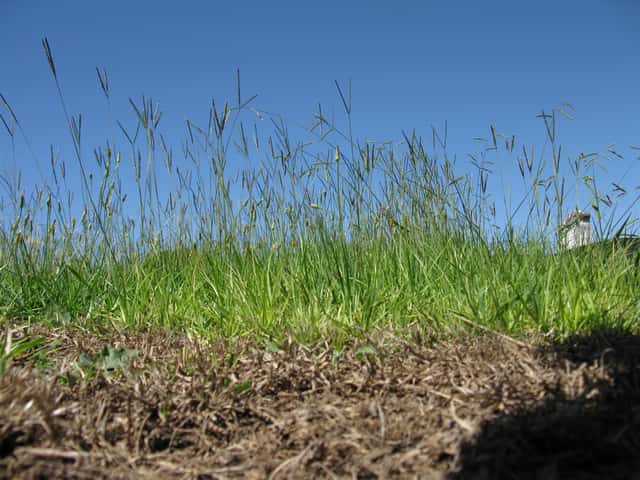
Bahiagrass produces a distinctive V-shaped seed head that stands tall above the lawn in summer.
Frequently asked questions
How often should I water Bahiagrass?
Does Bahiagrass need fertilizing?
How often should I mow Bahiagrass?
Does Bahiagrass tolerate shade?
Is Bahiagrass safe for pets?
Compare with similar plants
| Attribute | Difficulty | Light | Watering | Pet Safe |
|---|---|---|---|---|
| Field Maple | Easy | Bright indirect | 14d | ✓ |
| Silver Birch | Easy | Direct sun | 14d | ✓ |
| Cushion Bush | Easy | Direct sun | 14d | ✓ |
| Peruvian peppertree | Easy | Direct sun | 14d | ⚠️ |





