Rosaceae
European Pear (Pyrus communis): Complete Growing & Care Guide
Pyrus communis
European Pear is a moderately demanding outdoor tree. It thrives in full sun, requires regular watering, well-draining soil, and annual pruning in late winter. It is cold-hardy down to USDA zone 4 and produces abundant fruit with proper care.
Every 10 days
Direct sun
-20° - 35°C
50% - 75%
Categories
What is European Pear?
European Pear (Pyrus communis) is a medium-care plant from the Rosaceae family. Pyrus communis, the European Pear, is one of the oldest cultivated fruit trees in human history, originating in the temperate regions of Europe and Western Asia. It belongs to the Rosaceae family and is celebrated for producing some of the world's most beloved fruit cultivars — including Bartlett (W...
European Pear grows up to 12.0m, spread of 900cm, watering every 10 days, -20°C – 35°C, 50–75% humidity. It is not suitable for indoor environments and safe for pets.
Unlike many popular species, European Pear is safe to keep around pets.
How to Care for European Pear?
TLDR: European Pear needs Direct sun, watering every 10 days, and temperatures between -20-35°C with 50-75% humidity.
How Often Should You Water European Pear?
Water deeply every 7–14 days during the growing season, especially during dry spells. Young trees need more frequent watering to establish roots. Avoid waterlogging as pear trees are susceptible to root rot. Reduce watering in autumn as the tree goes dormant.
How Much Light Does European Pear Need?
European Pear demands full sun — at least 6–8 hours of direct sunlight per day. Plant in an open, unshaded position for optimal fruit production. Poor light results in weak growth and reduced fruiting.
What Is the Best Soil for European Pear?
Plant in well-draining, loamy to sandy loam soil enriched with organic matter. Avoid heavy clay that retains water. Ideal pH is 6.0–7.5. Incorporate compost at planting time to improve soil structure and fertility.
What Pot Should You Use for European Pear?
Outdoors in garden soil or large orchard planting. Not suitable for containers except dwarf rootstock cultivars.
Care Schedule
Fertilize
Every 60 days
What Is European Pear and Where Does It Come From?
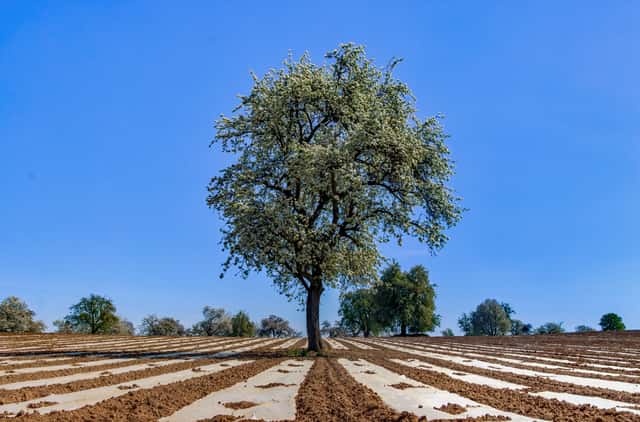
Pyrus communis, the European Pear, is one of the oldest cultivated fruit trees in human history, originating in the temperate regions of Europe and Western Asia. It belongs to the Rosaceae family and is celebrated for producing some of the world's most beloved fruit cultivars — including Bartlett (Williams), Bosc, Anjou, and Conference. A deciduous tree that can reach up to 12 meters in height, it bursts into beautiful white blossoms each spring before leafing out, and bears sweet, juicy fruit in late summer and early autumn.
How to Propagate European Pear?
Grafting
Grafting is the primary commercial propagation method for pear cultivars. Use clean, sharp tools. Ensure tight cambium contact for best results.
- 1 Select a healthy scion from a desired cultivar
- 2 Choose a vigorous rootstock compatible with European Pear
- 3 Make a clean cleft or whip-and-tongue cut
- 4 Join scion to rootstock, align cambium layers
- 5 Seal with grafting tape and wax
- 6 Place in a sheltered spot until union establishes
Materials needed:
Seed propagation
Seeds do not produce true-to-type fruit. For named cultivars, always use grafting. Seed-grown trees take 8–10 years to fruit.
- 1 Collect fresh seeds from ripe fruit
- 2 Stratify seeds in moist sand in the refrigerator for 60–90 days
- 3 Sow in well-draining seed compost in spring
- 4 Keep moist and warm until germination
- 5 Transplant seedlings when 10–15 cm tall
Materials needed:
How Big Does European Pear Grow?
TLDR: European Pear can reach up to 12.0m tall with Medium growth rate.
Max height
12.0m
Spread
9.0m
Growth rate
Medium
Foliage
Deciduous
Plant Uses
Edible
Can be consumed
Ornamental
Great for decoration
Culinary Uses
- Fruits eaten fresh, poached, baked, or dried. Used in preserves, jams, jellies, cider (perry), wine, spirits (Poire Williams), and desserts. Pairs well with cheese, almonds, chocolate, and cinnamon. Cultivars like Bartlett/Williams are the most popular for canning.
Is your plant showing symptoms?
Click on the symptom to discover possible causes:
What Diseases Commonly Affect European Pear?
TLDR: European Pear is susceptible to 11 known diseases. Monitor regularly for early detection.
Fire Blight
Fire blight is a highly destructive and contagious bacterial disease caused by Erwinia amylovora. It primarily affects plants in the Rosaceae family, including apple, pear, quince trees, and various ornamental plants. The disease can destroy an entire orchard in a single growing season under ideal conditions, with the bacterium moving approximately 11 inches per week in new growth.
Powdery Mildew
Powdery mildew is a common fungal disease caused by various fungi species including Erysiphe, Podosphaera, Oïdium, and Leveillula. It affects over 10,000 plant species worldwide. The disease thrives in warm, dry climates with high humidity and appears as a distinctive white powdery coating on plant surfaces.
Anthracnose
Anthracnose is a fungal disease caused by fungi in the genus Colletotrichum that affects many plants, including vegetables, fruits, and trees. The disease thrives in cool, wet conditions, causing dark, sunken lesions on leaves, stems, flowers, and fruits.
Canker
Canker is a disease caused by various fungi and bacteria that create necrotic, sunken areas on bark of branches, stems, and trunks. Pathogens enter through wounds and natural openings, especially when plants are stressed. Canker can gradually weaken or kill branches by disrupting water and nutrient flow.
Meaning & Symbolism
The pear is a symbol of longevity, good health, and immortality in many cultures. In Western Europe it represents abundance and prosperity. In Chinese tradition, the pear (li) is associated with immortality and hope.
Fun Facts
Pyrus communis has been cultivated for over 3,000 years and was a staple fruit in ancient Rome and Greece.
The classic Bartlett pear is the same as the Williams pear — it was renamed after Enoch Bartlett who distributed it in the United States.
A mature European Pear tree can live for over 100 years and still produce fruit.
Fire blight, caused by the bacterium Erwinia amylovora, is the most devastating disease affecting pear orchards worldwide.
Frequently asked questions
How often should I water my European Pear tree?
Does European Pear need full sun?
What are the most popular European Pear cultivars?
Is European Pear toxic to pets?
When does the European Pear bloom?
Compare with similar plants
| Attribute | Difficulty | Light | Watering | Pet Safe |
|---|---|---|---|---|
| Dark Fieldcap | Medium | Low light | 2d | ⚠️ |
| Azalea | Medium | Partial shade | 3d | ⚠️ |
| Bougainvillea | Medium | Direct sun | 7d | ⚠️ |
| Wild Lettuce | Medium | Direct sun | 7d | ⚠️ |



