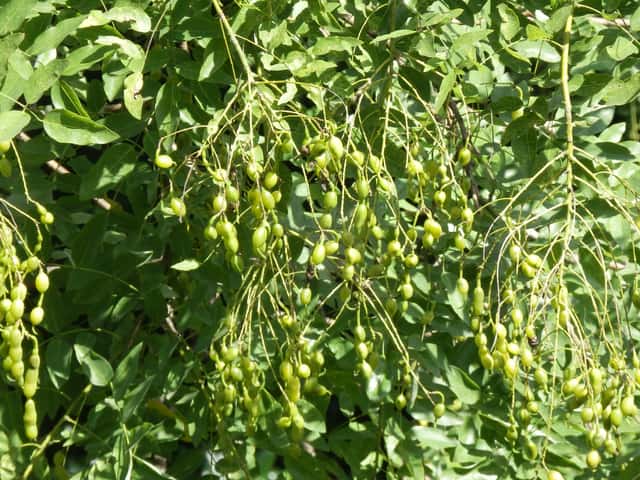
Fabaceae
Japanese Pagoda Tree: Full Sun Plant
Styphnolobium japonicum
Large deciduous tree, hardy and adaptable. Requires full sun, watering every 10-14 days, and is drought-tolerant once established. Seeds and pods are toxic.
Every 12 days
Direct sun
-28° - 38°C
30% - 70%
Categories
What is Japanese Pagoda Tree?
Japanese Pagoda Tree (Styphnolobium japonicum) is a medium-care plant from the Fabaceae family. The Japanese Pagoda Tree (Styphnolobium japonicum), formerly known as Sophora japonica, is a large deciduous tree native to China and widely cultivated across East Asia. Belonging to the Fabaceae family, it can reach up to 25 meters in height and is highly valued for its generous shade and fragrant...
Japanese Pagoda Tree grows up to 23.0m, spread of 2300cm, watering every 12 days, -28°C – 38°C, 30–70% humidity. It is not suitable for indoor environments and not safe for pets.
Without precautions, ingestion can cause irritation in pets. Keep out of reach of cats and dogs.
How to Care for Japanese Pagoda Tree?
TLDR: Japanese Pagoda Tree needs Direct sun, watering every 12 days, and temperatures between -28-38°C with 30-70% humidity.
How Often Should You Water Japanese Pagoda Tree?
Water every 10 to 14 days, allowing the soil to partially dry out between waterings. Once established, the tree is drought-tolerant and does not require frequent watering. Avoid waterlogged soil.
How Much Light Does Japanese Pagoda Tree Need?
Requires full sun to thrive, with at least 6 hours of direct sunlight per day. Avoid locations with heavy shade, as this hinders growth and flowering.
What Is the Best Soil for Japanese Pagoda Tree?
Prefers well-drained loamy soils with a pH between 5.5 and 8.5. It adapts well to poor, sandy, or slightly alkaline soils.
What Pot Should You Use for Japanese Pagoda Tree?
Not suitable for pots. Plant in open ground in large gardens, parks, or avenues.
Care Schedule
Fertilize
Every 60 days
What Is Japanese Pagoda Tree and Where Does It Come From?
The Japanese Pagoda Tree (Styphnolobium japonicum), formerly known as Sophora japonica, is a large deciduous tree native to China and widely cultivated across East Asia. Belonging to the Fabaceae family, it can reach up to 25 meters in height and is highly valued for its generous shade and fragrant creamy-white flowers produced in summer. It is a hardy tree, adaptable to poor soils and urban pollution, frequently used in parks, avenues, and historic gardens.
How Big Does Japanese Pagoda Tree Grow?
TLDR: Japanese Pagoda Tree can reach up to 23.0m tall with Medium growth rate.
Max height
23.0m
Spread
23.0m
Growth rate
Medium
Foliage
Deciduous
Warning: Toxic Plant
This plant can be toxic if ingested. Keep out of reach of:
Plant Uses
Ornamental
Great for decoration
Medicinal
Medicinal properties
Medicinal Uses
- Flowers and buds used in traditional Chinese medicine as anti-inflammatories and to treat circulatory disorders
- Rich in rutin, especially in the flower ovaries
- Leaves used as a laxative in folk medicine
Is your plant showing symptoms?
Click on the symptom to discover possible causes:
What Diseases Commonly Affect Japanese Pagoda Tree?
TLDR: Japanese Pagoda Tree is susceptible to 5 known diseases. Monitor regularly for early detection.
Powdery Mildew
Powdery mildew is a common fungal disease caused by various fungi species including Erysiphe, Podosphaera, Oïdium, and Leveillula. It affects over 10,000 plant species worldwide. The disease thrives in warm, dry climates with high humidity and appears as a distinctive white powdery coating on plant surfaces.
Canker
Canker is a disease caused by various fungi and bacteria that create necrotic, sunken areas on bark of branches, stems, and trunks. Pathogens enter through wounds and natural openings, especially when plants are stressed. Canker can gradually weaken or kill branches by disrupting water and nutrient flow.
Verticillium Wilt
Verticillium wilt is a soil-borne fungal disease caused primarily by the fungi Verticillium dahliae and V. albo-atrum. These pathogens infect plant roots and grow within the vascular tissues, blocking water and nutrient transport, resulting in wilting and eventual plant death. The disease affects over 350 plant species including vegetables, fruits, ornamental flowers, and trees. The fungi can survive in soil for more than 10 years as resistant structures called microsclerotia.
Rust
Rust is a common fungal disease caused by fungi in the order Pucciniales that affects a wide variety of plants. The disease gets its name from the characteristic orange, yellow, or reddish-brown pustules that appear on leaves, resembling metal rust. This obligate fungal parasite requires living plants to survive and can cause significant economic losses in agricultural crops.
Meaning & Symbolism
In East Asian tradition, the pagoda tree symbolizes longevity, wisdom, and good fortune. It was frequently planted near temples and government buildings as a symbol of prosperity.
Compare with similar plants
| Attribute | Difficulty | Light | Watering | Pet Safe |
|---|---|---|---|---|
| Dark Fieldcap | Medium | Low light | 2d | ⚠️ |
| Azalea | Medium | Partial shade | 3d | ⚠️ |
| Bougainvillea | Medium | Direct sun | 7d | ⚠️ |
| Wild Lettuce | Medium | Direct sun | 7d | ⚠️ |



