Solanaceae
Lily of the Valley Vine: Edible Plant
Salpichroa origanifolia
A fast-growing and hardy plant, ideal for Mediterranean or temperate outdoor gardens. It requires partial shade or partial sun (4–6 hours of direct light), well-drained soil, and moderate watering every 3–5 days during the growing season. It tolerates mild frosts down to -3 °C (27 °F). Its rhizomatous system makes it very resilient but also potentially invasive; it is advisable to control its spread with underground barriers.
Every 4 days
Partial shade
-3° - 35°C
30% - 50%
Categories
What is Lily of the Valley Vine?
Lily of the Valley Vine (Salpichroa origanifolia) is a easy-care plant from the Solanaceae family. Salpichroa origanifolia, popularly known as 'Lily of the Valley Vine' or 'Cock's Eggs', is a perennial, rhizomatous herb belonging to the Solanaceae family, native to South America—Argentina, Uruguay, Brazil, Bolivia, and Peru. Its climbing and highly branched stems can reach up to 3 meters (10 feet...
Lily of the Valley Vine grows up to 3.0m, spread of 100cm, watering every 4 days, -3°C – 35°C, 30–50% humidity. It is not suitable for indoor environments and not safe for pets.
Unlike many tropical plants, Lily of the Valley Vine tolerates watering mistakes. Best for beginners. Without precautions, ingestion can cause irritation in pets. Keep out of reach of cats and dogs.
How to Care for Lily of the Valley Vine?
TLDR: Lily of the Valley Vine needs Partial shade, watering every 4 days, and temperatures between -3-35°C with 30-50% humidity.
How Often Should You Water Lily of the Valley Vine?
Water every 3–5 days, keeping the substrate uniformly moist but not waterlogged. Insert your finger up to the second knuckle: if the top centimeter (0.4 inches) is dry, it's time to water. Reduce frequency in winter. Avoid overwatering to prevent root rot.
How Much Light Does Lily of the Valley Vine Need?
Prefers partial shade or partial sun, with 4–6 hours of direct light per day. In warm climates, an east or west-facing exposure is ideal to avoid the most intense midday hours. It does not thrive well indoors due to lack of light.
What Is the Best Soil for Lily of the Valley Vine?
Use a well-drained, loose substrate enriched with organic matter. Garden soil mixes with sand or perlite work well. The ideal pH is between 6.0 and 7.0. Avoid compacted or clayey soils that retain too much moisture.
What Pot Should You Use for Lily of the Valley Vine?
For pot cultivation, use large containers (minimum 30 cm / 12 inches in diameter) with ample drainage holes. Terracotta or wooden pots promote substrate breathability and reduce the risk of waterlogging. It is not the most suitable plant for indoor use.
Care Schedule
Fertilize
Every 30 days
What Is Lily of the Valley Vine and Where Does It Come From?
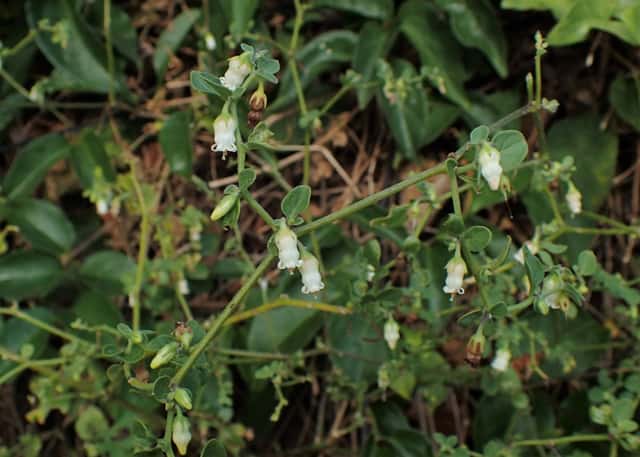
Salpichroa origanifolia, popularly known as 'Lily of the Valley Vine' or 'Cock's Eggs', is a perennial, rhizomatous herb belonging to the Solanaceae family, native to South America—Argentina, Uruguay, Brazil, Bolivia, and Peru. Its climbing and highly branched stems can reach up to 3 meters (10 feet) in length; its leaves are elliptical or oval, and its flowers are small, bell-shaped, and white or greenish-white. In late summer, it produces oval berries, 10–15 mm (0.4–0.6 inches) in size, that ripen from green to white or pale yellow, with a sweet and edible taste. The plant has naturalized in regions of Europe, California, and Tasmania, where it is considered invasive.
How to Propagate Lily of the Valley Vine?
How Big Does Lily of the Valley Vine Grow?
TLDR: Lily of the Valley Vine can reach up to 3.0m tall with Fast growth rate.
Max height
3.0m
Spread
1.0m
Growth rate
Fast
Foliage
Evergreen
Warning: Toxic Plant
This plant can be toxic if ingested. Keep out of reach of:
Plant Uses
Ornamental
Great for decoration
Medicinal
Medicinal properties
Edible
Can be consumed
Medicinal Uses
- Root decoction used in folk medicine to treat skin conditions and chilblains
- Leaf juice is traditionally used to prevent hair loss
- Mixture of leaves and flowers with tasi used as a galactagogue in traditional South American medicine
- The plant contains flavonoids and alkaloids with anti-inflammatory, diuretic, and antimicrobial properties
Culinary Uses
- Ripe berries (white or pale yellow) are sweet and edible
- They are used in the preparation of jams, ice creams, and artisanal juices
- Green and unripe fruits are toxic and should not be consumed
Is your plant showing symptoms?
Click on the symptom to discover possible causes:
What Diseases Commonly Affect Lily of the Valley Vine?
TLDR: Lily of the Valley Vine is susceptible to 5 known diseases. Monitor regularly for early detection.
Aphids
Aphids are small, soft-bodied, pear-shaped insects (1/16 to 1/8 inch long) that feed by sucking nutrient-rich sap from plants. They reproduce rapidly and can quickly weaken plants, causing distorted growth and transmitting plant viruses. Aphids come in various colors including green, black, red, yellow, brown, and gray. They secrete honeydew, a sticky substance that attracts ants and encourages sooty mold growth.
Spider Mites
Spider mites are tiny arachnids (less than 1/20 inch long) related to spiders and ticks that feed on plant sap. They thrive in hot, dry conditions and can cause significant damage to ornamental and vegetable plants. During severe infestations, crop losses can reach 14% or higher as these pests disrupt vital plant processes including photosynthesis, carbon dioxide absorption, and transpiration.
Root Rot
Root rot is a serious fungal disease that affects the root system of plants, causing them to decay and die. It is primarily caused by overwatering, poor drainage, or soil-borne fungi such as Pythium, Phytophthora, Rhizoctonia, and Fusarium. The disease thrives in waterlogged conditions where roots are deprived of oxygen, making them susceptible to fungal infection.
Powdery Mildew
Powdery mildew is a common fungal disease caused by various fungi species including Erysiphe, Podosphaera, Oïdium, and Leveillula. It affects over 10,000 plant species worldwide. The disease thrives in warm, dry climates with high humidity and appears as a distinctive white powdery coating on plant surfaces.
Compare with similar plants
| Attribute | Difficulty | Light | Watering | Pet Safe |
|---|---|---|---|---|
| Field Maple | Easy | Bright indirect | 14d | ✓ |
| Silver Birch | Easy | Direct sun | 14d | ✓ |
| Common Blanketflower | Easy | Direct sun | 10d | ✓ |
| Cushion Bush | Easy | Direct sun | 14d | ✓ |





