Solanaceae
Seaside Petunia: Complete Calibrachoa parviflora Care Guide
Calibrachoa parviflora
Easy-care plant requiring full sun, well-drained slightly acidic soil, and regular watering. Water when the top of the soil begins to dry. Fertilize every two weeks during the growing season. Deadhead spent flowers to encourage continuous blooming.
Every 3 days
Bright indirect
5° - 35°C
40% - 70%
Categories
What is Seaside Petunia?
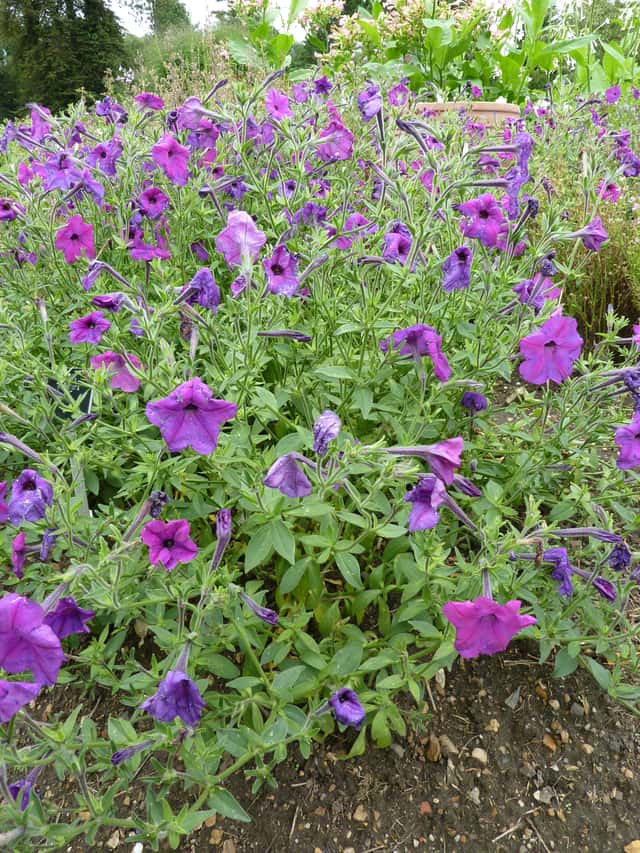
Seaside Petunia (Calibrachoa parviflora) is a easy-care plant from the Solanaceae family. Calibrachoa parviflora, commonly known as Seaside Petunia, is a small, trailing wildflower native to coastal and riparian habitats across Mexico, Central America, and South America. It produces tiny bell-shaped flowers under 1 cm wide, usually purple with a pale throat. It is the wild ancestor of mo...
Seaside Petunia grows up to 30cm, spread of 60cm, watering every 3 days, 5°C – 35°C, 40–70% humidity. It is suitable for indoor environments and safe for pets.
Unlike many tropical plants, Seaside Petunia tolerates watering mistakes. Best for beginners. Unlike many popular species, Seaside Petunia is safe to keep around pets. Without adequate drainage, root rot can develop within 7 days.
How to Care for Seaside Petunia?
TLDR: Seaside Petunia needs Bright indirect, watering every 3 days, and temperatures between 5-35°C with 40-70% humidity.
How Often Should You Water Seaside Petunia?
Water every 2-4 days when the top of the soil feels dry. Avoid waterlogging — roots are sensitive to standing water. In hanging baskets or hot weather, daily watering may be needed.
How Much Light Does Seaside Petunia Need?
Provide at least 6-8 hours of direct sunlight daily. Insufficient light significantly reduces flowering and causes leggy growth.
What Is the Best Soil for Seaside Petunia?
Use well-draining potting mix with pH 5.5-6.5. Add perlite to improve aeration. Avoid compacted or clay-heavy soils that retain excess moisture.
What Pot Should You Use for Seaside Petunia?
Hanging baskets or wide-rim containers best showcase its trailing habit. Use pots with drainage holes, minimum 20 cm diameter.
Care Schedule
Fertilize
Every 14 days
Repot
Every 365 days
What Is Seaside Petunia and Where Does It Come From?
Calibrachoa parviflora, commonly known as Seaside Petunia, is a small, trailing wildflower native to coastal and riparian habitats across Mexico, Central America, and South America. It produces tiny bell-shaped flowers under 1 cm wide, usually purple with a pale throat. It is the wild ancestor of modern garden Calibrachoa hybrids (million bells). The plant creeps along the ground, rooting at nodes, and thrives in moist, well-drained soils near streams and open slopes.
How to Propagate Seaside Petunia?
Stem Cutting
Take cuttings in early spring for best results. Sterilize cutting tools before use.
- 1 Cut a healthy stem 8-10 cm long, just below a node
- 2 Remove lower leaves, keeping 2-3 at the tip
- 3 Dip the base in rooting hormone
- 4 Plant in moist, well-draining potting mix
- 5 Keep in bright indirect light with consistent moisture until rooted
Materials needed:
Seed Sowing
Do not bury seeds. Keep the medium consistently moist but not soggy.
- 1 Surface-sow seeds on moist medium without covering — they need light to germinate
- 2 Maintain 20-24°C and high humidity
- 3 Transplant seedlings when 5-7 cm tall
Materials needed:
How Big Does Seaside Petunia Grow?
TLDR: Seaside Petunia can reach up to 30cm tall with Medium growth rate.
Max height
30cm
Spread
60cm
Growth rate
Medium
Foliage
Semi-evergreen
Plant Uses
Ornamental
Great for decoration
Ground Cover
Soil coverage
Is your plant showing symptoms?
Click on the symptom to discover possible causes:
What Diseases Commonly Affect Seaside Petunia?
TLDR: Seaside Petunia is susceptible to 15 known diseases. Monitor regularly for early detection.
Root Rot
Root rot is a serious fungal disease that affects the root system of plants, causing them to decay and die. It is primarily caused by overwatering, poor drainage, or soil-borne fungi such as Pythium, Phytophthora, Rhizoctonia, and Fusarium. The disease thrives in waterlogged conditions where roots are deprived of oxygen, making them susceptible to fungal infection.
Fusarium Wilt
Fusarium wilt is a serious fungal disease caused by the soil-borne fungus Fusarium oxysporum. The fungus invades roots and blocks the water-conducting vessels (xylem) of the plant, causing progressive wilting and eventual death. Host-specific forms of the pathogen exist that attack different plant species.
Pythium Root Rot
Pythium root rot is a serious fungal disease caused by various Pythium species including P. aphanidermatum, P. ultimum, and P. irregulare. These water molds are present in practically all cultivated soils and attack plant roots under wet conditions, causing rapid wet rot that can extend into the stem. The disease is favored by poor drainage, overwatering, and specific temperatures depending on the species.
Phytophthora Root Rot
Disease caused by fungus-like organisms (oomycetes) that live in soil and can survive for years. It affects roots, stem, and crown of plants, being especially severe in waterlogged or poorly drained soils. It is the second most common cause of root rot in trees and shrubs.
Meaning & Symbolism
Symbolizes grace, delicacy, and floral abundance. Associated with natural coastal beauty and the wild spirit of New World flora.
Fun Facts
Calibrachoa parviflora is the wild ancestor of all modern million bells garden hybrids grown worldwide.
Its flowers are less than 1 cm wide — among the smallest in the Solanaceae family.
The plant can root at stem nodes when they touch moist soil, naturally spreading along streambanks.
It holds a wetland indicator status (FACW) in the US, naturally growing along streams and muddy flats.
Frequently asked questions
How often should I water Seaside Petunia?
Is Calibrachoa parviflora toxic to cats and dogs?
Why has my Seaside Petunia stopped blooming?
How is Calibrachoa parviflora different from hybrid Calibrachoa?
Can I grow Seaside Petunia indoors?
Compare with similar plants
| Attribute | Difficulty | Light | Watering | Pet Safe |
|---|---|---|---|---|
| Small Scabious | Easy | Direct sun | 7d | ✓ |
| Field Maple | Easy | Bright indirect | 14d | ✓ |
| Silver Birch | Easy | Direct sun | 14d | ✓ |
| Red valerian | Easy | Direct sun | 10d | ✓ |



