Pinaceae
Smooth-bark Mexican Pine: Full Sun Plant
Pinus pseudostrobus
Requires full sun and well-drained soil; it is drought-tolerant once established but benefits from regular watering during the first year. It prefers temperate climates with rainy summers and cool winters; it withstands moderate frosts. Not suitable for pots or indoors: it requires open space to develop its root system and crown.
Every 14 days
Direct sun
-9° - 35°C
30% - 70%
Categories
What is Smooth-bark Mexican Pine?
Smooth-bark Mexican Pine (Pinus pseudostrobus) is a easy-care plant from the Pinaceae family. The Smooth-bark Mexican Pine (Pinus pseudostrobus) is a large conifer native to the highlands of Mexico and Central America, where it grows in pine-oak forests between 850 and 3,250 meters in altitude. It is distinguished by its smooth, grayish bark in young specimens, which becomes rougher and crac...
Smooth-bark Mexican Pine grows up to 40.0m, spread of 1800cm, watering every 14 days, -9°C – 35°C, 30–70% humidity. It is not suitable for indoor environments and safe for pets.
Unlike many tropical plants, Smooth-bark Mexican Pine tolerates watering mistakes. Best for beginners. Unlike many popular species, Smooth-bark Mexican Pine is safe to keep around pets.
How to Care for Smooth-bark Mexican Pine?
TLDR: Smooth-bark Mexican Pine needs Direct sun, watering every 14 days, and temperatures between -9-35°C with 30-70% humidity.
How Often Should You Water Smooth-bark Mexican Pine?
Water deeply every 2 weeks during establishment; once mature, the Smooth-bark Mexican Pine tolerates drought well and only needs supplemental watering during very dry summers.
How Much Light Does Smooth-bark Mexican Pine Need?
Requires direct full sun throughout the day; growth becomes weak and leggy in partial or full shade.
What Is the Best Soil for Smooth-bark Mexican Pine?
Prefers well-drained, slightly acidic soils (pH 5.0-6.5), of volcanic or sandy origin; it does not tolerate waterlogging or compacted soils.
What Pot Should You Use for Smooth-bark Mexican Pine?
Not recommended for long-term potting: it is a large forest tree that needs to be planted directly in the ground after the seedling stage.
Care Schedule
Fertilize
Every 180 days
What Is Smooth-bark Mexican Pine and Where Does It Come From?
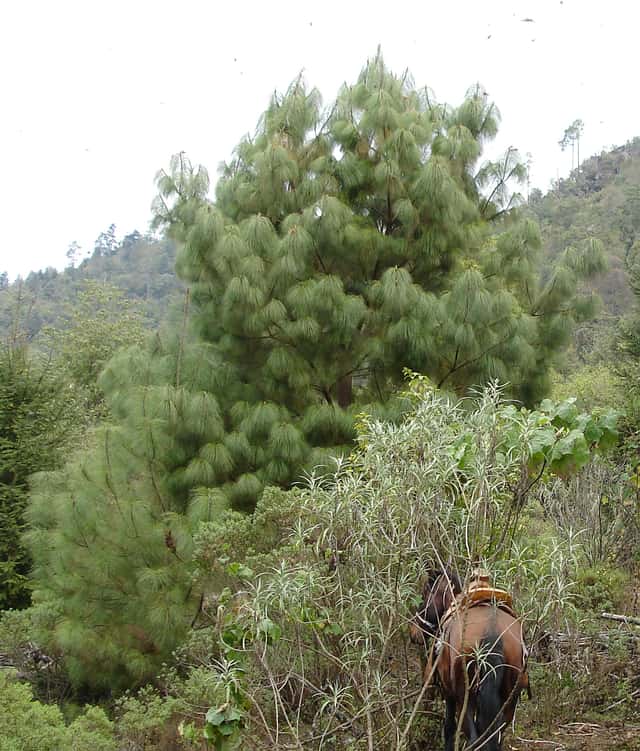
The Smooth-bark Mexican Pine (Pinus pseudostrobus) is a large conifer native to the highlands of Mexico and Central America, where it grows in pine-oak forests between 850 and 3,250 meters in altitude. It is distinguished by its smooth, grayish bark in young specimens, which becomes rougher and cracked with age, and by its long, drooping needles grouped in fascicles of five. In its natural habitat, it can exceed 30 meters in height, with a dense, rounded crown. It is a fast-growing species, drought-tolerant once established, and valued both for its timber and its ornamental use in temperate to warm climates.
How Big Does Smooth-bark Mexican Pine Grow?
TLDR: Smooth-bark Mexican Pine can reach up to 40.0m tall with Fast growth rate.
Max height
40.0m
Spread
18.0m
Growth rate
Fast
Foliage
Evergreen
Plant Uses
Ornamental
Great for decoration
Air Purifying
Improves air quality
Is your plant showing symptoms?
Click on the symptom to discover possible causes:
What Diseases Commonly Affect Smooth-bark Mexican Pine?
TLDR: Smooth-bark Mexican Pine is susceptible to 3 known diseases. Monitor regularly for early detection.
Rust
Rust is a common fungal disease caused by fungi in the order Pucciniales that affects a wide variety of plants. The disease gets its name from the characteristic orange, yellow, or reddish-brown pustules that appear on leaves, resembling metal rust. This obligate fungal parasite requires living plants to survive and can cause significant economic losses in agricultural crops.
Canker
Canker is a disease caused by various fungi and bacteria that create necrotic, sunken areas on bark of branches, stems, and trunks. Pathogens enter through wounds and natural openings, especially when plants are stressed. Canker can gradually weaken or kill branches by disrupting water and nutrient flow.
Hemiptera
Meaning & Symbolism
Represents resilience, longevity, and strength; in the Mexican highlands, it symbolizes perseverance against harsh mountain winters.
Compare with similar plants
| Attribute | Difficulty | Light | Watering | Pet Safe |
|---|---|---|---|---|
| Field Maple | Easy | Bright indirect | 14d | ✓ |
| Silver Birch | Easy | Direct sun | 14d | ✓ |
| Cushion Bush | Easy | Direct sun | 14d | ✓ |
| Peruvian peppertree | Easy | Direct sun | 14d | ⚠️ |