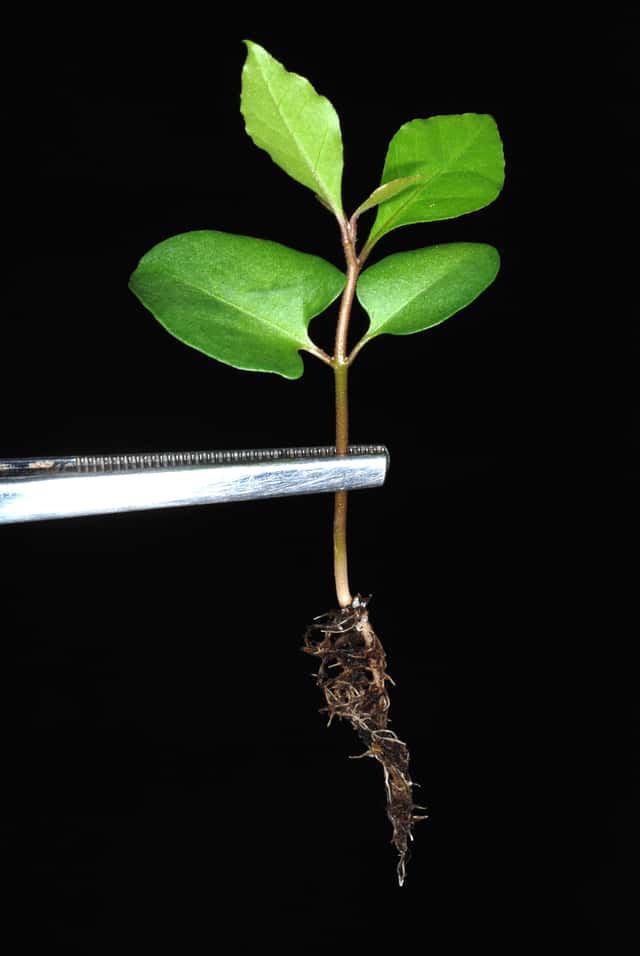
Nyctaginaceae
Pull-and-hold: Full Sun Plant
Pisonia aculeata
A robust and low-maintenance plant, adapted to outdoor tropical environments with plenty of sun. Requires moderate watering, allowing the soil to dry out between waterings. Does not tolerate waterlogging. Periodic pruning is recommended to control its vigorous growth.
Every 14 days
Direct sun
15° - 32°C
50% - 80%
Categories
What is Pull-and-hold?
Pull-and-hold (Pisonia aculeata) is a medium-care plant from the Nyctaginaceae family. Pisonia aculeata, known as pull-and-hold or devil's claws, is a tropical thorny climber in the Nyctaginaceae family. Native to the tropical regions of the Americas and the Caribbean, this vigorous plant develops long branches armed with recurved thorns—like hooks—that cling to other plants and surfa...
Pull-and-hold grows up to 15.0m, spread of 1000cm, watering every 14 days, 15°C – 32°C, 50–80% humidity. It is not suitable for indoor environments and safe for pets.
Unlike many popular species, Pull-and-hold is safe to keep around pets.
How to Care for Pull-and-hold?
TLDR: Pull-and-hold needs Direct sun, watering every 14 days, and temperatures between 15-32°C with 50-80% humidity.
How Often Should You Water Pull-and-hold?
Water every 14 days or when the top of the substrate is dry. Avoid waterlogging—it is sensitive to root rot in poorly drained soil. During periods of intense drought, slightly increase the frequency.
How Much Light Does Pull-and-hold Need?
Prefers full sun to partial shade. At least 6 hours of direct sunlight per day ensures healthy growth and flowering. In excessively shaded environments, growth becomes slow and the leaves lose their vitality.
What Is the Best Soil for Pull-and-hold?
Use a well-draining substrate—a mix of potting soil with coarse sand and perlite works well. The ideal pH is between 6.0 and 7.5. Avoid compacted or waterlogged soils.
What Pot Should You Use for Pull-and-hold?
Pots are not recommended for this species—it is a vigorous climber that thrives best directly in the ground or in gardens with support structures such as pergolas or fences.
Care Schedule
Fertilize
Every 28 days
Misting
Every 3 days
Repot
Every 730 days
What Is Pull-and-hold and Where Does It Come From?
Pisonia aculeata, known as pull-and-hold or devil's claws, is a tropical thorny climber in the Nyctaginaceae family. Native to the tropical regions of the Americas and the Caribbean, this vigorous plant develops long branches armed with recurved thorns—like hooks—that cling to other plants and surfaces to climb. Its small, inconspicuous flowers appear in clusters during spring and summer, followed by sticky seeds that can trap small insects and birds. It is occasionally cultivated as an ornamental plant in tropical gardens and natural hedges.
How to Propagate Pull-and-hold?
Stem cutting
Use sterilized tools. Cover with a plastic bag to maintain humidity until rooting. Remove the plastic for a few minutes daily to provide ventilation.
- 1 Cut a 10-15 cm semi-woody stem just below a node
- 2 Remove the lower leaves, leaving 2-3 at the top
- 3 Apply rooting hormone to the base of the cut
- 4 Plant in well-drained, moist substrate
- 5 Keep in a warm place (25-30°C) with indirect light
Materials needed:
Sowing
Seeds lose viability quickly. Use fresh seeds for best results.
- 1 Collect mature seeds and remove the sticky coating
- 2 Sow in moist, well-drained substrate
- 3 Maintain temperature between 25-30°C
- 4 Germination occurs in 4-8 weeks with constant humidity
Materials needed:
How Big Does Pull-and-hold Grow?
TLDR: Pull-and-hold can reach up to 15.0m tall with Medium growth rate.
Max height
15.0m
Spread
10.0m
Growth rate
Medium
Foliage
Evergreen
Warning: Toxic Plant
This plant can be toxic if ingested. Keep out of reach of:
Plant Uses
Ornamental
Great for decoration
Is your plant showing symptoms?
Click on the symptom to discover possible causes:
What Diseases Commonly Affect Pull-and-hold?
TLDR: Pull-and-hold is susceptible to 5 known diseases. Monitor regularly for early detection.
Root Rot
Root rot is a serious fungal disease that affects the root system of plants, causing them to decay and die. It is primarily caused by overwatering, poor drainage, or soil-borne fungi such as Pythium, Phytophthora, Rhizoctonia, and Fusarium. The disease thrives in waterlogged conditions where roots are deprived of oxygen, making them susceptible to fungal infection.
Spider Mites
Spider mites are tiny arachnids (less than 1/20 inch long) related to spiders and ticks that feed on plant sap. They thrive in hot, dry conditions and can cause significant damage to ornamental and vegetable plants. During severe infestations, crop losses can reach 14% or higher as these pests disrupt vital plant processes including photosynthesis, carbon dioxide absorption, and transpiration.
Mealybugs
Mealybugs are small, soft-bodied insects covered with a white, waxy, cottony material. They are common pests of houseplants and outdoor plants in mild climates. These sap-sucking insects feed on plant tissue, causing damage, stunted growth, and can lead to plant death if left untreated. They produce sticky honeydew which attracts sooty mold.
Anthracnose
Anthracnose is a fungal disease caused by fungi in the genus Colletotrichum that affects many plants, including vegetables, fruits, and trees. The disease thrives in cool, wet conditions, causing dark, sunken lesions on leaves, stems, flowers, and fruits.
Meaning & Symbolism
Tenacity and perseverance—the recurved thorns symbolize the ability to hold firmly onto what is important.
Compare with similar plants
| Attribute | Difficulty | Light | Watering | Pet Safe |
|---|---|---|---|---|
| Dark Fieldcap | Medium | Low light | 2d | ⚠️ |
| Azalea | Medium | Partial shade | 3d | ⚠️ |
| Bougainvillea | Medium | Direct sun | 7d | ⚠️ |
| Wild Lettuce | Medium | Direct sun | 7d | ⚠️ |



