Anacardiaceae
Chinese Pistache (Pistacia chinensis) — Complete Care Guide
Pistacia chinensis
Chinese pistache thrives with minimal care once established. Plant in full sun with well-draining soil. Water deeply but infrequently — every 1–2 weeks during the growing season, less in winter. Fertilize only if nutrient deficiency appears. Prune annually in late winter to maintain shape. This tree is very drought-tolerant after the first 2–3 establishment years.
Every 14 days
Direct sun
-20° - 40°C
30% - 60%
Categories
What is Chinese Pistache?
Chinese Pistache (Pistacia chinensis) is a medium-care plant from the Anacardiaceae family. Pistacia chinensis, commonly known as Chinese pistache, is a medium to large deciduous tree native to China and Taiwan. Renowned for its spectacular fiery fall foliage — turning vivid orange, red, and scarlet — it is one of the most reliable and showy ornamental trees for temperate climates. It grow...
Chinese Pistache grows up to 12.0m, spread of 900cm, watering every 14 days, -20°C – 40°C, 30–60% humidity. It is not suitable for indoor environments and safe for pets.
Unlike many popular species, Chinese Pistache is safe to keep around pets.
How to Care for Chinese Pistache?
TLDR: Chinese Pistache needs Direct sun, watering every 14 days, and temperatures between -20-40°C with 30-60% humidity.
How Often Should You Water Chinese Pistache?
Water deeply every 7–14 days during the first 2–3 years while the root system develops. Once established, the tree is highly drought-tolerant and may only need supplemental watering during prolonged dry spells. Always allow soil to dry partially between waterings. Avoid soggy soil, which promotes root rot.
How Much Light Does Chinese Pistache Need?
Chinese pistache demands full sun — at least 6 hours of direct sunlight daily. It performs best and develops the richest fall color with maximum sun exposure. It will tolerate light partial shade but flowering and autumn foliage color will be reduced.
What Is the Best Soil for Chinese Pistache?
Plant in well-draining soil — loam, sand, or clay are all acceptable as long as drainage is adequate. This tree adapts to alkaline and poor soils with ease. Avoid heavy, waterlogged sites, which lead to root rot and decline.
What Pot Should You Use for Chinese Pistache?
For container growing: use a large (25–30 gallon) terracotta or wooden planter with excellent drainage holes. Chinese pistache is best suited for landscape planting; containers work only for young specimens and require frequent watering. Use a mix of loam and coarse sand.
What Is Chinese Pistache and Where Does It Come From?
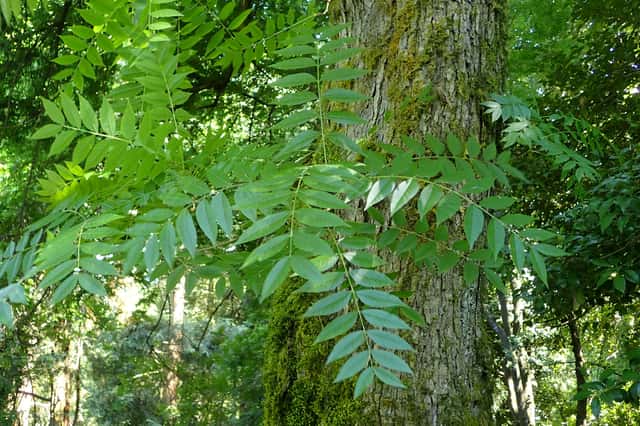
Pistacia chinensis, commonly known as Chinese pistache, is a medium to large deciduous tree native to China and Taiwan. Renowned for its spectacular fiery fall foliage — turning vivid orange, red, and scarlet — it is one of the most reliable and showy ornamental trees for temperate climates. It grows 30–40 feet tall with a broad, rounded canopy, exfoliating bark that reveals salmon-colored inner layers, and small, inconspicuous spring flowers. Once established, it is exceptionally drought-tolerant, pollution-resistant, and largely pest-free, making it a low-maintenance landscape favorite.
How to Propagate Chinese Pistache?
Seed Propagation
Fresh seeds have better germination rates. Grafting is preferred for cultivars like Keith Davey to preserve male characteristics. Expect 2-3 years before significant growth.
- 1 Collect ripe seeds in autumn and remove the fleshy outer coating
- 2 Cold-stratify seeds for 45 days in a damp mix of peat moss and vermiculite in the refrigerator
- 3 Sow seeds in well-draining seed-starting mix at a depth of 1/2 inch
- 4 Keep moist and warm (65-75°F) until germination occurs in 4-6 weeks
- 5 Transplant seedlings outdoors after the last frost
Materials needed:
Grafting
Grafting is used to preserve male clones and ensure predictable performance. Use sharp, sterile tools to reduce disease risk.
- 1 Select a healthy rootstock seedling at least pencil-thickness
- 2 Take a scion from a desired male cultivar (e.g., Keith Davey)
- 3 Make a clean cleft or side graft cut
- 4 Bind tightly with grafting tape and seal with grafting wax
- 5 Keep shaded and humid until the union is established
Materials needed:
How Big Does Chinese Pistache Grow?
TLDR: Chinese Pistache can reach up to 12.0m tall with Medium growth rate.
Max height
12.0m
Spread
9.0m
Growth rate
Medium
Foliage
Deciduous
Plant Uses
Ornamental
Great for decoration
Is your plant showing symptoms?
Click on the symptom to discover possible causes:
What Diseases Commonly Affect Chinese Pistache?
TLDR: Chinese Pistache is susceptible to 5 known diseases. Monitor regularly for early detection.
Verticillium Wilt
Verticillium wilt is a soil-borne fungal disease caused primarily by the fungi Verticillium dahliae and V. albo-atrum. These pathogens infect plant roots and grow within the vascular tissues, blocking water and nutrient transport, resulting in wilting and eventual plant death. The disease affects over 350 plant species including vegetables, fruits, ornamental flowers, and trees. The fungi can survive in soil for more than 10 years as resistant structures called microsclerotia.
Aphids
Aphids are small, soft-bodied, pear-shaped insects (1/16 to 1/8 inch long) that feed by sucking nutrient-rich sap from plants. They reproduce rapidly and can quickly weaken plants, causing distorted growth and transmitting plant viruses. Aphids come in various colors including green, black, red, yellow, brown, and gray. They secrete honeydew, a sticky substance that attracts ants and encourages sooty mold growth.
Scale Insects
Scale insects are small sap-sucking pests that appear as brown, shell-like bumps on plant stems and leaves. There are over 25 species, divided into armored (hard) and unarmored (soft) scales. They feed by piercing plant tissue and extracting sap, which weakens the plant and can lead to yellowing, stunted growth, and even death if left untreated. They also excrete honeydew, which attracts ants and promotes sooty mold growth.
Root Rot
Root rot is a serious fungal disease that affects the root system of plants, causing them to decay and die. It is primarily caused by overwatering, poor drainage, or soil-borne fungi such as Pythium, Phytophthora, Rhizoctonia, and Fusarium. The disease thrives in waterlogged conditions where roots are deprived of oxygen, making them susceptible to fungal infection.
Meaning & Symbolism
The Chinese pistache symbolizes resilience and transformation. Its blazing autumn colors — shifting from green to orange, red, and scarlet — represent the beauty of change and the reward of patience, as the tree's most spectacular display comes after a full season of growth.
Fun Facts
Chinese pistache is dioecious, meaning individual trees are either male or female — only female trees produce the decorative berry-like fruits
Its exfoliating bark peels away to reveal a striking salmon-pink inner layer, adding winter interest to the landscape
Once established, Chinese pistache can survive on rainfall alone in many temperate climates, making it one of the most drought-tolerant ornamental trees available
The species is a close relative of the edible pistachio (Pistacia vera) but its small fruits are not used as food
Frequently asked questions
How often should I water a Chinese pistache?
Does Chinese pistache have good fall color?
Is Chinese pistache toxic to pets?
How fast does Chinese pistache grow?
What soil does Chinese pistache need?
Compare with similar plants
| Attribute | Difficulty | Light | Watering | Pet Safe |
|---|---|---|---|---|
| Dark Fieldcap | Medium | Low light | 2d | ⚠️ |
| Azalea | Medium | Partial shade | 3d | ⚠️ |
| Bougainvillea | Medium | Direct sun | 7d | ⚠️ |
| Wild Lettuce | Medium | Direct sun | 7d | ⚠️ |




