Boraginaceae
Bethlehem Sage (Pulmonaria saccharata)
Pulmonaria saccharata
Bethlehem sage is a low-maintenance shade perennial that rewards minimal care with reliable spring color and handsome, silver-spotted foliage year-round. Keep the soil consistently moist and rich in organic matter, provide dappled to full shade, and divide clumps every few years to keep them vigorous.
Every 4 days
Low light
° - °C
% - %
Categories
What is Bethlehem Sage?
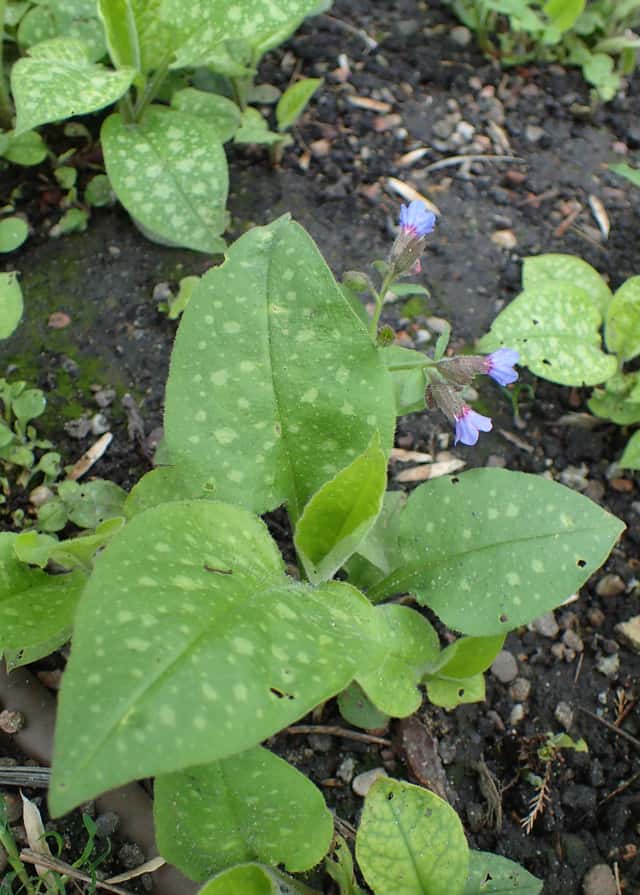
Bethlehem Sage (Pulmonaria saccharata) is a easy-care plant from the Boraginaceae family. Pulmonaria saccharata, commonly called Bethlehem sage, is a low-growing, semi-evergreen perennial native to woodlands of France and Italy. Its lance-shaped, deep green leaves are heavily splashed with silvery-white spots, forming a dense, textural groundcover even when the plant isn't in bloom. In e...
Bethlehem Sage grows up to 45cm, spread of 60cm, watering every 4 days. It is not suitable for indoor environments and safe for pets.
Unlike many tropical plants, Bethlehem Sage tolerates watering mistakes. Best for beginners. Unlike many popular species, Bethlehem Sage is safe to keep around pets.
How to Care for Bethlehem Sage?
TLDR: Bethlehem Sage needs Low light, watering every 4 days, and temperatures between 15-30°C with 40-70% humidity.
How Often Should You Water Bethlehem Sage?
Water regularly to keep the soil evenly moist, especially during dry spells; established plants have some drought tolerance, but letting the soil dry out repeatedly stresses the plant and invites powdery mildew.
How Much Light Does Bethlehem Sage Need?
Grow in partial to full shade. Morning sun is tolerated, but hot afternoon sun scorches the leaves and causes wilting; too little light reduces flowering.
What Is the Best Soil for Bethlehem Sage?
Plant in cool, humus-rich, evenly moist but well-drained soil. Amend heavy clay with compost, and avoid soggy, waterlogged spots that can lead to root rot.
What Pot Should You Use for Bethlehem Sage?
If grown in a container, choose a wide, shallow pot with good drainage to accommodate its spreading rhizomes; terracotta helps prevent waterlogging, but line with mulch to retain moisture.
What Is Bethlehem Sage and Where Does It Come From?
Pulmonaria saccharata, commonly called Bethlehem sage, is a low-growing, semi-evergreen perennial native to woodlands of France and Italy. Its lance-shaped, deep green leaves are heavily splashed with silvery-white spots, forming a dense, textural groundcover even when the plant isn't in bloom. In early spring, clusters of funnel-shaped flowers open pink and mature to vivid blue, creating a two-toned display on the same stem. Spreading slowly by creeping rhizomes, it thrives in the cool, moist shade of woodland and shade gardens.
How to Propagate Bethlehem Sage?
Division
Divide every 3-4 years to rejuvenate crowded clumps and improve flowering; avoid dividing during hot, dry weather.
- 1 Dig up an established clump in early fall after flowering has finished
- 2 Gently separate the rhizomes into sections, ensuring each piece has healthy roots and at least one growth bud
- 3 Replant divisions immediately at the same depth in prepared, humus-rich soil
- 4 Water thoroughly and keep consistently moist until new growth appears
Materials needed:
Seed sowing
Seed-grown plants may not reproduce the exact leaf spotting or flower color of the parent; division is more reliable for named cultivars.
- 1 Sow fresh seed in trays filled with moist, well-draining seed compost in early spring
- 2 Cover lightly with compost and keep in a cool, shaded spot
- 3 Keep the compost consistently moist until germination
- 4 Transplant seedlings to individual pots once they have two true leaves, then harden off before planting outdoors
Materials needed:
How Big Does Bethlehem Sage Grow?
TLDR: Bethlehem Sage can reach up to 45cm tall with Slow growth rate.
Max height
45cm
Spread
60cm
Growth rate
Slow
Foliage
Semi-evergreen
Plant Uses
Ornamental
Great for decoration
Ground Cover
Soil coverage
Medicinal
Medicinal properties
Medicinal Uses
- Historically used in European herbal medicine to treat coughs, bronchitis, and other respiratory complaints under the Doctrine of Signatures
- Leaves were brewed as a soothing tea for sore throats in traditional folk remedies
Culinary Uses
- Young leaves are occasionally added raw in small amounts to spring salads for a mild, slightly mucilaginous flavor, though this is a minor historical use rather than common practice
Is your plant showing symptoms?
Click on the symptom to discover possible causes:
What Diseases Commonly Affect Bethlehem Sage?
TLDR: Bethlehem Sage is susceptible to 3 known diseases. Monitor regularly for early detection.
Powdery Mildew
Powdery mildew is a common fungal disease caused by various fungi species including Erysiphe, Podosphaera, Oïdium, and Leveillula. It affects over 10,000 plant species worldwide. The disease thrives in warm, dry climates with high humidity and appears as a distinctive white powdery coating on plant surfaces.
Slugs and Snails
Slugs and snails are mollusks that feed on plant tissue, causing irregular holes in leaves and damage to young seedlings. They are most active at night and in moist conditions, leaving characteristic silvery slime trails. These pests can quickly devastate gardens, especially during wet seasons.
Root Rot
Root rot is a serious fungal disease that affects the root system of plants, causing them to decay and die. It is primarily caused by overwatering, poor drainage, or soil-borne fungi such as Pythium, Phytophthora, Rhizoctonia, and Fusarium. The disease thrives in waterlogged conditions where roots are deprived of oxygen, making them susceptible to fungal infection.
Meaning & Symbolism
The white-spotted leaves were once thought, under the old Doctrine of Signatures, to resemble diseased lungs, earning the plant its name and reputation as a healing herb. Folk names like 'Our Lady's Milk Drops' link it to protection and maternal care, while its early bloom makes it a symbol of spring's arrival in the shade garden.
Fun Facts
The genus name Pulmonaria comes from the Latin word for lung, inspired by the belief that its spotted leaves could cure lung ailments.
Its flowers open pink and gradually turn blue as they age, so a single plant can display both colors at once.
Bees and other early-season pollinators rely on Bethlehem sage as one of the first nectar sources of spring.
Frequently asked questions
Is Bethlehem sage toxic to cats or dogs?
How much sun does Bethlehem sage need?
Why is my Bethlehem sage developing powdery white patches?
How do I propagate Bethlehem sage?
Compare with similar plants
| Attribute | Difficulty | Light | Watering | Pet Safe |
|---|---|---|---|---|
| Field Maple | Easy | Bright indirect | 14d | ✓ |
| Silver Birch | Easy | Direct sun | 14d | ✓ |
| Cushion Bush | Easy | Direct sun | 14d | ✓ |
| Peruvian peppertree | Easy | Direct sun | 14d | ⚠️ |
Choose & Compare
Sources & References
- Pulmonaria saccharata - Missouri Botanical Garden Plant Finder
- Pulmonaria saccharata (Lungwort) - NC State Extension Gardener Plant Toolbox
- Pulmonaria Saccharata Plant Care & Growing Basics - PlantIn
- Pulmonaria - Wikipedia
- Plant Names Tell Their Stories: Pulmonaria spp. (lungwort) - Morris Arboretum





