Ranunculaceae
Clematis: The Vine of Showy Flowers
Clematis
Grows best in full sun with cool, shaded roots. Water deeply about once a week, keeping soil well-drained. Annual pruning recommended depending on flowering group.
Every 7 days
Bright indirect
-20° - 32°C
40% - 70%
Categories
What is Clematis?
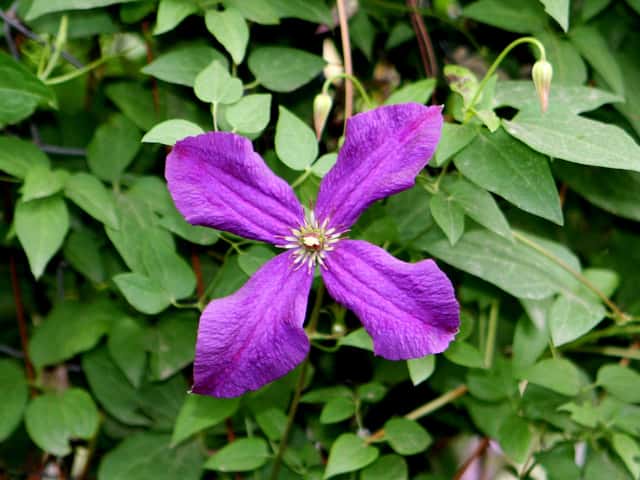
Clematis (Clematis) is a medium-care plant from the Ranunculaceae family. Clematis is a genus of woody and herbaceous flowering vines in the Ranunculaceae family, prized for its showy blooms in shades of purple, white, pink, and blue. Popular for covering trellises, fences, and walls, it flowers abundantly in spring and summer.
Clematis grows up to 3.0m, spread of 150cm, watering every 7 days, -20°C – 32°C, 40–70% humidity. It is not suitable for indoor environments and not safe for pets.
Without precautions, ingestion can cause irritation in pets. Keep out of reach of cats and dogs.
How to Care for Clematis?
TLDR: Clematis needs Bright indirect, watering every 7 days, and temperatures between -20-32°C with 40-70% humidity.
How Often Should You Water Clematis?
Water deeply about once a week, avoiding waterlogging; allow the soil to dry slightly between waterings.
How Much Light Does Clematis Need?
Prefers full sun on top growth (minimum 6 hours daily) but likes its base and roots kept shaded and cool.
What Is the Best Soil for Clematis?
Well-draining, fertile soil with a neutral to slightly alkaline pH (6.5-7.5); amend with organic compost.
What Pot Should You Use for Clematis?
Large, deep pot with good drainage, or planted directly in garden soil next to a trellis.
Care Schedule
Fertilize
Every 30 days
What Is Clematis and Where Does It Come From?
Clematis is a genus of woody and herbaceous flowering vines in the Ranunculaceae family, prized for its showy blooms in shades of purple, white, pink, and blue. Popular for covering trellises, fences, and walls, it flowers abundantly in spring and summer.
How to Propagate Clematis?
Seed sowing
Germination can be slow and uneven; be patient.
- 1 Collect ripe seeds in autumn
- 2 Cold-stratify for 4-6 weeks
- 3 Sow in light, moist substrate
- 4 Keep in a bright, sheltered spot
Materials needed:
Stem cutting
Use semi-hardwood cuttings for best results.
- 1 Cut a node with two leaves in summer
- 2 Apply rooting hormone
- 3 Plant in moist, airy substrate
- 4 Keep in humid conditions until rooted
Materials needed:
How Big Does Clematis Grow?
TLDR: Clematis can reach up to 3.0m tall with Medium growth rate.
Max height
3.0m
Spread
1.5m
Growth rate
Medium
Foliage
Deciduous
Warning: Toxic Plant
This plant can be toxic if ingested. Keep out of reach of:
Plant Uses
Ornamental
Great for decoration
Is your plant showing symptoms?
Click on the symptom to discover possible causes:
What Diseases Commonly Affect Clematis?
TLDR: Clematis is susceptible to 5 known diseases. Monitor regularly for early detection.
Powdery Mildew
Powdery mildew is a common fungal disease caused by various fungi species including Erysiphe, Podosphaera, Oïdium, and Leveillula. It affects over 10,000 plant species worldwide. The disease thrives in warm, dry climates with high humidity and appears as a distinctive white powdery coating on plant surfaces.
Aphids
Aphids are small, soft-bodied, pear-shaped insects (1/16 to 1/8 inch long) that feed by sucking nutrient-rich sap from plants. They reproduce rapidly and can quickly weaken plants, causing distorted growth and transmitting plant viruses. Aphids come in various colors including green, black, red, yellow, brown, and gray. They secrete honeydew, a sticky substance that attracts ants and encourages sooty mold growth.
Slugs and Snails
Slugs and snails are mollusks that feed on plant tissue, causing irregular holes in leaves and damage to young seedlings. They are most active at night and in moist conditions, leaving characteristic silvery slime trails. These pests can quickly devastate gardens, especially during wet seasons.
Whiteflies
Whiteflies are small, soft-bodied, winged insects closely related to aphids and mealybugs. They are moth-like in appearance, about 1/16 inch long, triangular in shape, and gray-white in color. These sap-sucking pests feed on plant tissue, causing yellowing, stunted growth, and wilting. They also excrete honeydew, which attracts ants and promotes sooty mold growth. Whiteflies can transmit serious plant viruses.
Meaning & Symbolism
Symbolizes mental beauty, ingenuity, and artifice; in Victorian flower language it represents safe travels.
Fun Facts
There are more than 300 Clematis species worldwide
The name comes from the Greek klema, meaning vine or tendril
Some species, like Clematis vitalba, are called old man's beard for their feathery seed heads
Frequently asked questions
Is Clematis toxic to pets?
How long does Clematis take to bloom?
How do you prune Clematis?
Compare with similar plants
| Attribute | Difficulty | Light | Watering | Pet Safe |
|---|---|---|---|---|
| Dark Fieldcap | Medium | Low light | 2d | ⚠️ |
| Azalea | Medium | Partial shade | 3d | ⚠️ |
| Bougainvillea | Medium | Direct sun | 7d | ⚠️ |
| Wild Lettuce | Medium | Direct sun | 7d | ⚠️ |



