Asteraceae
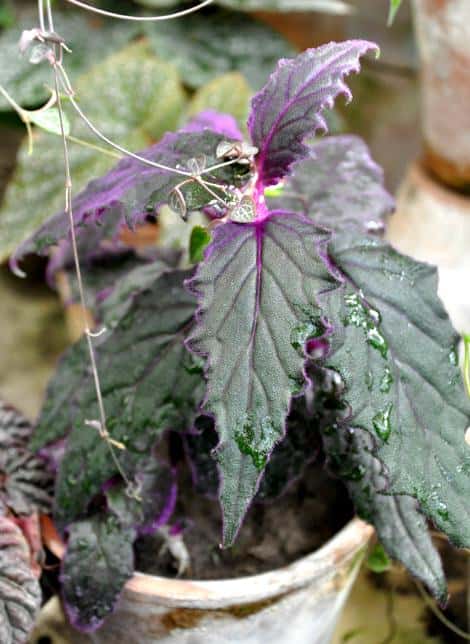
Purple Passion Plant (Gynura aurantiaca)
Gynura aurantiaca
Place in bright indirect light to maintain vivid purple coloring. Water weekly when top soil dries. Avoid getting water on the fuzzy leaves. Keep humidity at 40-60% and temperatures between 15-24°C.
Every 7 days
Partial shade
15° - 24°C
40% - 60%
Categories
What is Purple Passion Plant?
Purple Passion Plant (Gynura aurantiaca) is a easy-care plant from the Asteraceae family. Gynura aurantiaca is a striking tropical plant native to Java and Sumatra, known for its velvety purple-haired foliage that shimmers in the light. A member of the Asteraceae family, this fast-growing evergreen makes an excellent houseplant and is particularly stunning in hanging baskets where its tr...
Purple Passion Plant grows up to 60cm, spread of 120cm, watering every 7 days, 15°C – 24°C, 40–60% humidity. It is suitable for indoor environments and safe for pets.
Unlike many tropical plants, Purple Passion Plant tolerates watering mistakes. Best for beginners. Unlike many popular species, Purple Passion Plant is safe to keep around pets. Without adequate drainage, root rot can develop within 14 days.
How to Care for Purple Passion Plant?
TLDR: Purple Passion Plant needs Partial shade, watering every 7 days, and temperatures between 15-24°C with 40-60% humidity.
How Often Should You Water Purple Passion Plant?
Water when the top inch of soil feels dry, roughly once a week. Always water from the base to avoid wetting the velvety leaves, which can trap moisture and cause rot.
How Much Light Does Purple Passion Plant Need?
Provide bright indirect light for the best purple coloration. A spot near an east-facing window is ideal. Too little light causes leaves to revert to green; direct sun can scorch them.
What Is the Best Soil for Purple Passion Plant?
Use a well-draining mix with a slightly acidic pH (6.1-6.5). A blend of potting soil, peat moss, and perlite works well.
What Pot Should You Use for Purple Passion Plant?
A hanging basket or elevated pot that allows the trailing stems to cascade. Choose a pot with drainage holes to prevent waterlogging.
Care Schedule
Fertilize
Every 30 days
Rotate
Every 14 days
Repot
Every 365 days
What Is Purple Passion Plant and Where Does It Come From?
Gynura aurantiaca is a striking tropical plant native to Java and Sumatra, known for its velvety purple-haired foliage that shimmers in the light. A member of the Asteraceae family, this fast-growing evergreen makes an excellent houseplant and is particularly stunning in hanging baskets where its trailing stems can cascade gracefully. While it produces small orange-yellow flowers in fall and winter, many growers pinch them off due to their unpleasant smell.
How to Propagate Purple Passion Plant?
Stem Tip Cutting
Purple Passion roots very easily from cuttings. Since the plant tends to become leggy with age, regular propagation keeps your collection looking fresh.
- 1 Cut a healthy stem tip about 10cm long with 2-3 leaves
- 2 Remove the lower leaves
- 3 Place the cutting in moist potting mix or water
- 4 Cover with a plastic bag with ventilation holes for 2-3 weeks
- 5 Keep in bright indirect light and maintain moisture
Materials needed:
How Big Does Purple Passion Plant Grow?
TLDR: Purple Passion Plant can reach up to 60cm tall with Medium growth rate.
Max height
60cm
Spread
1.2m
Growth rate
Medium
Foliage
Evergreen
Plant Uses
Ornamental
Great for decoration
Is your plant showing symptoms?
Click on the symptom to discover possible causes:
What Diseases Commonly Affect Purple Passion Plant?
TLDR: Purple Passion Plant is susceptible to 13 known diseases. Monitor regularly for early detection.
Root Rot
Root rot is a serious fungal disease that affects the root system of plants, causing them to decay and die. It is primarily caused by overwatering, poor drainage, or soil-borne fungi such as Pythium, Phytophthora, Rhizoctonia, and Fusarium. The disease thrives in waterlogged conditions where roots are deprived of oxygen, making them susceptible to fungal infection.
Leaf Spot
Leaf spot is a common fungal disease caused by various pathogens including Alternaria, Ascochyta, Colletotrichum, Septoria, and Venturia. It primarily affects leaves, causing discolored spots that can lead to premature leaf drop if left untreated.
Gray Mold (Botrytis Blight)
Gray mold, caused by the fungus Botrytis cinerea, is one of the most common fungal diseases in plants. It affects over 200 plant species, including ornamentals, vegetables, fruits, and houseplants. The disease thrives in cool, humid conditions with poor air circulation, causing grayish spots and soft rot on infected tissues.
Rust
Rust is a common fungal disease caused by fungi in the order Pucciniales that affects a wide variety of plants. The disease gets its name from the characteristic orange, yellow, or reddish-brown pustules that appear on leaves, resembling metal rust. This obligate fungal parasite requires living plants to survive and can cause significant economic losses in agricultural crops.
Meaning & Symbolism
Creativity, uniqueness, and unconventional beauty
Fun Facts
The purple color comes from fine hairs (trichomes) covering the leaves, not the leaf itself
Gynura aurantiaca belongs to the same family as sunflowers and daisies (Asteraceae)
The species name aurantiaca means orange, referring to the flower color rather than the famous purple foliage
In its native Java, the plant can trail up to 2 meters in the wild
Frequently asked questions
Why is my Purple Passion Plant turning green?
Should I let my Purple Passion Plant flower?
Can I mist my Purple Passion Plant?
How long does a Purple Passion Plant live?
Compare with similar plants
| Attribute | Difficulty | Light | Watering | Pet Safe |
|---|---|---|---|---|
| Field Maple | Easy | Bright indirect | 14d | ✓ |
| Silver Birch | Easy | Direct sun | 14d | ✓ |
| Common Blanketflower | Easy | Direct sun | 10d | ✓ |
| Cushion Bush | Easy | Direct sun | 14d | ✓ |





