Platanaceae
Plane Tree: Full Sun Plant
Platanus
A genus of robust, fast-growing trees, ideal for parks, avenues, and large gardens. They prefer full sun exposure and fertile, well-drained soils but adapt to various conditions. They require regular watering when young; once established, they tolerate periods of drought. Annual maintenance pruning helps control size and reduce the incidence of anthracnose.
Every 14 days
Direct sun
-20° - 40°C
30% - 70%
Categories
What is Plane Tree?
Plane Tree (Platanus) is a easy-care plant from the Platanaceae family. Platanus is a genus of approximately 10 species of large, deciduous trees comprising the sole living genus of the family Platanaceae. Native to the Northern Hemisphere — spanning North America, Mexico, southeastern Europe, and Asia — plane trees are instantly recognizable by their distinctive exfoli...
Plane Tree grows up to 50.0m, spread of 3000cm, watering every 14 days, -20°C – 40°C, 30–70% humidity. It is not suitable for indoor environments and safe for pets.
Unlike many tropical plants, Plane Tree tolerates watering mistakes. Best for beginners. Unlike many popular species, Plane Tree is safe to keep around pets.
How to Care for Plane Tree?
TLDR: Plane Tree needs Direct sun, watering every 14 days, and temperatures between -20-40°C with 30-70% humidity.
How Often Should You Water Plane Tree?
Water frequently during the first 2-3 years of growth until the root system is established. Mature trees tolerate drought but benefit from watering during prolonged dry spells. Avoid waterlogging the soil—prefer well-drained soils.
How Much Light Does Plane Tree Need?
Plane trees require full sun (at least 6 hours of direct sunlight daily) to grow vigorously. In shaded locations, growth slows down, and the tree becomes more susceptible to fungal diseases.
What Is the Best Soil for Plane Tree?
Adapts to clay, loamy, and sandy soils. Prefers fertile, deep, and well-drained soils with a pH between 5.5 and 8.0. Tolerates compacted and slightly alkaline soils, making it ideal for urban environments.
What Pot Should You Use for Plane Tree?
Not applicable — large outdoor tree, not suitable for pots
Care Schedule
Fertilize
Every 90 days
What Is Plane Tree and Where Does It Come From?
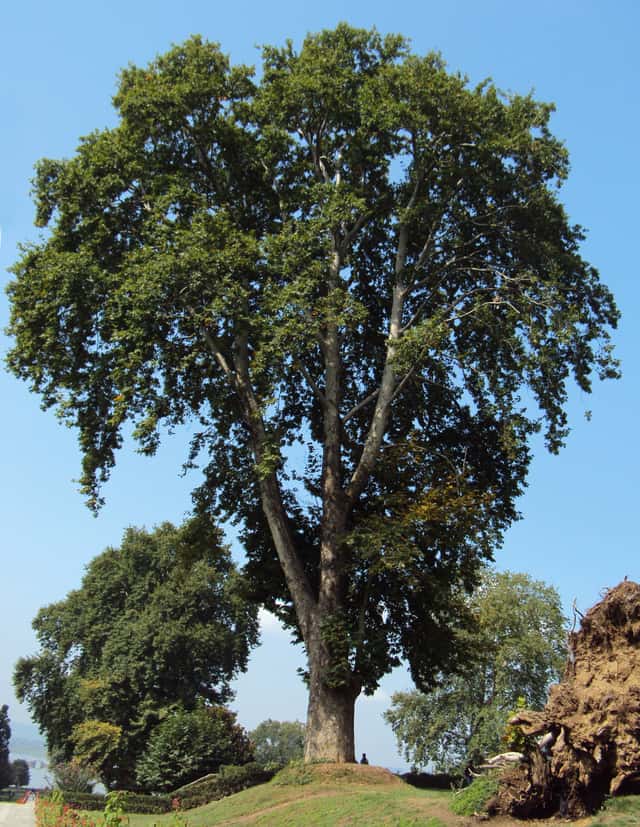
Platanus is a genus of approximately 10 species of large, deciduous trees comprising the sole living genus of the family Platanaceae. Native to the Northern Hemisphere — spanning North America, Mexico, southeastern Europe, and Asia — plane trees are instantly recognizable by their distinctive exfoliating bark that peels away in irregular patches to reveal a mosaic of cream, green, and grey tones. The broadly palmate leaves and spherical seed balls that hang on the branches through winter are equally distinctive. The London plane (Platanus × hispanica), a hybrid between the Oriental and American planes, has become one of the most widely planted ornamental trees in the world, renowned for its exceptional tolerance of urban pollution, soil compaction, and drought.
How to Propagate Plane Tree?
Sowing
Cold stratification significantly improves the germination rate. Fresh seeds germinate better.
- 1 Collect the dry globose fruits in winter
- 2 Separate the seeds (achenes) and cold stratify for 30-60 days
- 3 Sow in moist, well-drained substrate in spring
- 4 Keep in a bright location with temperatures between 15-20°C
- 5 Transplant to a permanent location when the seedling reaches 30-50 cm
Materials needed:
Cuttings
Hardwood cuttings from winter have a better rooting rate than softwood cuttings.
- 1 Cut 20-30 cm hardwood cuttings during the dormant period
- 2 Remove leaves and dip the base in rooting hormone
- 3 Plant in moist, well-drained substrate
- 4 Keep in a protected area with indirect light
Materials needed:
How Big Does Plane Tree Grow?
TLDR: Plane Tree can reach up to 50.0m tall with Fast growth rate.
Max height
50.0m
Spread
30.0m
Growth rate
Fast
Foliage
Deciduous
Plant Uses
Ornamental
Great for decoration
Medicinal Uses
- Minor medicinal uses recorded for Platanus orientalis in traditional medicine (bark and leaves used as astringents and anti-inflammatories)
Is your plant showing symptoms?
Click on the symptom to discover possible causes:
What Diseases Commonly Affect Plane Tree?
TLDR: Plane Tree is susceptible to 4 known diseases. Monitor regularly for early detection.
Anthracnose
Anthracnose is a fungal disease caused by fungi in the genus Colletotrichum that affects many plants, including vegetables, fruits, and trees. The disease thrives in cool, wet conditions, causing dark, sunken lesions on leaves, stems, flowers, and fruits.
Powdery Mildew
Powdery mildew is a common fungal disease caused by various fungi species including Erysiphe, Podosphaera, Oïdium, and Leveillula. It affects over 10,000 plant species worldwide. The disease thrives in warm, dry climates with high humidity and appears as a distinctive white powdery coating on plant surfaces.
Canker
Canker is a disease caused by various fungi and bacteria that create necrotic, sunken areas on bark of branches, stems, and trunks. Pathogens enter through wounds and natural openings, especially when plants are stressed. Canker can gradually weaken or kill branches by disrupting water and nutrient flow.
Leaf Spot
Leaf spot is a common fungal disease caused by various pathogens including Alternaria, Ascochyta, Colletotrichum, Septoria, and Venturia. It primarily affects leaves, causing discolored spots that can lead to premature leaf drop if left untreated.
Meaning & Symbolism
Since antiquity, plane trees have symbolized wisdom, knowledge, and enduring strength. In Classical Greece, Plato and Aristotle taught under their shade. In classical Chinese poetry, the falling of their autumn leaves represents melancholy and the passage of time.
Compare with similar plants
| Attribute | Difficulty | Light | Watering | Pet Safe |
|---|---|---|---|---|
| Field Maple | Easy | Bright indirect | 14d | ✓ |
| Silver Birch | Easy | Direct sun | 14d | ✓ |
| Cushion Bush | Easy | Direct sun | 14d | ✓ |
| Peruvian peppertree | Easy | Direct sun | 14d | ⚠️ |