Sapindaceae
Sycamore Maple: Low Water Needs
Acer pseudoplatanus
An exceptionally hardy, low-maintenance shade tree once established. Give it a sunny to partly shaded spot with room to spread, water regularly for the first two to three years, then rely on rainfall. Little to no fertilizer is needed on typical garden soils, and only light formative pruning is required in the dormant season.
Every 14 days
Bright indirect
-30° - 35°C
40% - 70%
Categories
What is Sycamore Maple?
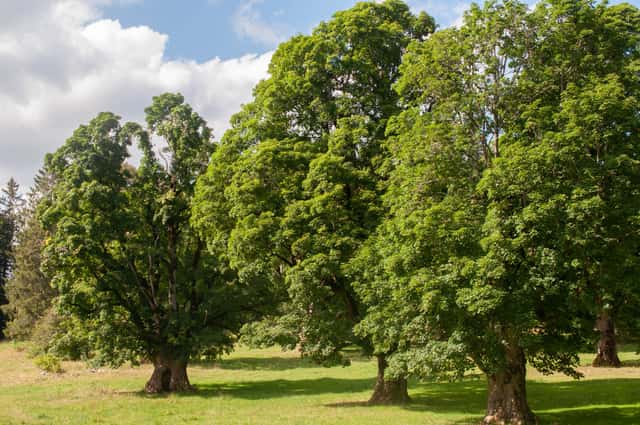
Sycamore Maple (Acer pseudoplatanus) is a easy-care plant from the Sapindaceae family. Acer pseudoplatanus is a large, fast-growing deciduous tree native to central and southern Europe and southwestern Asia, now widely naturalized across the UK and North America. It forms a broad, dome-shaped crown with five-lobed, dark green leaves and produces hanging racemes of small yellow-green f...
Sycamore Maple grows up to 30.0m, spread of 1500cm, watering every 14 days, -30°C – 35°C, 40–70% humidity. It is not suitable for indoor environments and safe for pets.
Unlike many tropical plants, Sycamore Maple tolerates watering mistakes. Best for beginners. Unlike many popular species, Sycamore Maple is safe to keep around pets.
How to Care for Sycamore Maple?
TLDR: Sycamore Maple needs Bright indirect, watering every 14 days, and temperatures between -30-35°C with 40-70% humidity.
How Often Should You Water Sycamore Maple?
Water young trees deeply once or twice a week during the first two growing seasons to establish a strong root system; mature trees are drought tolerant and rarely need supplemental watering.
How Much Light Does Sycamore Maple Need?
Thrives in full sun but tolerates light to moderate shade, especially as a young tree at woodland edges.
What Is the Best Soil for Sycamore Maple?
Adapts to almost any well drained soil, from sandy to heavy clay, and tolerates a wide pH range; avoid waterlogged ground.
What Pot Should You Use for Sycamore Maple?
Not suitable for long term container growing; this is a large forest tree best planted directly in open ground with several metres of clearance from structures.
What Is Sycamore Maple and Where Does It Come From?
Acer pseudoplatanus is a large, fast-growing deciduous tree native to central and southern Europe and southwestern Asia, now widely naturalized across the UK and North America. It forms a broad, dome-shaped crown with five-lobed, dark green leaves and produces hanging racemes of small yellow-green flowers in spring, followed by winged seeds (samaras) in autumn. It tolerates wind, salt spray, pollution and poor soils better than almost any other broadleaf tree, making it a popular choice for exposed sites, parks and shelterbelts. Note: the seeds and spring seedlings contain hypoglycin A, a toxin linked to atypical myopathy, a serious and often fatal muscle disease in grazing horses, so caution is advised when planting near pastures or paddocks.
How to Propagate Sycamore Maple?
Seed propagation
Sycamore maple self-seeds prolifically; unstratified seed germinates poorly, so cold treatment is essential.
- 1 Collect fresh winged samaras in autumn as soon as they fall
- 2 Cold stratify the seeds in moist sand or peat at 1-5C for 3-4 months
- 3 Sow stratified seeds in pots or a nursery bed in early spring
- 4 Keep the soil consistently moist until germination, which is usually rapid and abundant
Materials needed:
Grafting
Grafting is mainly used to propagate named ornamental cultivars, since these do not come true from seed.
- 1 Grow seedling rootstock of the species for 1-2 years
- 2 Take scion wood from the desired cultivar during dormancy
- 3 Whip-and-tongue or side-veneer graft the scion onto the rootstock
- 4 Seal and protect the graft union until it calluses and starts growing
Materials needed:
How Big Does Sycamore Maple Grow?
TLDR: Sycamore Maple can reach up to 30.0m tall with Fast growth rate.
Max height
30.0m
Spread
15.0m
Growth rate
Fast
Foliage
Deciduous
Plant Uses
Ornamental
Great for decoration
Culinary Uses
- Sap can be tapped in late winter or early spring and reduced by boiling to make a maple-style syrup, though sugar content is lower than Acer saccharum
Is your plant showing symptoms?
Click on the symptom to discover possible causes:
What Diseases Commonly Affect Sycamore Maple?
TLDR: Sycamore Maple is susceptible to 4 known diseases. Monitor regularly for early detection.
Aphids
Aphids are small, soft-bodied, pear-shaped insects (1/16 to 1/8 inch long) that feed by sucking nutrient-rich sap from plants. They reproduce rapidly and can quickly weaken plants, causing distorted growth and transmitting plant viruses. Aphids come in various colors including green, black, red, yellow, brown, and gray. They secrete honeydew, a sticky substance that attracts ants and encourages sooty mold growth.
Sooty Mold
Sooty mold is a fungal disease that develops on surfaces coated with honeydew, a sticky sweet substance secreted by sap-sucking insects like aphids, scale insects, and whiteflies. While it does not directly infect plant tissue, it reduces photosynthetic capacity by blocking sunlight and diminishes the plant's aesthetic appearance.
Powdery Mildew
Powdery mildew is a common fungal disease caused by various fungi species including Erysiphe, Podosphaera, Oïdium, and Leveillula. It affects over 10,000 plant species worldwide. The disease thrives in warm, dry climates with high humidity and appears as a distinctive white powdery coating on plant surfaces.
Verticillium Wilt
Verticillium wilt is a soil-borne fungal disease caused primarily by the fungi Verticillium dahliae and V. albo-atrum. These pathogens infect plant roots and grow within the vascular tissues, blocking water and nutrient transport, resulting in wilting and eventual plant death. The disease affects over 350 plant species including vegetables, fruits, ornamental flowers, and trees. The fungi can survive in soil for more than 10 years as resistant structures called microsclerotia.
Meaning & Symbolism
Long associated with strength, protection and endurance, its ability to thrive on exposed, windswept ground has made the sycamore maple a traditional symbol of resilience in the face of adversity.
Compare with similar plants
| Attribute | Difficulty | Light | Watering | Pet Safe |
|---|---|---|---|---|
| Field Maple | Easy | Bright indirect | 14d | ✓ |
| Silver Birch | Easy | Direct sun | 14d | ✓ |
| Cushion Bush | Easy | Direct sun | 14d | ✓ |
| Peruvian peppertree | Easy | Direct sun | 14d | ⚠️ |