Cupressaceae
Oriental Arborvitae (Platycladus orientalis): Complete Care Guide
Platycladus orientalis
Hardy, low-maintenance plant. Prefers full sun and well-drained soil. Drought tolerant once established. Water every 10 days. Prune annually to maintain shape. Avoid waterlogging to prevent root rot.
Every 10 days
Bright indirect
-20° - 38°C
40% - 70%
Categories
What is Oriental Arborvitae?
Oriental Arborvitae (Platycladus orientalis) is a easy-care plant from the Cupressaceae family. Platycladus orientalis, commonly known as Oriental Arborvitae or Chinese Arborvitae, is an evergreen conifer in the Cupressaceae family, native to China and Korea. It grows slowly with a columnar to conical form, reaching up to 10 meters tall. Its scale-like leaves form flattened, vertical sprays of...
Oriental Arborvitae grows up to 10.0m, spread of 460cm, watering every 10 days, -20°C – 38°C, 40–70% humidity. It is not suitable for indoor environments and not safe for pets.
Unlike many tropical plants, Oriental Arborvitae tolerates watering mistakes. Best for beginners. Without precautions, ingestion can cause irritation in pets. Keep out of reach of cats and dogs.
How to Care for Oriental Arborvitae?
TLDR: Oriental Arborvitae needs Bright indirect, watering every 10 days, and temperatures between -20-38°C with 40-70% humidity.
How Often Should You Water Oriental Arborvitae?
Water deeply every 10 days during the growing season. Established plants are drought tolerant and need less frequent watering. In winter, reduce frequency. Always check that the soil is dry before watering.
How Much Light Does Oriental Arborvitae Need?
Requires full sun (6+ hours daily) for healthy growth and dense foliage. Tolerates partial shade but may become open and less vigorous. Avoid deep shade.
What Is the Best Soil for Oriental Arborvitae?
Prefers well-drained soil, slightly acidic to alkaline (pH 6–8). Does not tolerate waterlogging. Can grow in clay or sandy soils with adequate drainage.
What Pot Should You Use for Oriental Arborvitae?
Terracotta or ceramic pot with drainage holes. For container growing, choose large pots (40+ cm). Direct garden planting is preferred.
Care Schedule
Fertilize
Every 90 days
What Is Oriental Arborvitae and Where Does It Come From?
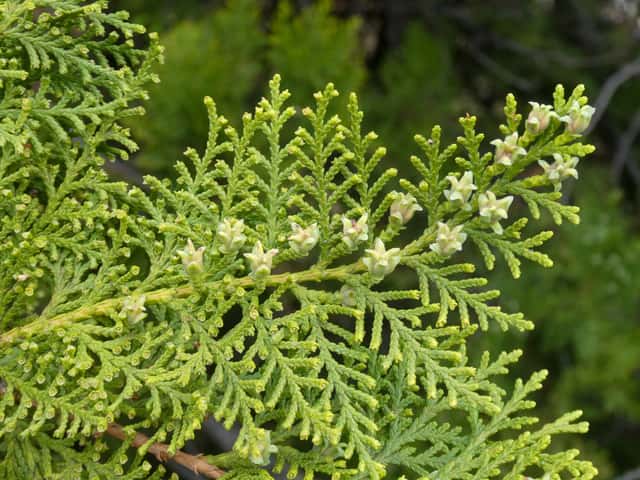
Platycladus orientalis, commonly known as Oriental Arborvitae or Chinese Arborvitae, is an evergreen conifer in the Cupressaceae family, native to China and Korea. It grows slowly with a columnar to conical form, reaching up to 10 meters tall. Its scale-like leaves form flattened, vertical sprays of yellow-green foliage that bronze in winter. Widely used as hedges, privacy screens, and ornamental specimens. WARNING: contains thujone in leaves and seeds — toxic to pets and humans if ingested.
How to Propagate Oriental Arborvitae?
Semi-hardwood cutting
Take cuttings in summer for best results. Keep substrate slightly moist, never waterlogged. Cover with plastic bag to retain humidity.
- 1 Cut a semi-hardwood shoot 5-10 cm with a heel
- 2 Remove leaves from the lower half
- 3 Apply rooting hormone to the base
- 4 Plant in well-drained moist substrate
- 5 Keep in a shaded, humid location until rooted
Materials needed:
Seeds
Germination can be irregular. Cold stratification improves germination rate.
- 1 Collect mature seeds in autumn
- 2 Cold-stratify for 4-6 weeks
- 3 Sow in well-drained substrate
- 4 Maintain temperature between 15-20°C
- 5 Transplant when seedlings reach 10 cm
Materials needed:
How Big Does Oriental Arborvitae Grow?
TLDR: Oriental Arborvitae can reach up to 10.0m tall with Slow growth rate.
Max height
10.0m
Spread
4.6m
Growth rate
Slow
Foliage
Evergreen
Warning: Toxic Plant
This plant can be toxic if ingested. Keep out of reach of:
Plant Uses
Ornamental
Great for decoration
Medicinal
Medicinal properties
Aromatic
Pleasant fragrance
Medicinal Uses
- Hemostatic properties (stops bleeding)
- Antitussive for coughs and bronchitis
- Anti-inflammatory and antimicrobial
- Cardiovascular support
- Promotes hair growth
- Treatment of skin infections
Is your plant showing symptoms?
Click on the symptom to discover possible causes:
What Diseases Commonly Affect Oriental Arborvitae?
TLDR: Oriental Arborvitae is susceptible to 6 known diseases. Monitor regularly for early detection.
Root Rot
Root rot is a serious fungal disease that affects the root system of plants, causing them to decay and die. It is primarily caused by overwatering, poor drainage, or soil-borne fungi such as Pythium, Phytophthora, Rhizoctonia, and Fusarium. The disease thrives in waterlogged conditions where roots are deprived of oxygen, making them susceptible to fungal infection.
Spider Mites
Spider mites are tiny arachnids (less than 1/20 inch long) related to spiders and ticks that feed on plant sap. They thrive in hot, dry conditions and can cause significant damage to ornamental and vegetable plants. During severe infestations, crop losses can reach 14% or higher as these pests disrupt vital plant processes including photosynthesis, carbon dioxide absorption, and transpiration.
Cercospora Leaf Spot
Cercospora leaf spot is a common fungal disease caused by Cercospora species that affects many plant types, particularly beets, roses, and leafy vegetables. The disease thrives in warm, humid conditions and can cause significant defoliation, reducing plant vigor and yield. It spreads rapidly through water splash, wind, and contaminated tools.
Leaf Spot
Leaf spot is a common fungal disease caused by various pathogens including Alternaria, Ascochyta, Colletotrichum, Septoria, and Venturia. It primarily affects leaves, causing discolored spots that can lead to premature leaf drop if left untreated.
Meaning & Symbolism
Symbol of longevity and vitality in Chinese culture. Sacred plant in Buddhism and Taoism, commonly found at temples and monasteries. Represents eternity and resilience.
Fun Facts
Considered sacred at Buddhist and Taoist temples in China for over 2,000 years
Its Chinese name (側柏, cèbǎi) means "side cypress", referring to the vertical arrangement of branches
The seeds have sedative properties and are used in traditional Chinese medicine to treat insomnia
Can live for hundreds of years — ancient specimens exist at Chinese monasteries
Frequently asked questions
How often should I water Oriental Arborvitae?
Is Oriental Arborvitae toxic to cats and dogs?
Can Oriental Arborvitae be grown in containers?
How do I prune Oriental Arborvitae?
Why are my arborvitae leaves turning brown?
Compare with similar plants
| Attribute | Difficulty | Light | Watering | Pet Safe |
|---|---|---|---|---|
| Field Maple | Easy | Bright indirect | 14d | ✓ |
| Silver Birch | Easy | Direct sun | 14d | ✓ |
| Cushion Bush | Easy | Direct sun | 14d | ✓ |
| Peruvian peppertree | Easy | Direct sun | 14d | ⚠️ |





