Papaveraceae
Poppy (Papaver): Complete Care Guide
Papaver
Grow in full sun. Water moderately, allowing soil to dry slightly between waterings. Prefers cool climates. Does not tolerate waterlogged soil. Propagates readily from seed, often self-seeding.
Every 7 days
Direct sun
8° - 24°C
30% - 50%
Categories
What is Poppy?
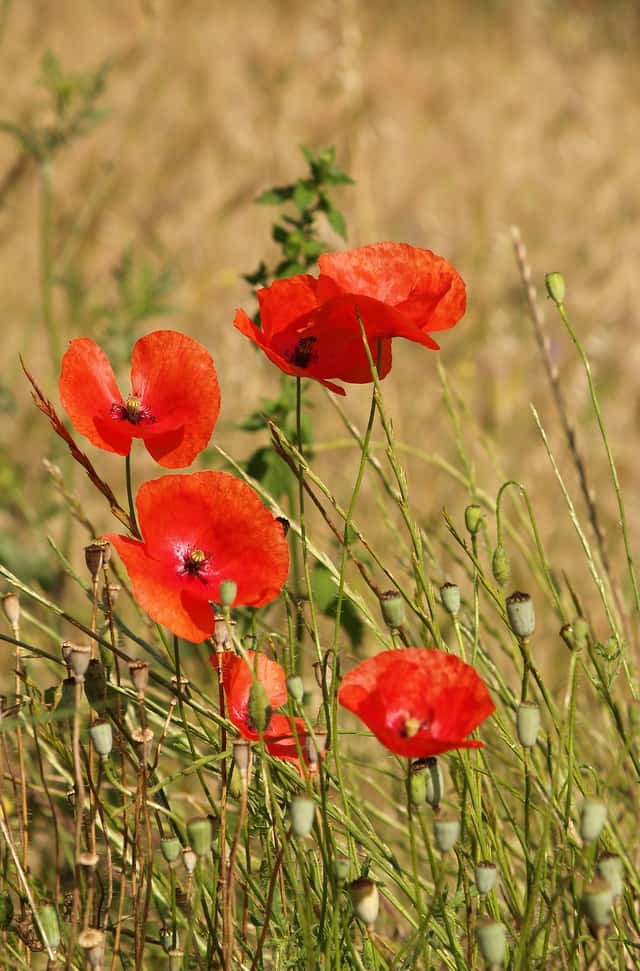
Poppy (Papaver) is a medium-care plant from the Papaveraceae family. Papaver is a genus of about 80 species of flowering plants commonly known as poppies. They are celebrated for their silky, tissue-paper-like petals in shades of red, orange, yellow, pink, and white. Notable species include P. somniferum (opium poppy), P. rhoeas (corn/field poppy), and P. orientale (...
Poppy grows up to 90cm, spread of 30cm, watering every 7 days, 8°C – 24°C, 30–50% humidity. It is not suitable for indoor environments and not safe for pets.
Without precautions, ingestion can cause irritation in pets. Keep out of reach of cats and dogs.
How to Care for Poppy?
TLDR: Poppy needs Direct sun, watering every 7 days, and temperatures between 8-24°C with 30-50% humidity.
How Often Should You Water Poppy?
Water approximately once a week, or when the top inch of soil is dry. Once established, poppies are drought-tolerant. Avoid overwatering — waterlogged soil leads to root rot, the most common cause of poppy failure.
How Much Light Does Poppy Need?
Full sun is essential — at least 6 to 8 hours of direct sunlight daily. In shade, stems become leggy and flower production drops significantly.
What Is the Best Soil for Poppy?
Prefers well-draining loamy soil enriched with organic matter. Ideal pH 6.0–7.5. Tolerates poor, sandy, or rocky soils. Heavy clay soils that retain water can be fatal to poppies.
What Pot Should You Use for Poppy?
Terracotta or ceramic pots with adequate drainage holes. Annual species are best grown in open beds where they can self-seed freely. If growing in containers, use large pots with lightweight, well-draining potting mix.
Care Schedule
Fertilize
Every 30 days
What Is Poppy and Where Does It Come From?
Papaver is a genus of about 80 species of flowering plants commonly known as poppies. They are celebrated for their silky, tissue-paper-like petals in shades of red, orange, yellow, pink, and white. Notable species include P. somniferum (opium poppy), P. rhoeas (corn/field poppy), and P. orientale (oriental poppy). All parts of the plant produce a milky latex that is toxic if ingested. Species range from hardy annuals to perennials, blooming in late spring through early summer.
How to Propagate Poppy?
Direct Sowing
Sow in late winter or early spring while temperatures are still cool. Mix tiny seeds with sand for even distribution. Do not transplant — poppies dislike root disturbance.
- 1 Prepare loose, well-drained soil
- 2 Scatter seeds on the surface — they need light to germinate
- 3 Press gently without covering with soil
- 4 Keep soil moist until germination
- 5 Thin seedlings to 15-20 cm spacing
Materials needed:
Root Division
Best for perennial species like P. orientale. Minimize root disturbance as much as possible.
- 1 Divide clumps in early spring or early autumn
- 2 Replant immediately in prepared soil
- 3 Water well after replanting
Materials needed:
How Big Does Poppy Grow?
TLDR: Poppy can reach up to 90cm tall with Fast growth rate.
Max height
90cm
Spread
30cm
Growth rate
Fast
Foliage
Deciduous
Warning: Toxic Plant
This plant can be toxic if ingested. Keep out of reach of:
Plant Uses
Ornamental
Great for decoration
Medicinal
Medicinal properties
Medicinal Uses
- Historical medicinal use: latex of P. somniferum is the source of morphine and codeine for pain relief
- Used in traditional medicine as a sedative and analgesic
Culinary Uses
- Dried poppy seeds (P. somniferum) widely used in breads, pastries, and Middle Eastern and European cuisine
Is your plant showing symptoms?
Click on the symptom to discover possible causes:
What Diseases Commonly Affect Poppy?
TLDR: Poppy is susceptible to 6 known diseases. Monitor regularly for early detection.
Downy Mildew
Downy mildew is a fungal-like disease caused by oomycetes (water molds) that thrives in cool, wet conditions. It affects a wide range of plants, causing yellowing leaves with fuzzy white-gray growth underneath, leading to defoliation and reduced yields if left untreated.
Root Rot
Root rot is a serious fungal disease that affects the root system of plants, causing them to decay and die. It is primarily caused by overwatering, poor drainage, or soil-borne fungi such as Pythium, Phytophthora, Rhizoctonia, and Fusarium. The disease thrives in waterlogged conditions where roots are deprived of oxygen, making them susceptible to fungal infection.
Aphids
Aphids are small, soft-bodied, pear-shaped insects (1/16 to 1/8 inch long) that feed by sucking nutrient-rich sap from plants. They reproduce rapidly and can quickly weaken plants, causing distorted growth and transmitting plant viruses. Aphids come in various colors including green, black, red, yellow, brown, and gray. They secrete honeydew, a sticky substance that attracts ants and encourages sooty mold growth.
Slugs and Snails
Slugs and snails are mollusks that feed on plant tissue, causing irregular holes in leaves and damage to young seedlings. They are most active at night and in moist conditions, leaving characteristic silvery slime trails. These pests can quickly devastate gardens, especially during wet seasons.
Meaning & Symbolism
Red poppies (P. rhoeas) are a universal symbol of remembrance, particularly commemorating soldiers fallen in World War I at Flanders Fields. Poppies also represent imagination, eternal sleep, and are the August birth flower.
Fun Facts
The field poppy (P. rhoeas) was one of the first plants to recolonize the devastated battlefields of World War I in Belgium, inspiring the poem 'In Flanders Fields'
P. somniferum has been cultivated for over 5,000 years and remains the source of morphine, one of the most powerful painkillers in medicine
Individual poppy flowers last only 1-3 days, but plants produce new blooms continuously throughout the flowering season
A single poppy seed capsule can contain up to 30,000 tiny seeds
Frequently asked questions
Are poppies toxic to pets?
How often should I water poppies?
Can poppies be grown in pots?
When is the best time to plant poppies?
Why are my poppies not flowering?
Compare with similar plants
| Attribute | Difficulty | Light | Watering | Pet Safe |
|---|---|---|---|---|
| Dark Fieldcap | Medium | Low light | 2d | ⚠️ |
| Azalea | Medium | Partial shade | 3d | ⚠️ |
| Bougainvillea | Medium | Direct sun | 7d | ⚠️ |
| Wild Lettuce | Medium | Direct sun | 7d | ⚠️ |



