Portulacaceae
Wingpod Purslane: Ground Cover Plant
Portulaca umbraticola
An easy-to-grow plant that requires full sun and very well-drained soil. Water only when the substrate is completely dry.
Every 10 days
Direct sun
10° - 38°C
30% - 50%
Categories
What is Wingpod Purslane?
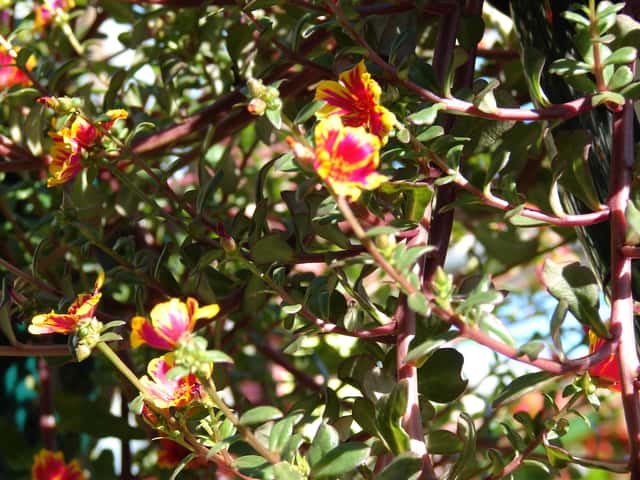
Wingpod Purslane (Portulaca umbraticola) is a easy-care plant from the Portulacaceae family. Portulaca umbraticola, commonly known as wingpod purslane or ornamental purslane, is a fast-growing trailing succulent. Its leaves are fleshy and spatulate, and its vibrant flowers have the unique characteristic of opening fully under bright sunlight and closing at night or on cloudy days. It is an...
Wingpod Purslane grows up to 25cm, spread of 40cm, watering every 10 days, 10°C – 38°C, 30–50% humidity. It is suitable for indoor environments and not safe for pets.
Unlike many tropical plants, Wingpod Purslane tolerates watering mistakes. Best for beginners. Without precautions, ingestion can cause irritation in pets. Keep out of reach of cats and dogs. Without adequate drainage, root rot can develop within 20 days.
How to Care for Wingpod Purslane?
TLDR: Wingpod Purslane needs Direct sun, watering every 10 days, and temperatures between 10-38°C with 30-50% humidity.
How Often Should You Water Wingpod Purslane?
Always check the moisture with your finger; if the soil is damp, do not water. It tolerates drought better than overwatering.
How Much Light Does Wingpod Purslane Need?
For abundant flowering, place it in a location that receives at least 6 to 8 hours of direct sunlight per day.
What Is the Best Soil for Wingpod Purslane?
Mix coarse sand or perlite into standard soil to ensure water drains quickly.
What Pot Should You Use for Wingpod Purslane?
Ceramic pots or hanging baskets with excellent drainage.
Care Schedule
Fertilize
Every 35 days
Repot
Every 365 days
What Is Wingpod Purslane and Where Does It Come From?
Portulaca umbraticola, commonly known as wingpod purslane or ornamental purslane, is a fast-growing trailing succulent. Its leaves are fleshy and spatulate, and its vibrant flowers have the unique characteristic of opening fully under bright sunlight and closing at night or on cloudy days. It is an extremely resilient plant, ideal for low-maintenance gardens, borders, and hanging baskets.
How to Propagate Wingpod Purslane?
Stem Cutting
- Do not bury too deeply to prevent rot
- Avoid overwatering in the first few days
- 1 Cutting the Stem
Cut a healthy segment 2 to 4 inches (5 to 10 cm) long.
- 2 Drying
Let the cut end dry in the shade for 24 hours to form a callus.
- 3 Planting
Insert the base into sandy soil and keep slightly moist until rooted.
Materials needed:
Sowing
- Sow after the risk of frost has passed
- Use a fine, sifted substrate
- 1 Preparation
Scatter the tiny seeds over the surface of well-drained soil.
- 2 Light
Do not cover the seeds with soil, as they need light to germinate.
- 3 Moisture
Keep the soil moist with a spray bottle until seedlings appear.
Materials needed:
How Big Does Wingpod Purslane Grow?
TLDR: Wingpod Purslane can reach up to 25cm tall with Fast growth rate.
Max height
25cm
Spread
40cm
Growth rate
Fast
Foliage
Deciduous
Warning: Toxic Plant
This plant can be toxic if ingested. Keep out of reach of:
Plant Uses
Ornamental
Great for decoration
Ground Cover
Soil coverage
Medicinal Uses
- Topical use for relief of minor burns
- Traditional anti-inflammatory properties
Culinary Uses
- Young leaves in salads
- Quick stir-fries
- Added to soups as a natural thickener
Is your plant showing symptoms?
Click on the symptom to discover possible causes:
What Diseases Commonly Affect Wingpod Purslane?
TLDR: Wingpod Purslane is susceptible to 10 known diseases. Monitor regularly for early detection.
Root Rot
Root rot is a serious fungal disease that affects the root system of plants, causing them to decay and die. It is primarily caused by overwatering, poor drainage, or soil-borne fungi such as Pythium, Phytophthora, Rhizoctonia, and Fusarium. The disease thrives in waterlogged conditions where roots are deprived of oxygen, making them susceptible to fungal infection.
Crown Rot
Crown rot is a serious fungal disease that attacks the crown (base) of the plant where the stem meets the soil. It is caused by various fungal pathogens including Phytophthora, Fusarium, and Rhizoctonia. The disease thrives in waterlogged conditions and can quickly spread to kill the entire plant if not addressed promptly.
Overwatering
Overwatering occurs when plants receive too much water, depriving roots of oxygen and causing root rot. This environmental stress is one of the most common causes of houseplant death, as waterlogged soil prevents roots from breathing and functioning properly.
Aphids
Aphids are small, soft-bodied, pear-shaped insects (1/16 to 1/8 inch long) that feed by sucking nutrient-rich sap from plants. They reproduce rapidly and can quickly weaken plants, causing distorted growth and transmitting plant viruses. Aphids come in various colors including green, black, red, yellow, brown, and gray. They secrete honeydew, a sticky substance that attracts ants and encourages sooty mold growth.
Meaning & Symbolism
Symbolizes joy, vivacity, and the ability to bloom even in adverse conditions.
Compare with similar plants
| Attribute | Difficulty | Light | Watering | Pet Safe |
|---|---|---|---|---|
| Field Maple | Easy | Bright indirect | 14d | ✓ |
| Silver Birch | Easy | Direct sun | 14d | ✓ |
| Cushion Bush | Easy | Direct sun | 14d | ✓ |
| Peruvian peppertree | Easy | Direct sun | 14d | ⚠️ |