Polypodiaceae
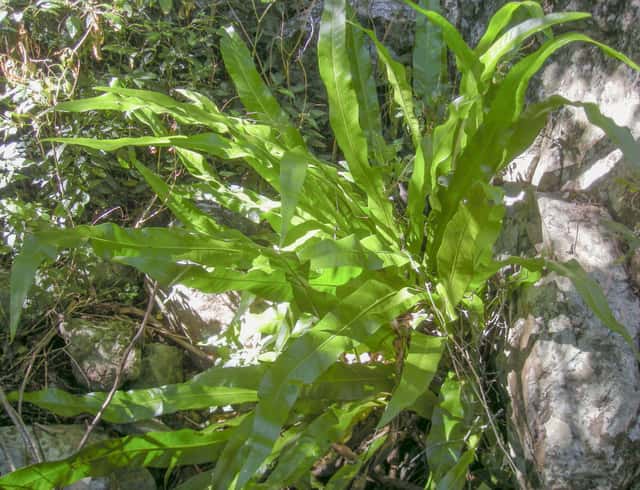
Fishtail Fern — Microsorum punctatum
Microsorum punctatum
Keep the soil consistently moist but well-drained. Provide bright indirect light or partial shade with high humidity. Avoid direct sunlight and waterlogged conditions. Fertilize monthly during spring and summer. Weekly misting helps maintain the humidity this fern craves.
Every 4 days
Partial shade
15° - 30°C
50% - 80%
Categories
What is Fishtail Fern?
Fishtail Fern (Microsorum punctatum) is a medium-care plant from the Polypodiaceae family. Microsorum punctatum, commonly known as the Fishtail Fern or Ox-tongue Fern, is a tropical evergreen fern native to southern Asia, ranging from India to China and across the Pacific Islands. It features long, leathery, glossy bright-green fronds with wavy margins, making it an attractive ornamental...
Fishtail Fern grows up to 60cm, spread of 60cm, watering every 4 days, 15°C – 30°C, 50–80% humidity. It is suitable for indoor environments and safe for pets.
Unlike many popular species, Fishtail Fern is safe to keep around pets. Without adequate drainage, root rot can develop within 8 days.
How to Care for Fishtail Fern?
TLDR: Fishtail Fern needs Partial shade, watering every 4 days, and temperatures between 15-30°C with 50-80% humidity.
How Often Should You Water Fishtail Fern?
Water every 4 days, keeping the soil lightly moist. Apply approximately 200ml per watering and avoid letting the roots sit in water. Reduce frequency in winter to every 7–10 days.
How Much Light Does Fishtail Fern Need?
Prefers bright indirect light to partial shade. Place near a north or east-facing window or under dappled light. Direct sunlight will scorch the fronds.
What Is the Best Soil for Fishtail Fern?
Use a well-draining potting mix such as peat and perlite or a quality houseplant compost. Ideal pH is between 6.0 and 7.0.
What Pot Should You Use for Fishtail Fern?
Ceramic or plastic pots with drainage holes. Choose wide pots to accommodate the spreading rhizomes.
Care Schedule
Fertilize
Every 30 days
Misting
Every 7 days
Repot
Every 365 days
What Is Fishtail Fern and Where Does It Come From?
Microsorum punctatum, commonly known as the Fishtail Fern or Ox-tongue Fern, is a tropical evergreen fern native to southern Asia, ranging from India to China and across the Pacific Islands. It features long, leathery, glossy bright-green fronds with wavy margins, making it an attractive ornamental plant for both indoor and outdoor shaded environments.
How to Propagate Fishtail Fern?
Rhizome Division
Divide in spring to take advantage of the active growing season. Keep the substrate lightly moist but never waterlogged.
- 1 Remove the plant from its pot and locate healthy rhizomes
- 2 Divide the rhizome with a clean knife, ensuring at least 2 fronds per section
- 3 Plant each section in moist, well-draining substrate
- 4 Keep in a humid location until established
Materials needed:
Spore Propagation
Spore propagation is slow and requires patience. Use sterilized substrate to prevent fungal issues.
- 1 Collect mature spores from the underside of fronds
- 2 Scatter over sterile, moist substrate in a closed container
- 3 Maintain in a warm, humid environment with indirect light
- 4 Wait for gametophytes to form before transplanting
Materials needed:
How Big Does Fishtail Fern Grow?
TLDR: Fishtail Fern can reach up to 60cm tall with Medium growth rate.
Max height
60cm
Spread
60cm
Growth rate
Medium
Foliage
Evergreen
Plant Uses
Ornamental
Great for decoration
Is your plant showing symptoms?
Click on the symptom to discover possible causes:
What Diseases Commonly Affect Fishtail Fern?
TLDR: Fishtail Fern is susceptible to 13 known diseases. Monitor regularly for early detection.
Root Rot
Root rot is a serious fungal disease that affects the root system of plants, causing them to decay and die. It is primarily caused by overwatering, poor drainage, or soil-borne fungi such as Pythium, Phytophthora, Rhizoctonia, and Fusarium. The disease thrives in waterlogged conditions where roots are deprived of oxygen, making them susceptible to fungal infection.
Leaf Spot
Leaf spot is a common fungal disease caused by various pathogens including Alternaria, Ascochyta, Colletotrichum, Septoria, and Venturia. It primarily affects leaves, causing discolored spots that can lead to premature leaf drop if left untreated.
Botrytis
Rust
Rust is a common fungal disease caused by fungi in the order Pucciniales that affects a wide variety of plants. The disease gets its name from the characteristic orange, yellow, or reddish-brown pustules that appear on leaves, resembling metal rust. This obligate fungal parasite requires living plants to survive and can cause significant economic losses in agricultural crops.
Meaning & Symbolism
Resilience and adaptability in tropical environments
Fun Facts
Native to tropical forests of Asia, it grows as an epiphyte on tree trunks and rocks.
Young fronds emerge tightly coiled as fiddleheads, a signature trait of all ferns.
With proper care, it can live for decades, becoming a long-lasting decorative piece.
The name punctatum refers to the dotted sori found on the underside of mature fronds.
Frequently asked questions
How often should I water the Fishtail Fern?
Is the Fishtail Fern toxic to pets?
What light does the Fishtail Fern need?
How do I propagate the Fishtail Fern?
Why are my fronds turning brown?
Compare with similar plants
| Attribute | Difficulty | Light | Watering | Pet Safe |
|---|---|---|---|---|
| Dark Fieldcap | Medium | Low light | 2d | ⚠️ |
| Azalea | Medium | Partial shade | 3d | ⚠️ |
| Bougainvillea | Medium | Direct sun | 7d | ⚠️ |
| Wild Lettuce | Medium | Direct sun | 7d | ⚠️ |



