Nyctaginaceae
Bougainvillea: Full Sun Plant
Bougainvillea glabra
Requires constant full sun and soil with excellent drainage. Flowering is stimulated by moderate dry periods and regular pruning.
Every 10 days
Direct sun
16° - 35°C
40% - 60%
Categories
What is Bougainvillea?
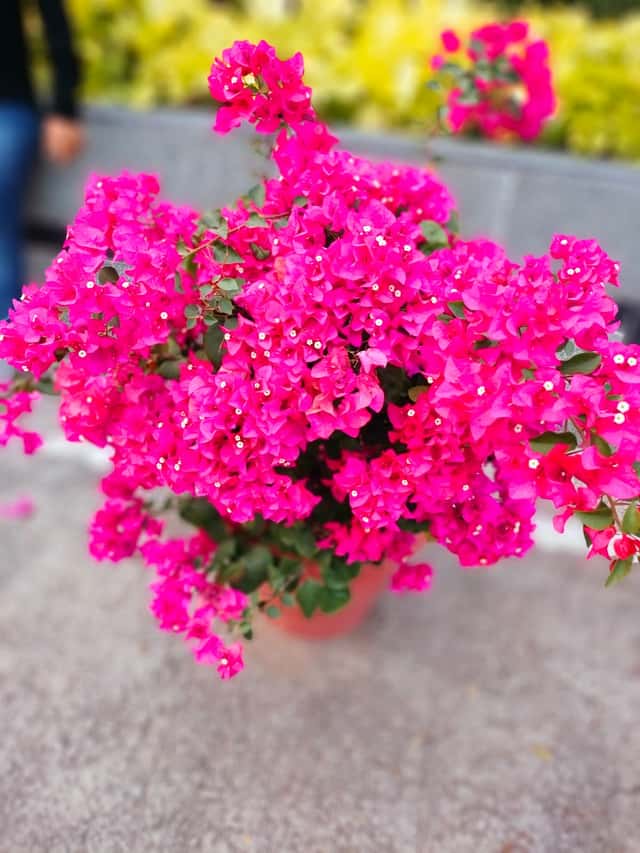
Bougainvillea (Bougainvillea glabra) is a medium-care plant from the Nyctaginaceae family. Bougainvillea glabra, commonly known as Paperflower or Bougainvillea, is a vigorous woody climber native to Brazil. It is famous for its vibrant colors, which are actually bracts (modified leaves) surrounding its small, inconspicuous white flowers. It is an extremely resilient plant that thrives in...
Bougainvillea grows up to 5.0m, spread of 250cm, watering every 10 days, 16°C – 35°C, 40–60% humidity. It is suitable for indoor environments and safe for pets.
Unlike many popular species, Bougainvillea is safe to keep around pets. Without adequate drainage, root rot can develop within 20 days.
How to Care for Bougainvillea?
TLDR: Bougainvillea needs Direct sun, watering every 10 days, and temperatures between 16-35°C with 40-60% humidity.
How Often Should You Water Bougainvillea?
Water deeply, but wait for the soil to dry out almost completely before watering again. Mild water stress can sometimes stimulate blooming.
How Much Light Does Bougainvillea Need?
For intense flowering, the plant should receive at least 6 hours of direct sun per day. In shaded areas, it will only produce green leaves.
What Is the Best Soil for Bougainvillea?
Use a mixture of fertile soil with coarse sand or perlite to ensure water flows quickly.
What Pot Should You Use for Bougainvillea?
Terracotta or ceramic pots with large drainage holes, as the plant does not tolerate waterlogged roots.
Care Schedule
Fertilize
Every 14 days
Repot
Every 730 days
What Is Bougainvillea and Where Does It Come From?
Bougainvillea glabra, commonly known as Paperflower or Bougainvillea, is a vigorous woody climber native to Brazil. It is famous for its vibrant colors, which are actually bracts (modified leaves) surrounding its small, inconspicuous white flowers. It is an extremely resilient plant that thrives in full sun and is ideal for covering walls, fences, and pergolas, bringing a lush, tropical look to the garden.
How to Propagate Bougainvillea?
Stem cuttings
- Keep the cutting protected from the wind
- Cover with a clear plastic bag to maintain humidity if the climate is very dry
- 1 Cutting selection
Cut a healthy semi-woody branch approximately 6 to 8 inches (15 to 20 cm) long.
- 2 Preparation
Remove the leaves from the bottom half and dip the base in rooting hormone to increase the chances of success.
- 3 Planting
Insert the cutting into a light, sandy substrate, keeping it slightly moist in a bright spot, but without direct sun until rooted.
Materials needed:
How Big Does Bougainvillea Grow?
TLDR: Bougainvillea can reach up to 5.0m tall with Fast growth rate.
Max height
5.0m
Spread
2.5m
Growth rate
Fast
Foliage
Evergreen
Plant Uses
Ornamental
Great for decoration
Medicinal Uses
- Flower infusion is used in folk medicine to treat coughs and respiratory issues
- Mild antiseptic properties
Culinary Uses
- The bracts can be used to make colorful teas or infusions
- Gourmet dish decoration
Is your plant showing symptoms?
Click on the symptom to discover possible causes:
What Diseases Commonly Affect Bougainvillea?
TLDR: Bougainvillea is susceptible to 10 known diseases. Monitor regularly for early detection.
Aphids
Aphids are small, soft-bodied, pear-shaped insects (1/16 to 1/8 inch long) that feed by sucking nutrient-rich sap from plants. They reproduce rapidly and can quickly weaken plants, causing distorted growth and transmitting plant viruses. Aphids come in various colors including green, black, red, yellow, brown, and gray. They secrete honeydew, a sticky substance that attracts ants and encourages sooty mold growth.
Powdery Mildew
Powdery mildew is a common fungal disease caused by various fungi species including Erysiphe, Podosphaera, Oïdium, and Leveillula. It affects over 10,000 plant species worldwide. The disease thrives in warm, dry climates with high humidity and appears as a distinctive white powdery coating on plant surfaces.
Root Rot
Root rot is a serious fungal disease that affects the root system of plants, causing them to decay and die. It is primarily caused by overwatering, poor drainage, or soil-borne fungi such as Pythium, Phytophthora, Rhizoctonia, and Fusarium. The disease thrives in waterlogged conditions where roots are deprived of oxygen, making them susceptible to fungal infection.
Scale Insects
Scale insects are small sap-sucking pests that appear as brown, shell-like bumps on plant stems and leaves. There are over 25 species, divided into armored (hard) and unarmored (soft) scales. They feed by piercing plant tissue and extracting sap, which weakens the plant and can lead to yellowing, stunted growth, and even death if left untreated. They also excrete honeydew, which attracts ants and promotes sooty mold growth.
Meaning & Symbolism
Symbolizes protection, liveliness, and hospitality. Its vibrant flowers represent energy and passion.
Compare with similar plants
| Attribute | Difficulty | Light | Watering | Pet Safe |
|---|---|---|---|---|
| Dark Fieldcap | Medium | Low light | 2d | ⚠️ |
| Azalea | Medium | Partial shade | 3d | ⚠️ |
| Bougainvillea | Medium | Direct sun | 7d | ⚠️ |
| Wild Lettuce | Medium | Direct sun | 7d | ⚠️ |



