Euphorbiaceae
Upright Spurge: Fast Growing
Euphorbia stricta
An easy, low-fuss garden spurge: give it well-drained soil and sun to part shade, then largely leave it alone. It self-seeds readily, so deadhead spent flower heads if you want to keep it in check.
Every 7 days
Bright indirect
5° - 28°C
% - %
Categories
What is Upright Spurge?
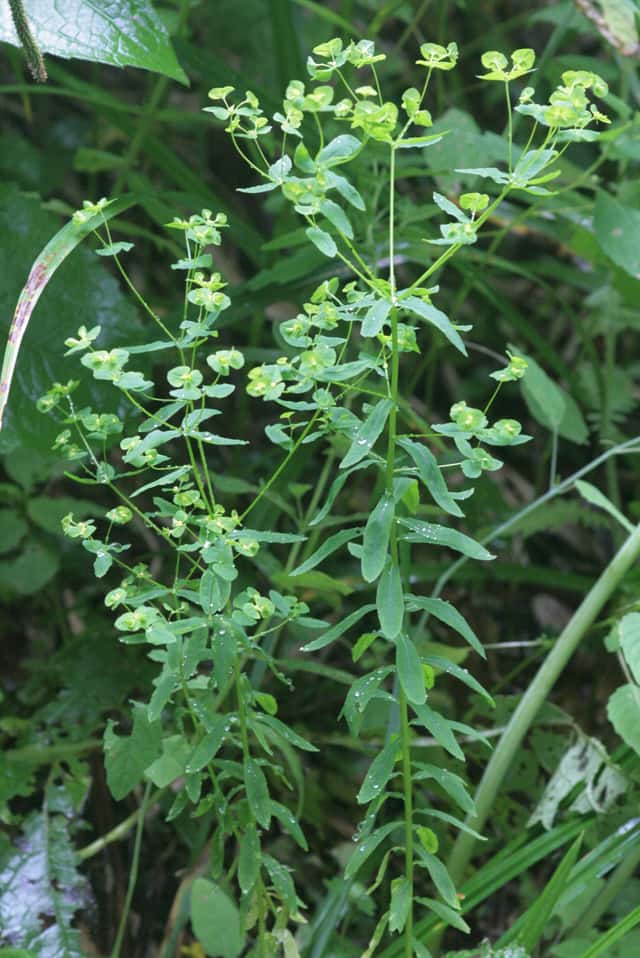
Upright Spurge (Euphorbia stricta) is a easy-care plant from the Euphorbiaceae family. Upright Spurge is a bushy, self-seeding member of the Euphorbiaceae native to Europe and southwest Asia. Slender, branching stems carry spear-shaped, pale to yellowish-green leaves and are topped from June to September by clusters of small greenish-yellow flowers. Like all spurges, its stems ooze a...
Upright Spurge grows up to 45cm, spread of 45cm, watering every 7 days, 5°C – 28°C. It is not suitable for indoor environments and not safe for pets.
Unlike many tropical plants, Upright Spurge tolerates watering mistakes. Best for beginners. Without precautions, ingestion can cause irritation in pets. Keep out of reach of cats and dogs.
How to Care for Upright Spurge?
TLDR: Upright Spurge needs Bright indirect, watering every 7 days, and temperatures between 5-28°C with 40-70% humidity.
How Often Should You Water Upright Spurge?
Let the soil dry out between waterings; it prefers soil that is moist but well-drained and tolerates short dry spells better than waterlogging.
How Much Light Does Upright Spurge Need?
Grows best in full sun but tolerates partial shade — good flowering needs at least a half-day of direct light.
What Is the Best Soil for Upright Spurge?
Not fussy about soil texture (sand, loam, clay or chalk all work) as long as drainage is good; avoid heavy, waterlogged ground.
What Pot Should You Use for Upright Spurge?
Best grown in the ground or a large well-drained garden bed/border rather than a container; if potted, use a wide pot with generous drainage holes.
What Is Upright Spurge and Where Does It Come From?
Upright Spurge is a bushy, self-seeding member of the Euphorbiaceae native to Europe and southwest Asia. Slender, branching stems carry spear-shaped, pale to yellowish-green leaves and are topped from June to September by clusters of small greenish-yellow flowers. Like all spurges, its stems ooze a milky, irritant latex when cut, so gloves are recommended when handling it. It thrives as an easy-going garden plant, tolerating a wide range of soils and both sun and part shade.
How to Propagate Upright Spurge?
Seed sowing
- Self-seeds freely so watch for volunteer seedlings
- Sow in autumn or early spring on well-drained soil
- 1 Collect seed
Gather seed capsules once they turn brown and before they split open.
- 2 Sow
Sow thinly on the surface of well-drained compost, barely covering the seed.
- 3 Grow on
Keep in a cold frame or sheltered spot until seedlings are large enough to plant out.
Materials needed:
Basal cuttings
- Wear gloves — the cut stem oozes irritant white latex
- Let the cut end dry briefly before inserting
- 1 Take a cutting
Cut a young non-flowering shoot a few cm from the base in spring.
- 2 Dry the sap
Dip the cut end in water to slow bleeding, then let it callus for a few hours.
- 3 Root it
Insert into gritty, well-drained compost and keep in bright, indirect light until rooted.
Materials needed:
How Big Does Upright Spurge Grow?
TLDR: Upright Spurge can reach up to 45cm tall with Fast growth rate.
Max height
45cm
Spread
45cm
Growth rate
Fast
Foliage
Deciduous
Warning: Toxic Plant
This plant can be toxic if ingested. Keep out of reach of:
Plant Uses
Ornamental
Great for decoration
Is your plant showing symptoms?
Click on the symptom to discover possible causes:
What Diseases Commonly Affect Upright Spurge?
TLDR: Upright Spurge is susceptible to 4 known diseases. Monitor regularly for early detection.
Powdery Mildew
Powdery mildew is a common fungal disease caused by various fungi species including Erysiphe, Podosphaera, Oïdium, and Leveillula. It affects over 10,000 plant species worldwide. The disease thrives in warm, dry climates with high humidity and appears as a distinctive white powdery coating on plant surfaces.
Root Rot
Root rot is a serious fungal disease that affects the root system of plants, causing them to decay and die. It is primarily caused by overwatering, poor drainage, or soil-borne fungi such as Pythium, Phytophthora, Rhizoctonia, and Fusarium. The disease thrives in waterlogged conditions where roots are deprived of oxygen, making them susceptible to fungal infection.
Rust
Rust is a common fungal disease caused by fungi in the order Pucciniales that affects a wide variety of plants. The disease gets its name from the characteristic orange, yellow, or reddish-brown pustules that appear on leaves, resembling metal rust. This obligate fungal parasite requires living plants to survive and can cause significant economic losses in agricultural crops.
Aphids
Aphids are small, soft-bodied, pear-shaped insects (1/16 to 1/8 inch long) that feed by sucking nutrient-rich sap from plants. They reproduce rapidly and can quickly weaken plants, causing distorted growth and transmitting plant viruses. Aphids come in various colors including green, black, red, yellow, brown, and gray. They secrete honeydew, a sticky substance that attracts ants and encourages sooty mold growth.
Meaning & Symbolism
General European folk association of spurges with protection/warding, tied to their acrid sap — not documented specifically for this species.
Compare with similar plants
| Attribute | Difficulty | Light | Watering | Pet Safe |
|---|---|---|---|---|
| Field Maple | Easy | Bright indirect | 14d | ✓ |
| Silver Birch | Easy | Direct sun | 14d | ✓ |
| Cushion Bush | Easy | Direct sun | 14d | ✓ |
| Peruvian peppertree | Easy | Direct sun | 14d | ⚠️ |





