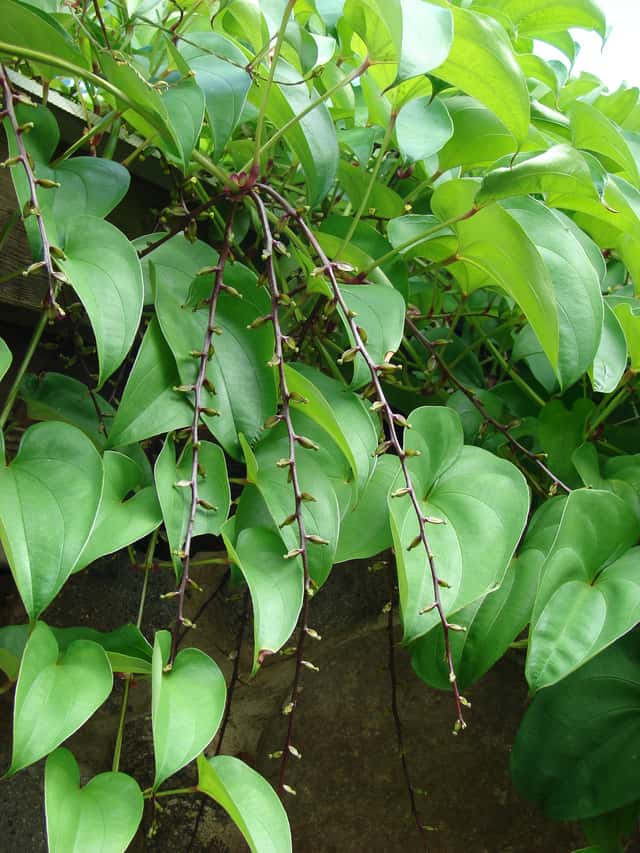
Dioscoreaceae
Purple Yam (Dioscorea alata): Complete Growing Guide
Dioscorea alata
Plant in full sun with fertile, well-draining loamy soil. Water consistently every 7 days during the growing season and provide a trellis or support for climbing. Fertilize monthly and reduce watering as vines die back at season end.
Every 7 days
Bright indirect
21° - 35°C
60% - 90%
Categories
What is Purple Yam?
Purple Yam (Dioscorea alata) is a medium-care plant from the Dioscoreaceae family. Purple Yam (Dioscorea alata) is a vigorous tropical climbing vine grown for its starchy, purple-to-white tubers. Native to Southeast Asia, it has spread throughout tropical Africa, the Americas, and the Pacific. It is one of the most widely cultivated yam species in the world, prized for its culinar...
Purple Yam grows up to 15.0m, spread of 50cm, watering every 7 days, 21°C – 35°C, 60–90% humidity. It is not suitable for indoor environments and not safe for pets.
Without precautions, ingestion can cause irritation in pets. Keep out of reach of cats and dogs.
How to Care for Purple Yam?
TLDR: Purple Yam needs Bright indirect, watering every 7 days, and temperatures between 21-35°C with 60-90% humidity.
How Often Should You Water Purple Yam?
Water every 7 days, allowing the top few centimetres of soil to dry between waterings. Reduce frequency as foliage begins to yellow and die back near harvest time.
How Much Light Does Purple Yam Need?
Thrives in full sun to partial shade. More sunlight drives larger tuber production. Avoid deep shade, which stunts growth and reduces yield.
What Is the Best Soil for Purple Yam?
Use fertile, well-draining loamy soil with pH 5.5–6.5. Incorporate compost before planting. Loose soil texture is essential for unobstructed tuber expansion.
What Pot Should You Use for Purple Yam?
Large container (minimum 40 cm deep) for pot culture; in-ground beds with loose, deep soil are ideal.
Care Schedule
Fertilize
Every 30 days
What Is Purple Yam and Where Does It Come From?
Purple Yam (Dioscorea alata) is a vigorous tropical climbing vine grown for its starchy, purple-to-white tubers. Native to Southeast Asia, it has spread throughout tropical Africa, the Americas, and the Pacific. It is one of the most widely cultivated yam species in the world, prized for its culinary versatility and cultural significance.
How Big Does Purple Yam Grow?
TLDR: Purple Yam can reach up to 15.0m tall with Fast growth rate.
Max height
15.0m
Spread
50cm
Growth rate
Fast
Foliage
Deciduous
Warning: Toxic Plant
This plant can be toxic if ingested. Keep out of reach of:
Plant Uses
Edible
Can be consumed
Medicinal
Medicinal properties
Ornamental
Great for decoration
Medicinal Uses
- Traditional anti-inflammatory poultices; antioxidant properties under study; used in Ayurvedic medicine
Culinary Uses
- Boiled, baked, or steamed tuber; base for ube halaya dessert; natural purple food colouring
Is your plant showing symptoms?
Click on the symptom to discover possible causes:
What Diseases Commonly Affect Purple Yam?
TLDR: Purple Yam is susceptible to 8 known diseases. Monitor regularly for early detection.
Anthracnose
Anthracnose is a fungal disease caused by fungi in the genus Colletotrichum that affects many plants, including vegetables, fruits, and trees. The disease thrives in cool, wet conditions, causing dark, sunken lesions on leaves, stems, flowers, and fruits.
Mosaic Virus
Mosaic virus is a group of plant viruses that cause mottled, patchy patterns on leaves and can affect a wide variety of plants. The virus creates characteristic yellow, white, and green mosaic patterns, often accompanied by stunted growth and deformed plant parts. This highly contagious disease spreads rapidly through insect vectors and contaminated tools.
Root-Knot Nematodes
Root-knot nematodes (Meloidogyne species) are microscopic roundworms that parasitize plant roots, causing characteristic galls or knots. These soil-borne pests are among the most economically damaging plant pathogens worldwide, affecting a wide range of ornamental and edible plants. The nematodes inject enzymes into root cells, causing abnormal swelling and disrupting water and nutrient uptake.
Fusarium Wilt
Fusarium wilt is a serious fungal disease caused by the soil-borne fungus Fusarium oxysporum. The fungus invades roots and blocks the water-conducting vessels (xylem) of the plant, causing progressive wilting and eventual death. Host-specific forms of the pathogen exist that attack different plant species.
Meaning & Symbolism
Symbolises abundance, nourishment, and cultural heritage in tropical communities.
Fun Facts
Purple Yam has been cultivated in tropical Asia for over 10,000 years.
Tuber flesh can range from pure white to deep violet depending on the variety.
It is the star ingredient of ube halaya, the iconic Filipino purple jam dessert.
Frequently asked questions
Can Purple Yam be grown in a pot?
Is Purple Yam toxic?
How long until harvest?
Compare with similar plants
| Attribute | Difficulty | Light | Watering | Pet Safe |
|---|---|---|---|---|
| Dark Fieldcap | Medium | Low light | 2d | ⚠️ |
| Azalea | Medium | Partial shade | 3d | ⚠️ |
| Bougainvillea | Medium | Direct sun | 7d | ⚠️ |
| Wild Lettuce | Medium | Direct sun | 7d | ⚠️ |



