Asteraceae
Painted Daisy: How to Grow and Care for Tanacetum coccineum
Tanacetum coccineum
Plant in full sun to partial shade in well-draining soil. Water consistently but avoid waterlogging. Deadhead spent blooms and cut back stems after flowering to encourage repeat blooming. This plant is very cold-hardy and requires minimal maintenance once established.
Every 7 days
Bright indirect
-28° - 28°C
40% - 65%
Categories
What is Painted Daisy?
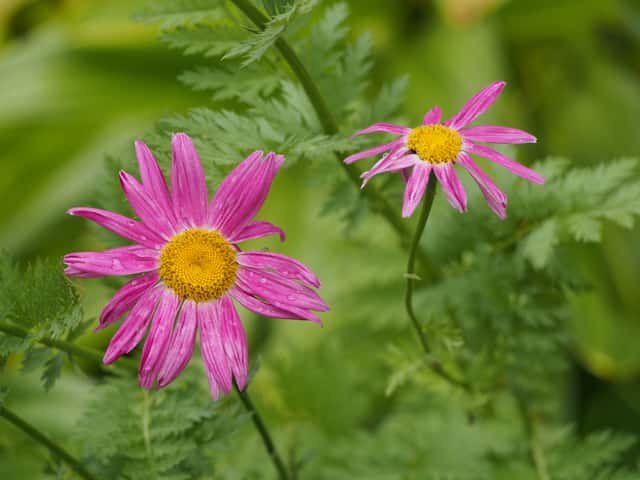
Painted Daisy (Tanacetum coccineum) is a easy-care plant from the Asteraceae family. Tanacetum coccineum, commonly known as the Painted Daisy or Pyrethrum, is a hardy herbaceous perennial in the Asteraceae family, native to Eastern Europe, the Caucasus, and Central Asia. It produces stunning daisy-like flowers in vivid shades of red, pink, purple, and white, each with a golden-yello...
Painted Daisy grows up to 90cm, spread of 45cm, watering every 7 days, -28°C – 28°C, 40–65% humidity. It is not suitable for indoor environments and not safe for pets.
Unlike many tropical plants, Painted Daisy tolerates watering mistakes. Best for beginners. Without precautions, ingestion can cause irritation in pets. Keep out of reach of cats and dogs.
How to Care for Painted Daisy?
TLDR: Painted Daisy needs Bright indirect, watering every 7 days, and temperatures between -28-28°C with 40-65% humidity.
How Often Should You Water Painted Daisy?
Water painted daisies approximately once a week, keeping the soil evenly moist but never waterlogged. Use drip irrigation or a soaker hose to water at the base and keep foliage dry, reducing the risk of fungal issues. Once established, the plant tolerates moderate drought between waterings.
How Much Light Does Painted Daisy Need?
Painted daisy thrives in full sun, requiring at least 6 to 8 hours of direct sunlight per day. In hotter climates (zone 8+), provide afternoon shade to prevent leaf scorch. Insufficient light leads to weak, leggy stems and reduced flowering.
What Is the Best Soil for Painted Daisy?
Prefers light, well-draining soil with a sandy or sandy-loam texture and a pH between 5.5 and 7.5. Avoid heavy clay soils that retain excess moisture, which can lead to root rot. Amend with coarse sand or perlite to improve drainage if needed.
What Pot Should You Use for Painted Daisy?
Terracotta or ceramic pots with adequate drainage holes are ideal, as they allow good soil aeration and prevent waterlogging. Use a light, well-draining potting mix with added perlite or coarse sand.
Care Schedule
Fertilize
Every 90 days
What Is Painted Daisy and Where Does It Come From?
Tanacetum coccineum, commonly known as the Painted Daisy or Pyrethrum, is a hardy herbaceous perennial in the Asteraceae family, native to Eastern Europe, the Caucasus, and Central Asia. It produces stunning daisy-like flowers in vivid shades of red, pink, purple, and white, each with a golden-yellow center disc. Beyond its striking ornamental value, the plant is celebrated for producing pyrethrins — natural insecticidal compounds extracted from its flowers and widely used in organic pest control. It is deer-resistant, attracts butterflies, and thrives in cottage gardens, borders, and cutting gardens.
How to Propagate Painted Daisy?
Seed Sowing
Direct sowing in autumn is also possible in mild-winter regions. Seeds can also be cold-stratified for 4 weeks to improve germination rates.
- 1 Sow seeds directly outdoors after last frost or start indoors 6-8 weeks before last frost
- 2 Press seeds lightly into the soil surface — they need light to germinate
- 3 Keep soil moist until germination occurs in 10-20 days at 18-22°C
- 4 Thin or transplant seedlings to 30-45 cm spacing when large enough to handle
Materials needed:
Root Division
Divide clumps every 2-3 years to rejuvenate the plant and maintain strong flowering vigor.
- 1 Dig up the entire clump in early spring before new growth emerges
- 2 Divide into smaller sections, each with healthy roots and shoots
- 3 Replant divisions immediately at the same depth in prepared soil
- 4 Water well and shade from intense sun for a few days until established
Materials needed:
How Big Does Painted Daisy Grow?
TLDR: Painted Daisy can reach up to 90cm tall with Medium growth rate.
Max height
90cm
Spread
45cm
Growth rate
Medium
Foliage
Deciduous
Warning: Toxic Plant
This plant can be toxic if ingested. Keep out of reach of:
Plant Uses
Ornamental
Great for decoration
Medicinal
Medicinal properties
Medicinal Uses
- Dried pyrethrum flowers are the natural source of pyrethrin insecticides, approved for use in certified organic farming
- Pyrethrin extracts are used in natural insect repellents and low-toxicity household pest control products
Is your plant showing symptoms?
Click on the symptom to discover possible causes:
What Diseases Commonly Affect Painted Daisy?
TLDR: Painted Daisy is susceptible to 6 known diseases. Monitor regularly for early detection.
Aphids
Aphids are small, soft-bodied, pear-shaped insects (1/16 to 1/8 inch long) that feed by sucking nutrient-rich sap from plants. They reproduce rapidly and can quickly weaken plants, causing distorted growth and transmitting plant viruses. Aphids come in various colors including green, black, red, yellow, brown, and gray. They secrete honeydew, a sticky substance that attracts ants and encourages sooty mold growth.
Spider Mites
Spider mites are tiny arachnids (less than 1/20 inch long) related to spiders and ticks that feed on plant sap. They thrive in hot, dry conditions and can cause significant damage to ornamental and vegetable plants. During severe infestations, crop losses can reach 14% or higher as these pests disrupt vital plant processes including photosynthesis, carbon dioxide absorption, and transpiration.
Powdery Mildew
Powdery mildew is a common fungal disease caused by various fungi species including Erysiphe, Podosphaera, Oïdium, and Leveillula. It affects over 10,000 plant species worldwide. The disease thrives in warm, dry climates with high humidity and appears as a distinctive white powdery coating on plant surfaces.
Southern Blight
Southern blight is a devastating soilborne fungal disease caused by Athelia rolfsii (formerly Sclerotium rolfsii), affecting over 500 plant species including vegetables, ornamentals, and fruit crops. The fungus survives in soil through resting structures called sclerotia that resemble mustard seeds and can remain viable for years.
Meaning & Symbolism
Painted daisy symbolizes cheerfulness, innocence, and natural purity. Throughout history, its pyrethrin-rich flowers have made it a symbol of natural protection — a guardian of the garden that repels pests without harming the environment.
Fun Facts
Tanacetum coccineum flowers are the primary commercial source of natural pyrethrin insecticides, which are approved for certified organic agriculture
The plant is native to a region stretching from the Caucasus through Iran to Central Asia, where it grows on rocky slopes and alpine meadows
Pyrethrins are biodegradable and break down rapidly in sunlight, making them far safer for the environment than synthetic chemical insecticides
Frequently asked questions
How often should I water painted daisy?
Is painted daisy toxic to pets?
How do I get more flowers on my painted daisy?
Does painted daisy really repel insects?
Is painted daisy a perennial or annual?
Compare with similar plants
| Attribute | Difficulty | Light | Watering | Pet Safe |
|---|---|---|---|---|
| Field Maple | Easy | Bright indirect | 14d | ✓ |
| Silver Birch | Easy | Direct sun | 14d | ✓ |
| Cushion Bush | Easy | Direct sun | 14d | ✓ |
| Wild Lettuce | Medium | Direct sun | 7d | ⚠️ |





