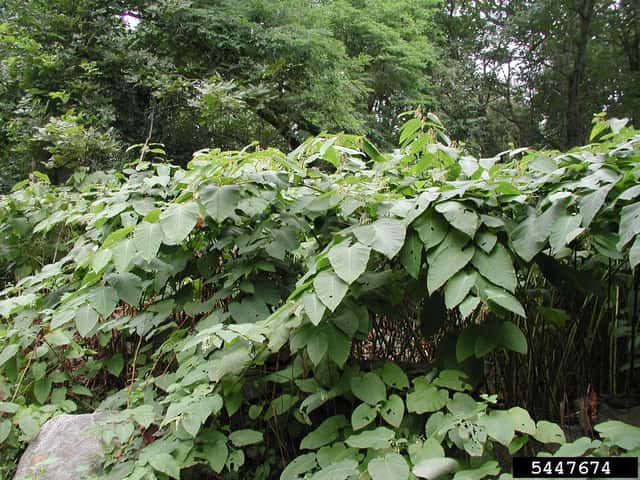
Polygonaceae
Giant Knotweed — Reynoutria sachalinensis
Reynoutria sachalinensis
Giant knotweed is virtually undemanding in cultivation but should never be planted in garden settings due to its extreme invasiveness. It thrives in full sun to partial shade and tolerates a wide range of soils and moisture levels. Water regularly during establishment; mature stands are drought-tolerant. Fertilisation is unnecessary as it thrives in poor soils. Control requires persistent cutting, excavation, or approved herbicide treatments repeated over several years.
Every 14 days
Bright indirect
-25° - 35°C
40% - 90%
Categories
What is Giant Knotweed?
Giant Knotweed (Reynoutria sachalinensis) is a easy-care plant from the Polygonaceae family. Giant knotweed (Reynoutria sachalinensis) is one of the world's most aggressive invasive plants, native to Sakhalin Island, Japan, and eastern Asia. It produces towering hollow stems that can exceed 4 metres in height, with enormous heart-shaped leaves up to 40 cm wide. In late summer, it bears dens...
Giant Knotweed grows up to 4.0m, spread of 300cm, watering every 14 days, -25°C – 35°C, 40–90% humidity. It is not suitable for indoor environments and safe for pets.
Unlike many tropical plants, Giant Knotweed tolerates watering mistakes. Best for beginners. Unlike many popular species, Giant Knotweed is safe to keep around pets.
How to Care for Giant Knotweed?
TLDR: Giant Knotweed needs Bright indirect, watering every 14 days, and temperatures between -25-35°C with 40-90% humidity.
How Often Should You Water Giant Knotweed?
Once established, giant knotweed is highly drought-tolerant and rarely needs supplemental irrigation. During initial planting (in controlled containment), water every 1–2 weeks. Overwatering is not a concern outdoors, but avoid creating conditions that spread rhizome fragments via waterways.
How Much Light Does Giant Knotweed Need?
Thrives in full sun but tolerates partial shade. Provide at least 6 hours of direct sunlight for optimal growth. In shade it grows slightly smaller but remains vigorous and invasive.
What Is the Best Soil for Giant Knotweed?
Tolerates almost any soil type — loamy, sandy, clay, or disturbed ground. Prefers moist, well-drained loam with a pH of 5.5–7.5. No special soil preparation is needed; it will colonise even poor, compacted ground.
What Pot Should You Use for Giant Knotweed?
Not suitable for containers or indoor cultivation. If grown for research in containment, use deep, reinforced containers with solid bases — never mesh or drainage holes that rhizomes can escape through.
Care Schedule
Fertilize
Every 14 days
Misting
Every 3 days
Rotate
Every 7 days
Repot
Every 365 days
What Is Giant Knotweed and Where Does It Come From?
Giant knotweed (Reynoutria sachalinensis) is one of the world's most aggressive invasive plants, native to Sakhalin Island, Japan, and eastern Asia. It produces towering hollow stems that can exceed 4 metres in height, with enormous heart-shaped leaves up to 40 cm wide. In late summer, it bears dense clusters of tiny creamy-white flowers that attract pollinators. Introduced to Europe and North America in the 19th century as an ornamental and fodder plant, it has since escaped cultivation and colonised riverbanks, roadsides, waste ground, and disturbed habitats on a massive scale. Its rhizome system penetrates deep into the soil and can regenerate from fragments as small as 1 cm, making eradication extraordinarily difficult. It outcompetes native vegetation by shading the ground and releasing allelopathic compounds that suppress other plants. Listed among the 100 worst invasive species globally, it poses serious risks to biodiversity, infrastructure, and watercourses.
How Big Does Giant Knotweed Grow?
TLDR: Giant Knotweed can reach up to 4.0m tall with Fast growth rate.
Max height
4.0m
Spread
3.0m
Growth rate
Fast
Foliage
Deciduous
Warning: Toxic Plant
This plant can be toxic if ingested. Keep out of reach of:
Plant Uses
Ornamental
Great for decoration
Medicinal
Medicinal properties
Medicinal Uses
- In traditional Japanese medicine, young shoots were used to treat inflammation and skin conditions
- Root extracts contain resveratrol, a compound studied for its antioxidant properties
Is your plant showing symptoms?
Click on the symptom to discover possible causes:
What Diseases Commonly Affect Giant Knotweed?
TLDR: Giant Knotweed is susceptible to 6 known diseases. Monitor regularly for early detection.
Powdery Mildew
Powdery mildew is a common fungal disease caused by various fungi species including Erysiphe, Podosphaera, Oïdium, and Leveillula. It affects over 10,000 plant species worldwide. The disease thrives in warm, dry climates with high humidity and appears as a distinctive white powdery coating on plant surfaces.
Rust
Rust is a common fungal disease caused by fungi in the order Pucciniales that affects a wide variety of plants. The disease gets its name from the characteristic orange, yellow, or reddish-brown pustules that appear on leaves, resembling metal rust. This obligate fungal parasite requires living plants to survive and can cause significant economic losses in agricultural crops.
Aphids
Aphids are small, soft-bodied, pear-shaped insects (1/16 to 1/8 inch long) that feed by sucking nutrient-rich sap from plants. They reproduce rapidly and can quickly weaken plants, causing distorted growth and transmitting plant viruses. Aphids come in various colors including green, black, red, yellow, brown, and gray. They secrete honeydew, a sticky substance that attracts ants and encourages sooty mold growth.
Leaf Spot
Leaf spot is a common fungal disease caused by various pathogens including Alternaria, Ascochyta, Colletotrichum, Septoria, and Venturia. It primarily affects leaves, causing discolored spots that can lead to premature leaf drop if left untreated.
Fun Facts
Can grow up to 10 cm per day during peak growing season.
Rhizomes can penetrate concrete, tarmac, and building foundations.
A single plant can spread to cover 300 m² within a few years.
Listed on the IUCN's 100 worst invasive alien species list.
Its hollow stems were historically used by children as pea-shooters in Japan.
Frequently asked questions
Is giant knotweed dangerous to humans?
How do I control or kill giant knotweed?
Can giant knotweed be used medicinally?
Compare with similar plants
| Attribute | Difficulty | Light | Watering | Pet Safe |
|---|---|---|---|---|
| Field Maple | Easy | Bright indirect | 14d | ✓ |
| Silver Birch | Easy | Direct sun | 14d | ✓ |
| Cushion Bush | Easy | Direct sun | 14d | ✓ |
| Peruvian peppertree | Easy | Direct sun | 14d | ⚠️ |





