Cyperaceae
Pendulous Sedge: Ground Cover Plant
Carex pendula
Low-maintenance once established in consistently moist soil. Grows in full sun to partial shade and is especially suited to damp, shaded corners and waterside plantings. Cut back tatty foliage in spring and remove flowering stems promptly to curb its enthusiastic self-seeding.
Every 3 days
Partial shade
-20° - 32°C
55% - 90%
Categories
What is Pendulous Sedge?
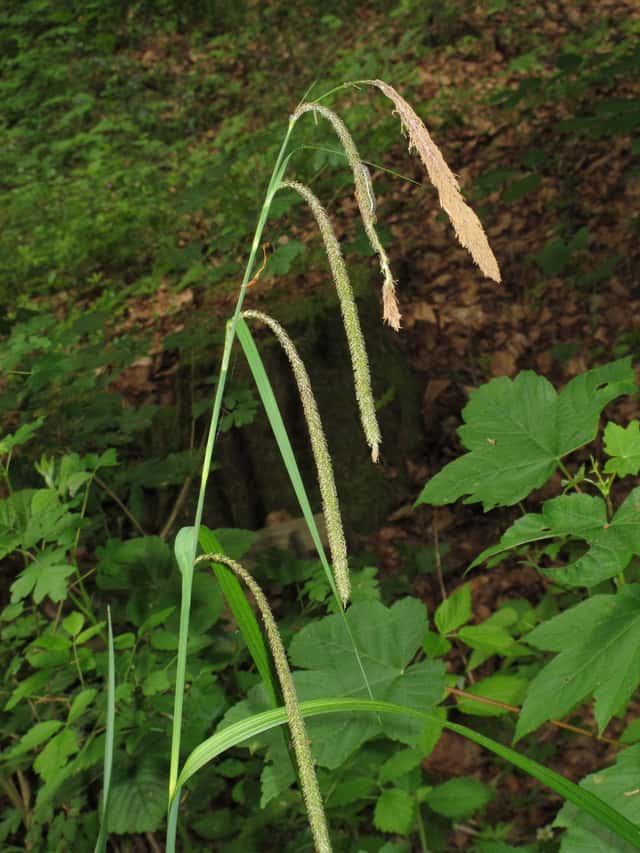
Pendulous Sedge (Carex pendula) is a easy-care plant from the Cyperaceae family. Pendulous sedge is a vigorous, evergreen perennial in the Cyperaceae family, native across western, central and southern Europe. It forms large arching clumps of dark green, pleated, grass-like foliage, above which tall stems carry several slender, drooping flower spikes from spring into summer. A t...
Pendulous Sedge grows up to 1.5m, spread of 100cm, watering every 3 days, -20°C – 32°C, 55–90% humidity. It is not suitable for indoor environments and safe for pets.
Unlike many tropical plants, Pendulous Sedge tolerates watering mistakes. Best for beginners. Unlike many popular species, Pendulous Sedge is safe to keep around pets.
How to Care for Pendulous Sedge?
TLDR: Pendulous Sedge needs Partial shade, watering every 3 days, and temperatures between -20-32°C with 55-90% humidity.
How Often Should You Water Pendulous Sedge?
Keep the soil reliably moist to wet at all times; water generously during dry spells, as this sedge does not cope well with prolonged drought.
How Much Light Does Pendulous Sedge Need?
Thrives in full sun to partial shade; in hotter climates give it partial shade to reduce water stress.
What Is the Best Soil for Pendulous Sedge?
Prefers fertile, humus-rich soil that stays consistently moist or wet; tolerates heavy clay well but dislikes dry, sandy conditions.
What Pot Should You Use for Pendulous Sedge?
Wide, deep containers with a water reservoir, or planted directly in bog gardens and moist borders
Care Schedule
Fertilize
Every 14 days
Misting
Every 3 days
Rotate
Every 7 days
Repot
Every 365 days
What Is Pendulous Sedge and Where Does It Come From?
Pendulous sedge is a vigorous, evergreen perennial in the Cyperaceae family, native across western, central and southern Europe. It forms large arching clumps of dark green, pleated, grass-like foliage, above which tall stems carry several slender, drooping flower spikes from spring into summer. A tough, adaptable plant, it is a favourite for bog gardens, pond margins and damp shaded borders where few other plants thrive.
How to Propagate Pendulous Sedge?
Division
- Divide established clumps from mid-spring to early summer
- Use a sharp spade to separate healthy rooted sections
- 1 Lift the clump
Carefully dig up the clump with a garden fork
- 2 Divide
Cut the clump into smaller sections, each with roots and foliage
- 3 Replant
Replant immediately into moist soil and water thoroughly
Materials needed:
Seed sowing
- Sow outdoors in autumn in a moist site
- Germination can be uneven
- 1 Collect seed
Gather ripe seed from the drooping spikes
- 2 Sow
Sow onto moist compost surface in autumn
- 3 Keep moist
Keep the compost consistently moist until germination
Materials needed:
How Big Does Pendulous Sedge Grow?
TLDR: Pendulous Sedge can reach up to 1.5m tall with Fast growth rate.
Max height
1.5m
Spread
1.0m
Growth rate
Fast
Foliage
Evergreen
Plant Uses
Ornamental
Great for decoration
Ground Cover
Soil coverage
Edible
Can be consumed
Culinary Uses
- Roasted, ground seeds used as a flour substitute
- Raw seeds added to salads
Is your plant showing symptoms?
Click on the symptom to discover possible causes:
What Diseases Commonly Affect Pendulous Sedge?
TLDR: Pendulous Sedge is susceptible to 4 known diseases. Monitor regularly for early detection.
Aphids
Aphids are small, soft-bodied, pear-shaped insects (1/16 to 1/8 inch long) that feed by sucking nutrient-rich sap from plants. They reproduce rapidly and can quickly weaken plants, causing distorted growth and transmitting plant viruses. Aphids come in various colors including green, black, red, yellow, brown, and gray. They secrete honeydew, a sticky substance that attracts ants and encourages sooty mold growth.
Leaf Spot
Leaf spot is a common fungal disease caused by various pathogens including Alternaria, Ascochyta, Colletotrichum, Septoria, and Venturia. It primarily affects leaves, causing discolored spots that can lead to premature leaf drop if left untreated.
Root Rot
Root rot is a serious fungal disease that affects the root system of plants, causing them to decay and die. It is primarily caused by overwatering, poor drainage, or soil-borne fungi such as Pythium, Phytophthora, Rhizoctonia, and Fusarium. The disease thrives in waterlogged conditions where roots are deprived of oxygen, making them susceptible to fungal infection.
Rust
Rust is a common fungal disease caused by fungi in the order Pucciniales that affects a wide variety of plants. The disease gets its name from the characteristic orange, yellow, or reddish-brown pustules that appear on leaves, resembling metal rust. This obligate fungal parasite requires living plants to survive and can cause significant economic losses in agricultural crops.
Meaning & Symbolism
Resilience and adaptability, thriving gracefully in damp, shaded corners where other plants struggle
Compare with similar plants
| Attribute | Difficulty | Light | Watering | Pet Safe |
|---|---|---|---|---|
| Field Maple | Easy | Bright indirect | 14d | ✓ |
| Silver Birch | Easy | Direct sun | 14d | ✓ |
| Cushion Bush | Easy | Direct sun | 14d | ✓ |
| Peruvian peppertree | Easy | Direct sun | 14d | ⚠️ |





