Ericaceae
Pacific Rhododendron: Complete Care Guide
Rhododendron macrophyllum
Grow in acidic, humus-rich, well-drained soil in part shade. Keep consistently moist but never waterlogged, and mulch to protect shallow roots. Prune lightly after flowering to maintain shape.
Every 5 days
Partial shade
-15° - 27°C
50% - 80%
Categories
What is Pacific Rhododendron?
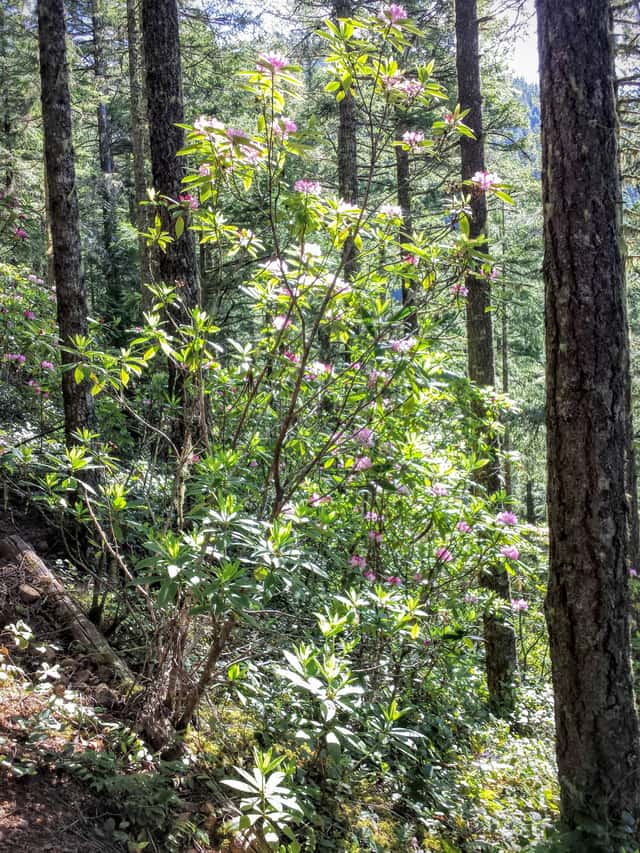
Pacific Rhododendron (Rhododendron macrophyllum) is a medium-care plant from the Ericaceae family. The Pacific Rhododendron is a large evergreen shrub native to coastal forests from British Columbia to northern California, and is the state flower of Washington. It forms dense, leathery, dark-green foliage and produces showy clusters of pink to rose-purple, bell-shaped flowers in late spring throu...
Pacific Rhododendron grows up to 5.0m, spread of 350cm, watering every 5 days, -15°C – 27°C, 50–80% humidity. It is not suitable for indoor environments and not safe for pets.
Without precautions, ingestion can cause irritation in pets. Keep out of reach of cats and dogs.
How to Care for Pacific Rhododendron?
TLDR: Pacific Rhododendron needs Partial shade, watering every 5 days, and temperatures between -15-27°C with 50-80% humidity.
How Often Should You Water Pacific Rhododendron?
Water deeply whenever the top of the soil starts to dry; this shrub dislikes both drought and soggy roots, so aim for steady, even moisture.
How Much Light Does Pacific Rhododendron Need?
Best in dappled or part shade; it tolerates full sun only where soil moisture stays high year-round.
What Is the Best Soil for Pacific Rhododendron?
Needs acidic soil (pH 4.5-6.0) rich in organic matter, such as a pine-bark or peat-based ericaceous mix, with sharp drainage.
What Pot Should You Use for Pacific Rhododendron?
A wide, shallow container with excellent drainage holes; ericaceous (acidic) potting mix is essential for container culture.
Care Schedule
Fertilize
Every 14 days
Misting
Every 3 days
Rotate
Every 7 days
Repot
Every 365 days
What Is Pacific Rhododendron and Where Does It Come From?
The Pacific Rhododendron is a large evergreen shrub native to coastal forests from British Columbia to northern California, and is the state flower of Washington. It forms dense, leathery, dark-green foliage and produces showy clusters of pink to rose-purple, bell-shaped flowers in late spring through summer. In the wild it thrives as an understory shrub beneath conifers, prized by gardeners for woodland and shade borders.
How to Propagate Pacific Rhododendron?
Semi-hardwood cuttings
- Take cuttings in late summer from current-season growth
- Use rooting hormone to improve success
- Keep in high humidity until roots form
- 1 Select stem
Cut a 10-15cm semi-hardwood stem tip with a few leaves attached.
- 2 Apply hormone
Dip the wounded end in rooting hormone powder or gel.
- 3 Plant and cover
Insert into a moist, acidic, well-draining mix and cover with plastic to retain humidity.
Materials needed:
How Big Does Pacific Rhododendron Grow?
TLDR: Pacific Rhododendron can reach up to 5.0m tall with Medium growth rate.
Max height
5.0m
Spread
3.5m
Growth rate
Medium
Foliage
Evergreen
Warning: Toxic Plant
This plant can be toxic if ingested. Keep out of reach of:
Plant Uses
Ornamental
Great for decoration
Is your plant showing symptoms?
Click on the symptom to discover possible causes:
What Diseases Commonly Affect Pacific Rhododendron?
TLDR: Pacific Rhododendron is susceptible to 7 known diseases. Monitor regularly for early detection.
Spider Mites
Spider mites are tiny arachnids (less than 1/20 inch long) related to spiders and ticks that feed on plant sap. They thrive in hot, dry conditions and can cause significant damage to ornamental and vegetable plants. During severe infestations, crop losses can reach 14% or higher as these pests disrupt vital plant processes including photosynthesis, carbon dioxide absorption, and transpiration.
Aphids
Aphids are small, soft-bodied, pear-shaped insects (1/16 to 1/8 inch long) that feed by sucking nutrient-rich sap from plants. They reproduce rapidly and can quickly weaken plants, causing distorted growth and transmitting plant viruses. Aphids come in various colors including green, black, red, yellow, brown, and gray. They secrete honeydew, a sticky substance that attracts ants and encourages sooty mold growth.
Powdery Mildew
Powdery mildew is a common fungal disease caused by various fungi species including Erysiphe, Podosphaera, Oïdium, and Leveillula. It affects over 10,000 plant species worldwide. The disease thrives in warm, dry climates with high humidity and appears as a distinctive white powdery coating on plant surfaces.
Leaf Spot
Leaf spot is a common fungal disease caused by various pathogens including Alternaria, Ascochyta, Colletotrichum, Septoria, and Venturia. It primarily affects leaves, causing discolored spots that can lead to premature leaf drop if left untreated.
Meaning & Symbolism
Associated with resilience and quiet caution in Pacific Northwest woodland lore, reflecting its toxic nature hidden behind beautiful blooms.
Compare with similar plants
| Attribute | Difficulty | Light | Watering | Pet Safe |
|---|---|---|---|---|
| Dark Fieldcap | Medium | Low light | 2d | ⚠️ |
| Azalea | Medium | Partial shade | 3d | ⚠️ |
| Bougainvillea | Medium | Direct sun | 7d | ⚠️ |
| Wild Lettuce | Medium | Direct sun | 7d | ⚠️ |
Choose & Compare
Sources & References
- Pacific Rhododendron Care – Gardening Know How
- Rhododendron macrophyllum – Lady Bird Johnson Wildflower Center
- Rhododendron-Phytophthora Blight and Dieback – PNW Handbooks
- Rhododendron-Powdery Mildew – PNW Handbooks
- Rhododendron-Rusts – PNW Handbooks
- Rhododendron macrophyllum – RHS
- How to Solve Pacific rhododendron Issues – PictureThis



