Rosaceae
Himalayan Blackberry: How to Grow Rubus bifrons
Rubus bifrons
Grow in full sun for best fruiting, in well-drained soil rich in organic matter. Water regularly but allow soil to dry between waterings; drought tolerant once established. Prune annually to control vigorous growth and encourage fruit production.
Every 7 days
Bright indirect
-15° - 35°C
40% - 70%
Categories
What is Himalayan Blackberry?
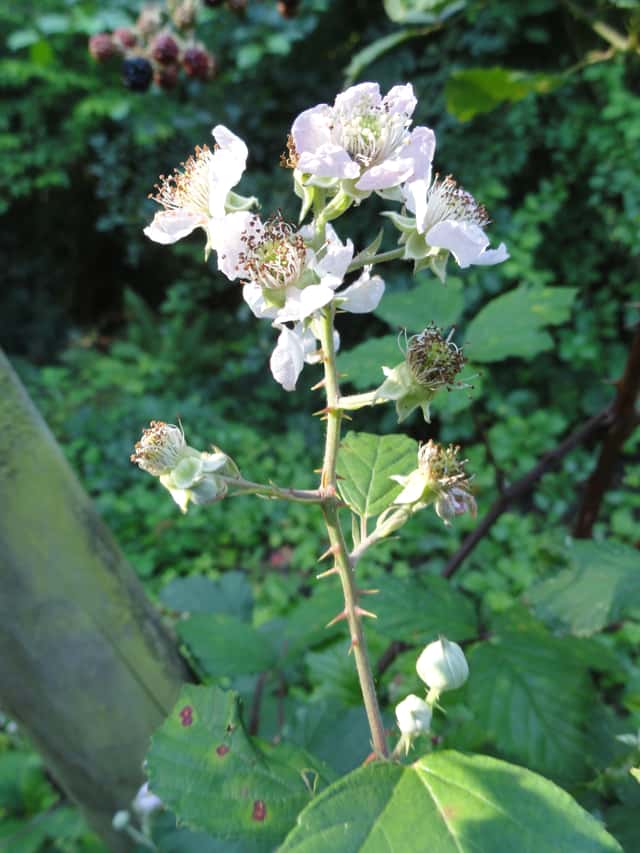
Himalayan Blackberry (Rubus bifrons) is a easy-care plant from the Rosaceae family. Himalayan Blackberry (Rubus bifrons) is a thorny, sprawling shrub in the Rosaceae family, native to Europe and western Asia. It grows vigorously, forming dense thickets with arching canes reaching several meters, producing white to pale pink flowers in late spring/summer followed by glossy black, sw...
Himalayan Blackberry grows up to 4.0m, spread of 400cm, watering every 7 days, -15°C – 35°C, 40–70% humidity. It is not suitable for indoor environments and safe for pets.
Unlike many tropical plants, Himalayan Blackberry tolerates watering mistakes. Best for beginners. Unlike many popular species, Himalayan Blackberry is safe to keep around pets.
How to Care for Himalayan Blackberry?
TLDR: Himalayan Blackberry needs Bright indirect, watering every 7 days, and temperatures between -15-35°C with 40-70% humidity.
How Often Should You Water Himalayan Blackberry?
Water deeply about once a week, letting the top layer of soil dry out between waterings. Avoid waterlogging, which promotes root rot.
How Much Light Does Himalayan Blackberry Need?
Prefers full sun (6+ hours daily) for maximum flowering and fruiting, but tolerates partial shade.
What Is the Best Soil for Himalayan Blackberry?
Loamy, well-draining soil rich in organic matter; slightly acidic to neutral pH (5.5-7.0).
What Pot Should You Use for Himalayan Blackberry?
Large container (10+ gallons) or direct ground planting due to vigorous size
Care Schedule
Fertilize
Every 60 days
What Is Himalayan Blackberry and Where Does It Come From?
Himalayan Blackberry (Rubus bifrons) is a thorny, sprawling shrub in the Rosaceae family, native to Europe and western Asia. It grows vigorously, forming dense thickets with arching canes reaching several meters, producing white to pale pink flowers in late spring/summer followed by glossy black, sweet fruit in summer. Extremely hardy, it has become invasive in many regions outside its native range.
How to Propagate Himalayan Blackberry?
Tip layering
This method mimics the plant's natural spread, as canes root easily at their tips.
- 1 Bend a cane tip down until it touches the soil
- 2 Cover the tip with soil, keeping it buried
- 3 Keep moist until roots form
- 4 Separate from the mother plant and transplant
Materials needed:
How Big Does Himalayan Blackberry Grow?
TLDR: Himalayan Blackberry can reach up to 4.0m tall with Fast growth rate.
Max height
4.0m
Spread
4.0m
Growth rate
Fast
Foliage
Deciduous
Plant Uses
Edible
Can be consumed
Ornamental
Great for decoration
Culinary Uses
- Edible fruit used in jams, pies, and eaten fresh
Is your plant showing symptoms?
Click on the symptom to discover possible causes:
What Diseases Commonly Affect Himalayan Blackberry?
TLDR: Himalayan Blackberry is susceptible to 7 known diseases. Monitor regularly for early detection.
Powdery Mildew
Powdery mildew is a common fungal disease caused by various fungi species including Erysiphe, Podosphaera, Oïdium, and Leveillula. It affects over 10,000 plant species worldwide. The disease thrives in warm, dry climates with high humidity and appears as a distinctive white powdery coating on plant surfaces.
Root Rot
Root rot is a serious fungal disease that affects the root system of plants, causing them to decay and die. It is primarily caused by overwatering, poor drainage, or soil-borne fungi such as Pythium, Phytophthora, Rhizoctonia, and Fusarium. The disease thrives in waterlogged conditions where roots are deprived of oxygen, making them susceptible to fungal infection.
Spider Mites
Spider mites are tiny arachnids (less than 1/20 inch long) related to spiders and ticks that feed on plant sap. They thrive in hot, dry conditions and can cause significant damage to ornamental and vegetable plants. During severe infestations, crop losses can reach 14% or higher as these pests disrupt vital plant processes including photosynthesis, carbon dioxide absorption, and transpiration.
Aphids
Aphids are small, soft-bodied, pear-shaped insects (1/16 to 1/8 inch long) that feed by sucking nutrient-rich sap from plants. They reproduce rapidly and can quickly weaken plants, causing distorted growth and transmitting plant viruses. Aphids come in various colors including green, black, red, yellow, brown, and gray. They secrete honeydew, a sticky substance that attracts ants and encourages sooty mold growth.
Fun Facts
A single cane can grow over 7 meters in a single season
It is considered invasive in parts of North America and Australia
Its fruit is larger and sweeter than common blackberry
Frequently asked questions
Does Himalayan Blackberry need a lot of sun?
How often should I water it?
Is the fruit edible?
Is this plant invasive?
Compare with similar plants
| Attribute | Difficulty | Light | Watering | Pet Safe |
|---|---|---|---|---|
| Field Maple | Easy | Bright indirect | 14d | ✓ |
| Silver Birch | Easy | Direct sun | 14d | ✓ |
| Cushion Bush | Easy | Direct sun | 14d | ✓ |
| Peruvian peppertree | Easy | Direct sun | 14d | ⚠️ |
Choose & Compare
Sources & References
- Rubus bifrons - Wikipedia
- Rubus armeniacus - Wikipedia
- Rubus bifrons | NC State Extension Gardener Plant Toolbox
- Rubus armeniacus | Landscape Plants | Oregon State University
- Himalayan blackberry identification and control - King County
- Himalayan Blackberry | Rubus bifrons - Benton SWCD
- Himalayan Blackberry | Solve Pest Problems - OSU
- Blackberry (Rubus spp.)-Blackberry Rust | PNW Pest Management Handbooks





