Asparagaceae
Agave asperrima - Rough Agave Care Guide
Agave asperrima
A tough, low-maintenance succulent built for full sun and neglect. Give it gritty, fast-draining sandy soil, water only when the soil is bone dry, and keep it away from winter wet. Handle with gloves - the sap can irritate skin.
Every 21 days
Direct sun
-9° - 40°C
20% - 40%
Categories
What is Rough Agave?
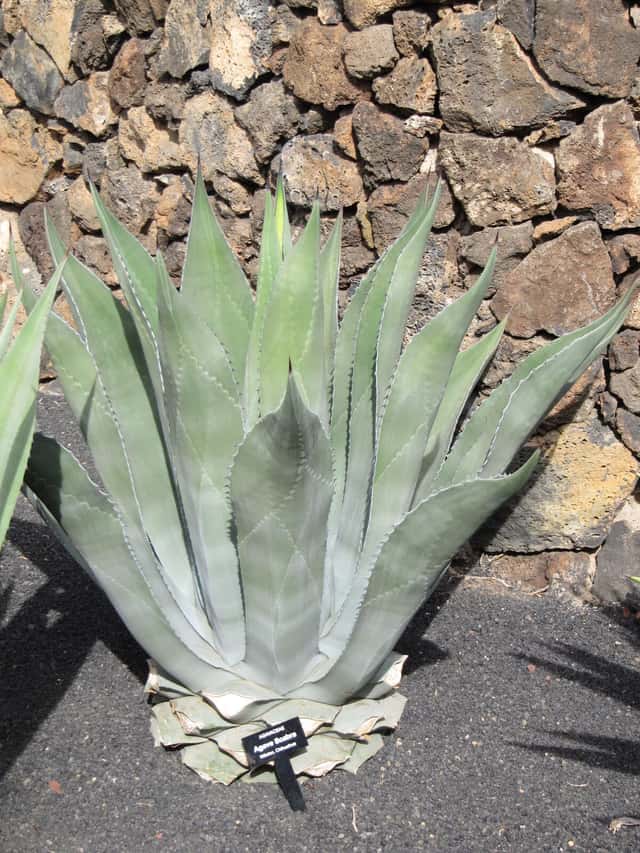
Rough Agave (Agave asperrima) is a easy-care plant from the Asparagaceae family. Agave asperrima is a stemless, evergreen succulent native to the arid scrublands of southern Texas and central-northern Mexico. It forms a dense rosette of 30-40 broad, gray-green leaves edged with sharp marginal teeth and tipped with a stout terminal spine, reaching roughly 1 meter tall and up to 2...
Rough Agave grows up to 1.0m, spread of 200cm, watering every 21 days, -9°C – 40°C, 20–40% humidity. It is suitable for indoor environments and not safe for pets.
Unlike many tropical plants, Rough Agave tolerates watering mistakes. Best for beginners. Without precautions, ingestion can cause irritation in pets. Keep out of reach of cats and dogs. Without adequate drainage, root rot can develop within 42 days.
How to Care for Rough Agave?
TLDR: Rough Agave needs Direct sun, watering every 21 days, and temperatures between -9-40°C with 20-40% humidity.
How Often Should You Water Rough Agave?
Water deeply but infrequently, letting the soil dry out completely between waterings (roughly every 3 weeks in summer, much less in winter). Overwatering, especially in cold or humid conditions, quickly leads to crown and root rot.
How Much Light Does Rough Agave Need?
Needs full sun to thrive and develop its compact, well-formed rosette; tolerates light afternoon shade in the hottest climates but becomes leggy in low light.
What Is the Best Soil for Rough Agave?
Plant in sandy, gravelly, well-draining soil (a cactus or succulent mix amended with coarse sand or pumice works well). Avoid heavy, water-retentive soils.
What Pot Should You Use for Rough Agave?
Unglazed terracotta pot with generous drainage holes, which wicks away excess moisture and suits its drought-tolerant roots.
What Is Rough Agave and Where Does It Come From?
Agave asperrima is a stemless, evergreen succulent native to the arid scrublands of southern Texas and central-northern Mexico. It forms a dense rosette of 30-40 broad, gray-green leaves edged with sharp marginal teeth and tipped with a stout terminal spine, reaching roughly 1 meter tall and up to 2 meters across. After 7 to 15 or more years of slow growth, a mature rosette sends up a tall flowering stalk 4-7 meters high bearing yellow blooms, then dies - but not before producing offsets (pups) around its base that carry the plant forward. In its native Mexico it is a traditional source for mezcal-style spirits distilled from the roasted, fermented core.
How to Propagate Rough Agave?
Offset (Pup) Division
Wear thick gloves and long sleeves, as the sap is a skin irritant. Avoid watering the pup again until it shows new growth to prevent rot.
- 1 Wait until offsets (pups) reach at least 10-15 cm across with their own roots
- 2 Use a clean, sharp knife to sever the pup from the mother plant close to its base
- 3 Let the cut surface callus and dry for 3-5 days in a shaded, airy spot
- 4 Plant the pup in well-draining sandy soil mix
- 5 Water lightly once, then withhold water for about a week until new roots establish
Materials needed:
Seed Propagation
Germination and early growth are slow; keep soil just barely moist and avoid overwatering seedlings.
- 1 Surface-sow seeds on a well-draining sandy soil mix without covering them
- 2 Keep at 15-20 C (59-68 F) in bright, indirect light
- 3 Mist lightly to keep the surface barely moist until germination
- 4 Transplant seedlings once they develop 2-3 true leaves
Materials needed:
How Big Does Rough Agave Grow?
TLDR: Rough Agave can reach up to 1.0m tall with Slow growth rate.
Max height
1.0m
Spread
2.0m
Growth rate
Slow
Foliage
Evergreen
Warning: Toxic Plant
This plant can be toxic if ingested. Keep out of reach of:
Plant Uses
Ornamental
Great for decoration
Edible
Can be consumed
Culinary Uses
- Roasted, fermented core (pina) traditionally distilled into mezcal-style spirits
Is your plant showing symptoms?
Click on the symptom to discover possible causes:
What Diseases Commonly Affect Rough Agave?
TLDR: Rough Agave is susceptible to 7 known diseases. Monitor regularly for early detection.
Bacterial Soft Rot
Erwinia is a genus of plant-pathogenic bacteria that cause fast-spreading rots and blights. On apple and pear, Erwinia amylovora causes fire blight: tender shoots wilt, turn dark, and often bend like a shepherd’s crook; blossoms and twigs may ooze a sticky, amber liquid. In vegetables and many houseplants, related Erwinia-type bacteria cause soft rot: leaves or stems look water-soaked, turn mushy, and smell bad, often starting at wounds or at the crown. These bacteria spread by splashing water, insects, dirty tools, and infected plant parts, especially in warm, wet weather.
Root Rot
Root rot is a serious fungal disease that affects the root system of plants, causing them to decay and die. It is primarily caused by overwatering, poor drainage, or soil-borne fungi such as Pythium, Phytophthora, Rhizoctonia, and Fusarium. The disease thrives in waterlogged conditions where roots are deprived of oxygen, making them susceptible to fungal infection.
Overwatering
Overwatering occurs when plants receive too much water, depriving roots of oxygen and causing root rot. This environmental stress is one of the most common causes of houseplant death, as waterlogged soil prevents roots from breathing and functioning properly.
Fusarium Wilt
Fusarium wilt is a serious fungal disease caused by the soil-borne fungus Fusarium oxysporum. The fungus invades roots and blocks the water-conducting vessels (xylem) of the plant, causing progressive wilting and eventual death. Host-specific forms of the pathogen exist that attack different plant species.
Meaning & Symbolism
Endurance and resilience, reflecting its ability to thrive in harsh, arid conditions.
Fun Facts
The rosette is monocarpic: it flowers only once, after 7 to 15+ years, then dies, leaving behind offsets (pups) to continue the plant.
Its roasted, fermented core (pina) has traditionally been distilled into mezcal-style spirits in central and northern Mexico.
The flowering stalk can shoot up 4 to 7 meters tall in just a few months before blooming.
Handle with gloves: the sap contains calcium oxalate raphides that can cause skin irritation similar to a chemical burn.
Frequently asked questions
How often should I water Agave asperrima?
Is Agave asperrima toxic to pets?
How much sunlight does it need?
Will it flower indoors?
Compare with similar plants
| Attribute | Difficulty | Light | Watering | Pet Safe |
|---|---|---|---|---|
| Field Maple | Easy | Bright indirect | 14d | ✓ |
| Silver Birch | Easy | Direct sun | 14d | ✓ |
| Common Blanketflower | Easy | Direct sun | 10d | ✓ |
| Cushion Bush | Easy | Direct sun | 14d | ✓ |
Choose & Compare
Sources & References
- Agave asperrima - Useful Tropical Plants
- Agave asperrima Jacobi - Pl@ntNet World Flora
- Maguey áspero (Agave asperrima) - EncicloVida
- Agave Asperrima Plant Care & Growing Basics - PlantIn
- Agave Asperrima Care Guide - Succulents Network
- Agave asperrima - How to grow & care - GrowPlants
- Reference: Agave Hardiness - Agaveville forum
- Agave Snout Weevil - Identify and Stop It - Gardenia.net
- Agave Snout Weevils - Backbone Valley Nursery





