Araceae
Aglaonema rotundum Care Guide
Aglaonema rotundum
Provide bright, indirect light and let the top 2-5 cm of soil dry out between waterings, roughly every 7-10 days. Keep in well-draining, organic-rich soil, maintain moderate to high humidity, and avoid temperatures below 16C (60F). Feed monthly during spring and summer.
Every 7 days
Partial shade
16° - 27°C
50% - 70%
Categories
What is Round-Leaf Aglaonema?
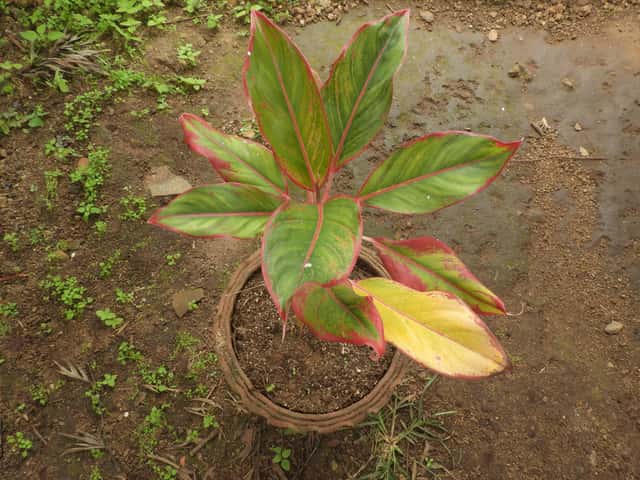
Round-Leaf Aglaonema (Aglaonema rotundum) is a easy-care plant from the Araceae family. Aglaonema rotundum is a striking true species of Chinese evergreen native to the shaded rainforest understory near Medan, North Sumatra, Indonesia. It is prized for its rounded, leathery, near-black leaves marked with vivid pink to wine-red veins, one of the boldest color contrasts found in any Agla...
Round-Leaf Aglaonema grows up to 50cm, spread of 40cm, watering every 7 days, 16°C – 27°C, 50–70% humidity. It is suitable for indoor environments and not safe for pets.
Unlike many tropical plants, Round-Leaf Aglaonema tolerates watering mistakes. Best for beginners. Without precautions, ingestion can cause irritation in pets. Keep out of reach of cats and dogs. Without adequate drainage, root rot can develop within 14 days.
How to Care for Round-Leaf Aglaonema?
TLDR: Round-Leaf Aglaonema needs Partial shade, watering every 7 days, and temperatures between 16-27°C with 50-70% humidity.
How Often Should You Water Round-Leaf Aglaonema?
Water thoroughly when the top 2 inches (5 cm) of soil feel dry, letting excess drain freely. Aglaonema rotundum dislikes both bone-dry and soggy soil - overwatering is the most common cause of root rot.
How Much Light Does Round-Leaf Aglaonema Need?
Bright, indirect light keeps the pink veining vibrant; avoid direct sun, which scorches the leaves. It tolerates lower light but growth slows and coloration fades.
What Is the Best Soil for Round-Leaf Aglaonema?
Use a loose, well-draining mix of potting soil, perlite, and orchid bark or coco coir. A slightly acidic pH (5.6-6.5) supports healthy root growth.
What Pot Should You Use for Round-Leaf Aglaonema?
A pot with ample drainage holes, terracotta or plastic; size up only when roots fill the current pot.
Care Schedule
Fertilize
Every 30 days
Misting
Every 7 days
Rotate
Every 14 days
Repot
Every 365 days
What Is Round-Leaf Aglaonema and Where Does It Come From?
Aglaonema rotundum is a striking true species of Chinese evergreen native to the shaded rainforest understory near Medan, North Sumatra, Indonesia. It is prized for its rounded, leathery, near-black leaves marked with vivid pink to wine-red veins, one of the boldest color contrasts found in any Aglaonema species. Compact and slow-growing, it typically reaches 30-50 cm indoors, making it well suited to shelves, side tables, and low-light corners of the home.
How to Propagate Round-Leaf Aglaonema?
Division of offsets
Keep newly divided plants in bright, indirect light and high humidity until new growth appears.
- 1 Remove the plant from its pot and gently loosen the root ball.
- 2 Locate natural offsets or clumps with their own roots.
- 3 Use a clean, sharp knife to separate an offset with roots intact.
- 4 Pot each division in fresh, well-draining soil and water lightly.
Materials needed:
How Big Does Round-Leaf Aglaonema Grow?
TLDR: Round-Leaf Aglaonema can reach up to 50cm tall with Medium growth rate.
Max height
50cm
Spread
40cm
Growth rate
Medium
Foliage
Evergreen
Warning: Toxic Plant
This plant can be toxic if ingested. Keep out of reach of:
Plant Uses
Ornamental
Great for decoration
Air Purifying
Improves air quality
Is your plant showing symptoms?
Click on the symptom to discover possible causes:
What Diseases Commonly Affect Round-Leaf Aglaonema?
TLDR: Round-Leaf Aglaonema is susceptible to 9 known diseases. Monitor regularly for early detection.
Root Rot
Root rot is a serious fungal disease that affects the root system of plants, causing them to decay and die. It is primarily caused by overwatering, poor drainage, or soil-borne fungi such as Pythium, Phytophthora, Rhizoctonia, and Fusarium. The disease thrives in waterlogged conditions where roots are deprived of oxygen, making them susceptible to fungal infection.
Leaf Spot
Leaf spot is a common fungal disease caused by various pathogens including Alternaria, Ascochyta, Colletotrichum, Septoria, and Venturia. It primarily affects leaves, causing discolored spots that can lead to premature leaf drop if left untreated.
Anthracnose
Anthracnose is a fungal disease caused by fungi in the genus Colletotrichum that affects many plants, including vegetables, fruits, and trees. The disease thrives in cool, wet conditions, causing dark, sunken lesions on leaves, stems, flowers, and fruits.
Powdery Mildew
Powdery mildew is a common fungal disease caused by various fungi species including Erysiphe, Podosphaera, Oïdium, and Leveillula. It affects over 10,000 plant species worldwide. The disease thrives in warm, dry climates with high humidity and appears as a distinctive white powdery coating on plant surfaces.
Meaning & Symbolism
In Southeast Asian and Feng Shui tradition, Aglaonema is regarded as a symbol of luck, prosperity, and enduring friendship.
Fun Facts
Aglaonema rotundum was originally discovered growing near a waterfall at about 360 m elevation near Medan, North Sumatra.
Its near-black leaves with glowing pink to wine-red veins make it one of the most striking true species in the Aglaonema genus.
In Feng Shui, Aglaonema plants are traditionally considered symbols of luck and prosperity.
Frequently asked questions
Is Aglaonema rotundum toxic to pets?
How often should I water Aglaonema rotundum?
Does Aglaonema rotundum need bright light?
How big does Aglaonema rotundum get?
Compare with similar plants
| Attribute | Difficulty | Light | Watering | Pet Safe |
|---|---|---|---|---|
| Field Maple | Easy | Bright indirect | 14d | ✓ |
| Silver Birch | Easy | Direct sun | 14d | ✓ |
| Common Blanketflower | Easy | Direct sun | 10d | ✓ |
| Cushion Bush | Easy | Direct sun | 14d | ✓ |





