Asteraceae
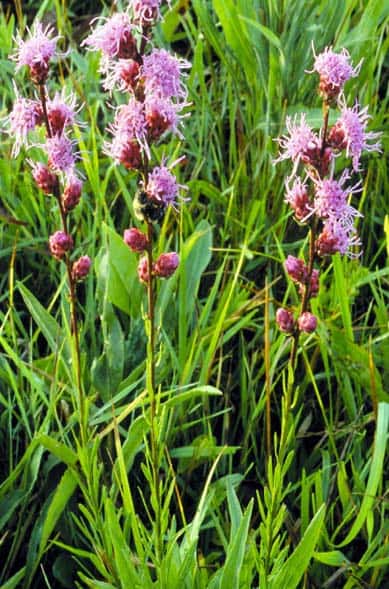
Liatris aspera - Rough Blazing Star
Liatris aspera
Plant in full sun with sandy or rocky, well-drained soil. Water regularly the first season to establish, then only during extended drought. Avoid heavy, wet soils that encourage corm rot.
Every 10 days
Direct sun
-35° - 38°C
30% - 70%
Categories
What is Rough Blazing Star?
Rough Blazing Star (Liatris aspera) is a easy-care plant from the Asteraceae family. Liatris aspera is a native North American prairie perennial in the daisy family, prized for its dense spikes of rosy-purple, button-like flowers that open from the top down along an unbranched stem. Rising 2 to 4 feet tall from a woody corm, it thrives in full sun and lean, well-drained soil, making...
Rough Blazing Star grows up to 1.2m, spread of 30cm, watering every 10 days, -35°C – 38°C, 30–70% humidity. It is not suitable for indoor environments and safe for pets.
Unlike many tropical plants, Rough Blazing Star tolerates watering mistakes. Best for beginners. Unlike many popular species, Rough Blazing Star is safe to keep around pets.
How to Care for Rough Blazing Star?
TLDR: Rough Blazing Star needs Direct sun, watering every 10 days, and temperatures between -35-38°C with 30-70% humidity.
How Often Should You Water Rough Blazing Star?
Water deeply but infrequently; let the soil dry between waterings. Once established, Liatris aspera is highly drought tolerant and rarely needs supplemental water except in prolonged dry spells.
How Much Light Does Rough Blazing Star Need?
Give it full sun (6+ hours of direct light daily). It tolerates light afternoon shade, but flowering and stem strength are best in full sun.
What Is the Best Soil for Rough Blazing Star?
Use sandy, rocky, or well-drained soil with a slightly acidic pH. Avoid heavy clay or soils that stay wet, as excess moisture leads to root and corm rot.
What Pot Should You Use for Rough Blazing Star?
If grown in a container, choose a deep pot with ample drainage holes to accommodate the corm and prevent waterlogging.
What Is Rough Blazing Star and Where Does It Come From?
Liatris aspera is a native North American prairie perennial in the daisy family, prized for its dense spikes of rosy-purple, button-like flowers that open from the top down along an unbranched stem. Rising 2 to 4 feet tall from a woody corm, it thrives in full sun and lean, well-drained soil, making it a staple of prairie restorations and pollinator gardens. Its blooms are a magnet for bees, butterflies, and skippers from midsummer into fall.
How to Propagate Rough Blazing Star?
Seed Propagation
Fall direct-sowing outdoors mimics natural stratification and often gives the best germination rates.
- 1 Collect ripe seed heads in fall once the fluffy pappus appears.
- 2 Cold-moist stratify seeds for 4-6 weeks at about 4C (40F) in damp sand or a sealed bag in the refrigerator.
- 3 Sow stratified seed about 0.6 cm deep in a firm, weed-free seedbed or trays in early spring.
- 4 Keep soil temperature around 15-20C and lightly moist until germination.
- 5 Transplant seedlings to their permanent sunny location once they have several true leaves.
Materials needed:
Corm Division
Always leave at least one eye per division and avoid planting in soggy soil to prevent corm rot.
- 1 In fall after stems die back, dig up an established clump of corms with a spade.
- 2 Gently rinse soil away to expose the corm mass.
- 3 Cut or separate corms with a clean, sharp knife, keeping at least one growth point (eye) per division.
- 4 Dust cut surfaces with fungicide to prevent rot.
- 5 Replant divisions immediately in well-drained soil, or store in slightly moist sphagnum peat around 28-30F until spring planting.
Materials needed:
How Big Does Rough Blazing Star Grow?
TLDR: Rough Blazing Star can reach up to 1.2m tall with Medium growth rate.
Max height
1.2m
Spread
30cm
Growth rate
Medium
Foliage
Deciduous
Plant Uses
Ornamental
Great for decoration
Medicinal
Medicinal properties
Medicinal Uses
- Traditional Native American tea from the leaves used for snakebite and stomach upset (historical use, not a modern medical remedy)
Is your plant showing symptoms?
Click on the symptom to discover possible causes:
What Diseases Commonly Affect Rough Blazing Star?
TLDR: Rough Blazing Star is susceptible to 10 known diseases. Monitor regularly for early detection.
Root Rot
Root rot is a serious fungal disease that affects the root system of plants, causing them to decay and die. It is primarily caused by overwatering, poor drainage, or soil-borne fungi such as Pythium, Phytophthora, Rhizoctonia, and Fusarium. The disease thrives in waterlogged conditions where roots are deprived of oxygen, making them susceptible to fungal infection.
Leaf Spot
Leaf spot is a common fungal disease caused by various pathogens including Alternaria, Ascochyta, Colletotrichum, Septoria, and Venturia. It primarily affects leaves, causing discolored spots that can lead to premature leaf drop if left untreated.
Septoria Leaf Spot
Septoria leaf spot is a destructive fungal disease caused by Septoria lycopersici, particularly devastating during seasons of moderate temperature and abundant rainfall. The disease starts on lower leaves and progresses upward, causing small circular spots with tan to gray centers and dark brown margins. If left untreated, it can dramatically reduce plant yields and cause complete leaf blight.
Rust
Rust is a common fungal disease caused by fungi in the order Pucciniales that affects a wide variety of plants. The disease gets its name from the characteristic orange, yellow, or reddish-brown pustules that appear on leaves, resembling metal rust. This obligate fungal parasite requires living plants to survive and can cause significant economic losses in agricultural crops.
Meaning & Symbolism
A symbol of resilience and untamed prairie beauty; its corms carried traditional medicinal significance for Native American communities of the Great Plains.
Fun Facts
Its flower spikes open from the top down, the opposite of most spike-flowering plants.
A single plant can attract dozens of butterfly and skipper species during peak bloom.
The corms were historically used by Native American communities to brew medicinal teas.
Rough Blazing Star gets its name from the coarse, hairy texture of its stems and leaves.
Frequently asked questions
Is Liatris aspera toxic to cats or dogs?
How much water does Rough Blazing Star need?
When does Liatris aspera bloom?
Why are the leaves of my Liatris turning yellow or spotted?
Can Liatris aspera be grown in containers?
Compare with similar plants
| Attribute | Difficulty | Light | Watering | Pet Safe |
|---|---|---|---|---|
| Field Maple | Easy | Bright indirect | 14d | ✓ |
| Silver Birch | Easy | Direct sun | 14d | ✓ |
| Cushion Bush | Easy | Direct sun | 14d | ✓ |
| Wild Lettuce | Medium | Direct sun | 7d | ⚠️ |
Choose & Compare
Sources & References
- Rough Blazing Star - Liatris aspera | Prairie Nursery
- Liatris aspera (Rough Blazing-star) | NC Extension Gardener Plant Toolbox
- Liatris aspera Button Blazing Star | Prairie Moon Nursery
- NRCS Plant Guide: Tall Blazing Star
- Rough Blazing Star, A Complete Guide For Liatris Aspera
- Liatris aspera - Native Plant Society of Texas





