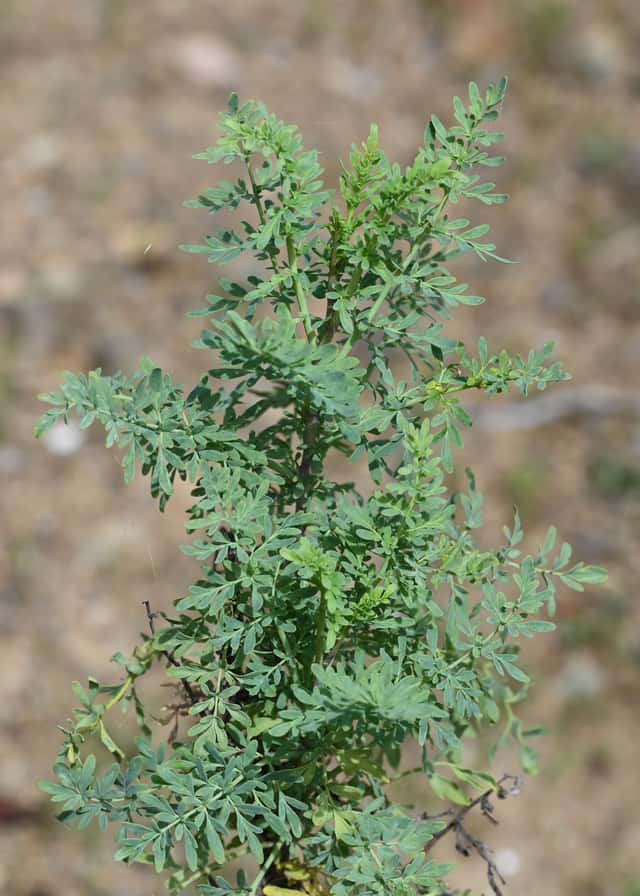
Rutaceae
Fringed Rue (Ruta chalepensis)
Ruta chalepensis
A hardy, low-maintenance shrub suited to Mediterranean, dry, and xeric gardens. Requires full sun, well-drained soil, and minimal watering. Highly drought-tolerant. Always handle with gloves as the plant causes phototoxic skin reactions. Keep away from children and pets. Excellent for herb gardens and borders when planted thoughtfully.
Every 10 days
Direct sun
5° - 35°C
30% - 60%
Categories
What is Fringed Rue?
Fringed Rue (Ruta chalepensis) is a easy-care plant from the Rutaceae family. Ruta chalepensis, commonly known as Fringed Rue or Egyptian Rue, is a perennial evergreen aromatic shrub in the family Rutaceae, native to the Mediterranean basin, North Africa, and the Middle East. It grows to 40–80 cm tall, bearing finely pinnate grey-green leaves with a strong pungent scent and c...
Fringed Rue grows up to 80cm, spread of 60cm, watering every 10 days, 5°C – 35°C, 30–60% humidity. It is not suitable for indoor environments and not safe for pets.
Unlike many tropical plants, Fringed Rue tolerates watering mistakes. Best for beginners. Without precautions, ingestion can cause irritation in pets. Keep out of reach of cats and dogs.
How to Care for Fringed Rue?
TLDR: Fringed Rue needs Direct sun, watering every 10 days, and temperatures between 5-35°C with 30-60% humidity.
How Often Should You Water Fringed Rue?
Water sparingly — approximately every 10 days in summer, allowing the soil to dry out completely between waterings. Ruta chalepensis is highly drought-tolerant and will suffer from overwatering. Reduce watering frequency significantly in winter.
How Much Light Does Fringed Rue Need?
Requires full sun with at least 6 hours of direct sunlight daily. Will tolerate partial shade but produces less fragrance and fewer flowers. Avoid deep shade entirely.
What Is the Best Soil for Fringed Rue?
Prefers sandy loam or well-draining soils with a neutral to slightly alkaline pH (6.0–7.5). Will not tolerate waterlogged or heavy clay soils. Amend with coarse sand or grit if planting in heavy ground.
What Pot Should You Use for Fringed Rue?
Terracotta or unglazed clay pot with generous drainage holes. Avoid plastic pots that retain excess moisture.
Care Schedule
Fertilize
Every 90 days
What Is Fringed Rue and Where Does It Come From?
Ruta chalepensis, commonly known as Fringed Rue or Egyptian Rue, is a perennial evergreen aromatic shrub in the family Rutaceae, native to the Mediterranean basin, North Africa, and the Middle East. It grows to 40–80 cm tall, bearing finely pinnate grey-green leaves with a strong pungent scent and clusters of small yellow flowers in summer. The plant contains furanocoumarins, alkaloids, and flavonoids that confer potent medicinal properties but also significant toxicity. It causes phototoxic dermatitis on skin contact followed by sun exposure, and ingestion in large amounts can cause severe organ toxicity. It is widely used in traditional medicine and holds deep cultural significance as a protective talisman.
How Big Does Fringed Rue Grow?
TLDR: Fringed Rue can reach up to 80cm tall with Fast growth rate.
Max height
80cm
Spread
60cm
Growth rate
Fast
Foliage
Evergreen
Warning: Toxic Plant
This plant can be toxic if ingested. Keep out of reach of:
Plant Uses
Ornamental
Great for decoration
Medicinal
Medicinal properties
Aromatic
Pleasant fragrance
Edible
Can be consumed
Medicinal Uses
- Traditional remedy for intestinal colic and atonic amenorrhea
- Anti-inflammatory, antiparasitic, and antimicrobial properties documented
- Used in folk medicine for rheumatic diseases and skin ailments
- WARNING: Internal use must be under medical supervision — can cause severe toxicity including organ failure
Culinary Uses
- Leaves used as a bitter flavoring in very small amounts in Mediterranean cuisine
- Historical ingredient in aromatic vinegars and digestive liqueurs
- Culinary use requires extreme moderation due to high toxicity
Is your plant showing symptoms?
Click on the symptom to discover possible causes:
What Diseases Commonly Affect Fringed Rue?
TLDR: Fringed Rue is susceptible to 5 known diseases. Monitor regularly for early detection.
Aphids
Aphids are small, soft-bodied, pear-shaped insects (1/16 to 1/8 inch long) that feed by sucking nutrient-rich sap from plants. They reproduce rapidly and can quickly weaken plants, causing distorted growth and transmitting plant viruses. Aphids come in various colors including green, black, red, yellow, brown, and gray. They secrete honeydew, a sticky substance that attracts ants and encourages sooty mold growth.
Spider Mites
Spider mites are tiny arachnids (less than 1/20 inch long) related to spiders and ticks that feed on plant sap. They thrive in hot, dry conditions and can cause significant damage to ornamental and vegetable plants. During severe infestations, crop losses can reach 14% or higher as these pests disrupt vital plant processes including photosynthesis, carbon dioxide absorption, and transpiration.
Powdery Mildew
Powdery mildew is a common fungal disease caused by various fungi species including Erysiphe, Podosphaera, Oïdium, and Leveillula. It affects over 10,000 plant species worldwide. The disease thrives in warm, dry climates with high humidity and appears as a distinctive white powdery coating on plant surfaces.
Root Rot
Root rot is a serious fungal disease that affects the root system of plants, causing them to decay and die. It is primarily caused by overwatering, poor drainage, or soil-borne fungi such as Pythium, Phytophthora, Rhizoctonia, and Fusarium. The disease thrives in waterlogged conditions where roots are deprived of oxygen, making them susceptible to fungal infection.
Meaning & Symbolism
In Mediterranean and Latin American traditions, Fringed Rue is a powerful symbol of protection, purification, and warding off the evil eye. It is used in folk rituals, hung over doorways, and given as protective amulets.
Fun Facts
The furanocoumarins in Fringed Rue cause phototoxic reactions — skin contact followed by sunlight can produce blisters resembling severe burns within 24 hours.
Despite its toxicity, it is a popular companion plant in herb gardens because its strong scent deters many insect pests.
Ruta chalepensis is one of the most documented plants in Latin American ethnobotany, appearing frequently in remedies for digestive and reproductive ailments.
The species epithet "chalepensis" refers to Aleppo (ancient Haleb), Syria, reflecting one of its original collection localities.
Frequently asked questions
Is Fringed Rue toxic to pets and children?
Can I grow Fringed Rue in a container?
How often should I water Fringed Rue?
When does Fringed Rue flower?
Compare with similar plants
| Attribute | Difficulty | Light | Watering | Pet Safe |
|---|---|---|---|---|
| Field Maple | Easy | Bright indirect | 14d | ✓ |
| Silver Birch | Easy | Direct sun | 14d | ✓ |
| Cushion Bush | Easy | Direct sun | 14d | ✓ |
| Peruvian peppertree | Easy | Direct sun | 14d | ⚠️ |





