Malvaceae
African Hemp: Fast Growing
Sparrmannia africana
It requires plenty of light but not direct midday sun, consistently slightly moist soil, and high humidity. It grows rapidly, so it should be shaped with heavy pruning every spring and repotted into fresh, nutrient-rich substrate.
Every 4 days
Bright indirect
7° - 24°C
50% - 70%
Categories
What is African Hemp?
African Hemp (Sparrmannia africana) is a medium-care plant from the Malvaceae family. The African Hemp (Sparrmannia africana) is a fast-growing evergreen shrub from the mallow family (Malvaceae), native to the open woodlands of South Africa near the Cape of Good Hope. In the wild, it grows to 4–8 m, though it remains significantly smaller as a houseplant. It has heart-shaped, finely...
African Hemp grows up to 4.0m, spread of 300cm, watering every 4 days, 7°C – 24°C, 50–70% humidity. It is suitable for indoor environments and not safe for pets.
Without precautions, ingestion can cause irritation in pets. Keep out of reach of cats and dogs. Without adequate drainage, root rot can develop within 8 days.
How to Care for African Hemp?
TLDR: African Hemp needs Bright indirect, watering every 4 days, and temperatures between 7-24°C with 50-70% humidity.
How Often Should You Water African Hemp?
Water regularly so the substrate never dries out completely—every 3–4 days in summer, and once a week in winter. However, waterlogging is harmful; leaves rot quickly in constantly wet soil, while drying out will cause the leaves to yellow.
How Much Light Does African Hemp Need?
Place in a bright spot with bright, indirect light, ideally near an east- or south-facing window. Direct midday sun can burn the leaves, so provide shade during the summer.
What Is the Best Soil for African Hemp?
Requires a loose, nutrient-rich substrate with good drainage and a slightly acidic to neutral pH (6.0–7.0)—a mixture of peat, perlite, and high-quality potting soil with added compost is suitable.
What Pot Should You Use for African Hemp?
Due to its rapid growth and root sensitivity to waterlogging, choose a pot with a drainage hole made of a lightweight, breathable material (e.g., terracotta) that wicks away excess moisture; repot into a slightly larger container every spring.
Care Schedule
Fertilize
Every 14 days
Misting
Every 1 days
Rotate
Every 30 days
Repot
Every 365 days
What Is African Hemp and Where Does It Come From?
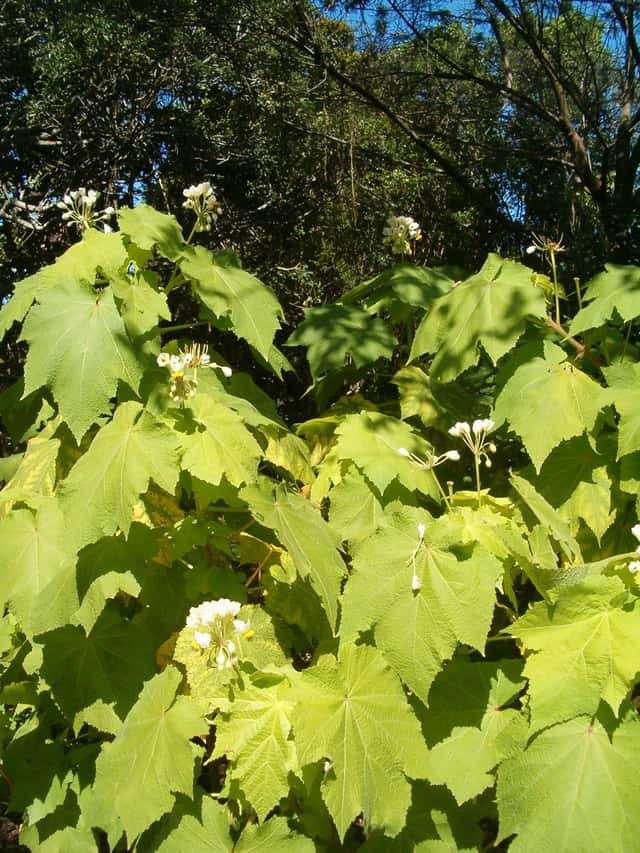
The African Hemp (Sparrmannia africana) is a fast-growing evergreen shrub from the mallow family (Malvaceae), native to the open woodlands of South Africa near the Cape of Good Hope. In the wild, it grows to 4–8 m, though it remains significantly smaller as a houseplant. It has heart-shaped, finely lobed leaves covered in short hairs, which can cause mild irritation to sensitive skin. From late winter to summer, it produces white flowers with striking yellow and red stamens that react with movement when touched by insects.
How to Propagate African Hemp?
How Big Does African Hemp Grow?
TLDR: African Hemp can reach up to 4.0m tall with Fast growth rate.
Max height
4.0m
Spread
3.0m
Growth rate
Fast
Foliage
Evergreen
Warning: Toxic Plant
This plant can be toxic if ingested. Keep out of reach of:
Plant Uses
Ornamental
Great for decoration
Is your plant showing symptoms?
Click on the symptom to discover possible causes:
What Diseases Commonly Affect African Hemp?
TLDR: African Hemp is susceptible to 8 known diseases. Monitor regularly for early detection.
Spider Mites
Spider mites are tiny arachnids (less than 1/20 inch long) related to spiders and ticks that feed on plant sap. They thrive in hot, dry conditions and can cause significant damage to ornamental and vegetable plants. During severe infestations, crop losses can reach 14% or higher as these pests disrupt vital plant processes including photosynthesis, carbon dioxide absorption, and transpiration.
Whiteflies
Whiteflies are small, soft-bodied, winged insects closely related to aphids and mealybugs. They are moth-like in appearance, about 1/16 inch long, triangular in shape, and gray-white in color. These sap-sucking pests feed on plant tissue, causing yellowing, stunted growth, and wilting. They also excrete honeydew, which attracts ants and promotes sooty mold growth. Whiteflies can transmit serious plant viruses.
Aphids
Aphids are small, soft-bodied, pear-shaped insects (1/16 to 1/8 inch long) that feed by sucking nutrient-rich sap from plants. They reproduce rapidly and can quickly weaken plants, causing distorted growth and transmitting plant viruses. Aphids come in various colors including green, black, red, yellow, brown, and gray. They secrete honeydew, a sticky substance that attracts ants and encourages sooty mold growth.
Mealybugs
Mealybugs are small, soft-bodied insects covered with a white, waxy, cottony material. They are common pests of houseplants and outdoor plants in mild climates. These sap-sucking insects feed on plant tissue, causing damage, stunted growth, and can lead to plant death if left untreated. They produce sticky honeydew which attracts sooty mold.
Compare with similar plants
| Attribute | Difficulty | Light | Watering | Pet Safe |
|---|---|---|---|---|
| Dark Fieldcap | Medium | Low light | 2d | ⚠️ |
| Azalea | Medium | Partial shade | 3d | ⚠️ |
| Bougainvillea | Medium | Direct sun | 7d | ⚠️ |
| Wild Lettuce | Medium | Direct sun | 7d | ⚠️ |



