Asteraceae
Yarrow: Aromatic Plant
Achillea millefolium
Yarrow is an extremely low-maintenance and resilient plant that thrives best in a sunny location with poor to average, well-draining soil. The plant is highly drought-tolerant and requires very little watering once established. Fertilization should be avoided, as overly nutrient-rich soil can cause the stems to become floppy and collapse. Yarrow spreads quickly via rhizomes and seeds—if necessary, divide the plant every 3–5 years in spring or fall.
Every 14 days
Direct sun
-40° - 38°C
30% - 60%
Categories
What is Yarrow?
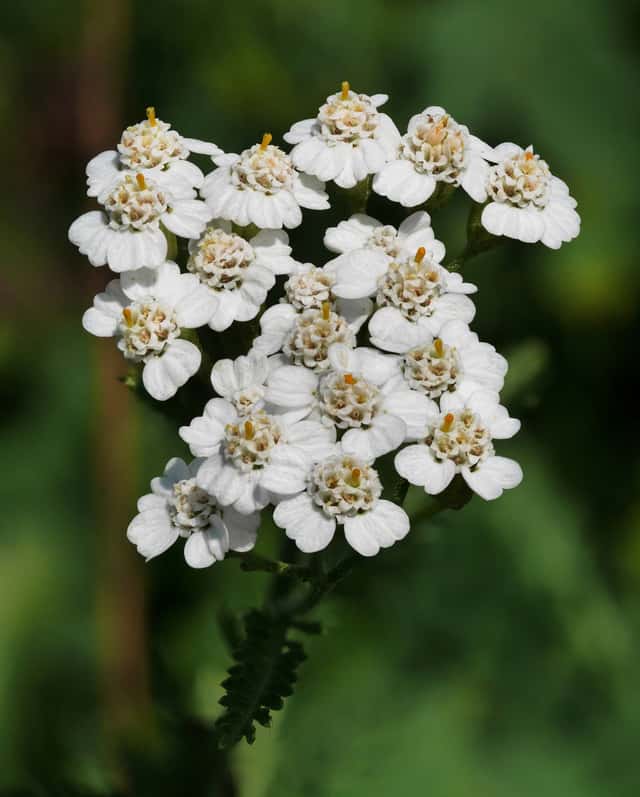
Yarrow (Achillea millefolium) is a easy-care plant from the Asteraceae family. Yarrow (Achillea millefolium) is a perennial, extremely hardy herbaceous plant that grows wild throughout Finland in meadows, fields, roadsides, and dry open areas. The plant is known for its finely divided, fern-like leaves and small, dense flower clusters (umbels) that range in color from white to...
Yarrow grows up to 90cm, spread of 60cm, watering every 14 days, -40°C – 38°C, 30–60% humidity. It is not suitable for indoor environments and not safe for pets.
Unlike many tropical plants, Yarrow tolerates watering mistakes. Best for beginners. Without precautions, ingestion can cause irritation in pets. Keep out of reach of cats and dogs.
How to Care for Yarrow?
TLDR: Yarrow needs Direct sun, watering every 14 days, and temperatures between -40-38°C with 30-60% humidity.
How Often Should You Water Yarrow?
Yarrow is exceptionally drought-tolerant. Established plants can survive with almost no supplemental watering—irrigate only during dry spells about every 1–2 weeks. Young seedlings need more consistent watering to establish their roots, but overwatering must be strictly avoided, as standing moisture causes root rot. It is better to water at the base rather than over the leaves to prevent the development of mold or mildew.
How Much Light Does Yarrow Need?
Yarrow requires plenty of direct sunlight—at least 6 hours a day. A full sun location produces a compact, prolifically flowering plant. In the shade, the plant grows leggy and sparse, flowering is reduced, and the plant becomes more susceptible to diseases. Choose the hottest and brightest spot in the garden for your yarrow.
What Is the Best Soil for Yarrow?
Yarrow thrives best in poor, nutrient-lean, and well-drained soil—sandy or loamy soil works well as long as it dries quickly. Avoid heavy, wet clay soils, which can cause root rot. The ideal pH range is 5.5–7.5. Overly fertile soil makes the plants grow weak and prone to disease. If necessary, improve soil drainage by adding sand or grit.
What Pot Should You Use for Yarrow?
Yarrow is best suited for outdoor planting in the ground, where it has room to spread. If you wish to grow it in a container, choose a spacious pot at least 12 inches (30 cm) deep and wide with excellent drainage and significant drainage holes. Use low-nutrient potting mix or garden soil mixed with sand. In a pot, the plant dries out faster—monitor soil moisture and water as needed.
What Is Yarrow and Where Does It Come From?
Yarrow (Achillea millefolium) is a perennial, extremely hardy herbaceous plant that grows wild throughout Finland in meadows, fields, roadsides, and dry open areas. The plant is known for its finely divided, fern-like leaves and small, dense flower clusters (umbels) that range in color from white to pink. A familiar perennial herb in both nature and gardens, Yarrow has a long history of both medicinal and ornamental use dating back to antiquity—its name refers to the Greek hero Achilles, who according to legend used the plant to treat the wounds of his soldiers.
How to Propagate Yarrow?
seed
- 1 Sow seeds indoors in February-March or directly in the ground in May-June
- 2 Seeds germinate in light in 5–21 days—do not cover with soil, leave exposed to light
- 3 Keep the substrate evenly moist until germination
- 4 Move seedlings outside after night frosts (at approx. 6 inches / 15 cm height)
- 5 Space plants at least 18 inches (45 cm) apart due to spreading
division
- 1 Divide established plants every 3–5 years in spring or fall
- 2 Dig up the plant with a shovel and divide the root clumps
- 3 Each division should contain healthy roots and shoots
- 4 Plant the divisions immediately in new locations and water well
cutting
- 1 Take 3–4 inch (8–10 cm) tip cuttings in spring or early summer
- 2 Remove lower leaves and place in a propagation medium
- 3 Keep moist and in partial shade during the rooting phase (2–4 weeks)
- 4 Transplant the rooted cutting to its growing site
How Big Does Yarrow Grow?
TLDR: Yarrow can reach up to 90cm tall with Fast growth rate.
Max height
90cm
Spread
60cm
Growth rate
Fast
Foliage
Semi-evergreen
Warning: Toxic Plant
This plant can be toxic if ingested. Keep out of reach of:
Plant Uses
Ornamental
Great for decoration
Medicinal
Medicinal properties
Aromatic
Pleasant fragrance
Edible
Can be consumed
Medicinal Uses
- First aid for wounds and bleeding: fresh leaves are crushed and pressed onto the wound to staunch bleeding—used for centuries from battlefields to folk medicine
- Fever and flu tea: yarrow tea promotes sweating and has traditionally been used to reduce fever
- Digestive support: the bitter taste stimulates the secretion of digestive juices, relieves flatulence, and supports appetite
- Menstrual cramps: used in traditional herbal medicine to relieve menstrual pain and imbalances
- Wound and inflammation care: anti-inflammatory and astringent properties support skin healing
- Warning: not recommended during pregnancy; may cause allergies in individuals sensitive to Asteraceae
Culinary Uses
- Young leaves fresh in salads—the flavor is strong and peppery, used in small quantities
- Dried leaves as a spice—used to replace mustard or horseradish due to its intense flavor
- Flowers for herbal tea—mild, slightly bitter taste; can be enjoyed alone or mixed with other herbal teas
- Traditional 'poor man's pepper'—yarrow leaves have been used as a seasoning when other spices were unavailable
Is your plant showing symptoms?
Click on the symptom to discover possible causes:
What Diseases Commonly Affect Yarrow?
TLDR: Yarrow is susceptible to 4 known diseases. Monitor regularly for early detection.
Powdery Mildew
Powdery mildew is a common fungal disease caused by various fungi species including Erysiphe, Podosphaera, Oïdium, and Leveillula. It affects over 10,000 plant species worldwide. The disease thrives in warm, dry climates with high humidity and appears as a distinctive white powdery coating on plant surfaces.
Rust
Rust is a common fungal disease caused by fungi in the order Pucciniales that affects a wide variety of plants. The disease gets its name from the characteristic orange, yellow, or reddish-brown pustules that appear on leaves, resembling metal rust. This obligate fungal parasite requires living plants to survive and can cause significant economic losses in agricultural crops.
Aphids
Aphids are small, soft-bodied, pear-shaped insects (1/16 to 1/8 inch long) that feed by sucking nutrient-rich sap from plants. They reproduce rapidly and can quickly weaken plants, causing distorted growth and transmitting plant viruses. Aphids come in various colors including green, black, red, yellow, brown, and gray. They secrete honeydew, a sticky substance that attracts ants and encourages sooty mold growth.
Root Rot
Root rot is a serious fungal disease that affects the root system of plants, causing them to decay and die. It is primarily caused by overwatering, poor drainage, or soil-borne fungi such as Pythium, Phytophthora, Rhizoctonia, and Fusarium. The disease thrives in waterlogged conditions where roots are deprived of oxygen, making them susceptible to fungal infection.
Meaning & Symbolism
Yarrow has a rich symbolic heritage—it is a plant of boundaries, purification, and divination in folklore worldwide. The name Achillea refers to the Greek hero Achilles, who was said to have used yarrow to heal wounds on the battlefield. Elias Lönnrot mentions the plant in Finnish folk medicine as a way to staunch bleeding and relieve stomach issues and pain. The plant symbolizes courage, protection, and healing power.
Compare with similar plants
| Attribute | Difficulty | Light | Watering | Pet Safe |
|---|---|---|---|---|
| Field Maple | Easy | Bright indirect | 14d | ✓ |
| Silver Birch | Easy | Direct sun | 14d | ✓ |
| Cushion Bush | Easy | Direct sun | 14d | ✓ |
| Wild Lettuce | Medium | Direct sun | 7d | ⚠️ |





