Cactaceae
Saguaro — The Giant of the Sonoran Desert
Carnegiea gigantea
An outdoor-only plant requiring full direct sun and fast-draining sandy soil. Water very infrequently; highly drought-tolerant and very sensitive to overwatering. Hardy to 23°F (-5°C) for brief periods.
Every 21 days
Direct sun
-5° - 45°C
10% - 30%
Categories
What is Saguaro?
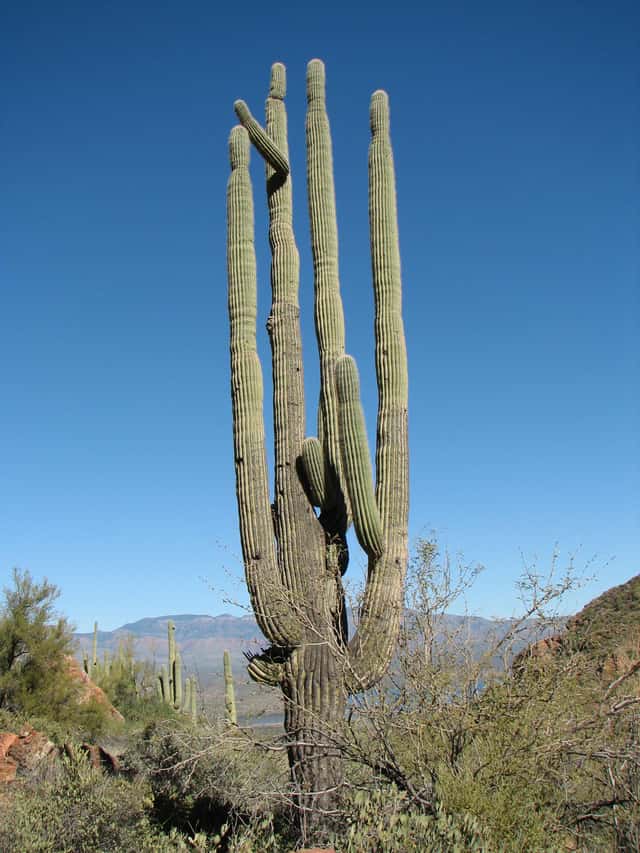
Saguaro (Carnegiea gigantea) is a hard-care plant from the Cactaceae family. The Saguaro (Carnegiea gigantea) is the largest cactus in North America, native to the Sonoran Desert of the United States and Mexico. Recognizable by its towering height of up to 60 feet (18 m) and iconic branching arms, it is the symbol of the American Southwest and the state of Arizona. Saguaro g...
Saguaro grows up to 18.0m, spread of 600cm, watering every 21 days, -5°C – 45°C, 10–30% humidity. It is not suitable for indoor environments and safe for pets.
Unlike easy-care plants, Saguaro demands constant attention to humidity and light. Not recommended for beginners. Unlike many popular species, Saguaro is safe to keep around pets.
How to Care for Saguaro?
TLDR: Saguaro needs Direct sun, watering every 21 days, and temperatures between -5-45°C with 10-30% humidity.
How Often Should You Water Saguaro?
Water every 2–3 weeks in spring and summer, allowing the soil to dry out completely between waterings. In fall and winter, reduce to once monthly or stop entirely. Never allow water to pool at the base — overwatering is the number one killer.
How Much Light Does Saguaro Need?
Requires full direct sun for at least 8 hours daily. This is strictly an outdoor plant; it cannot thrive indoors without very intense artificial lighting.
What Is the Best Soil for Saguaro?
Use cactus-specific potting mix or combine 50% coarse sand with 50% cactus soil. Drainage must be immediate and complete — waterlogged soil causes rapid root rot.
What Pot Should You Use for Saguaro?
Large terracotta or ceramic pot with ample drainage holes. For young plants, use appropriately sized small pots and increase gradually. Ideally, plant directly in the garden in well-draining sandy soil in a warm, dry climate.
Care Schedule
Fertilize
Every 365 days
What Is Saguaro and Where Does It Come From?
The Saguaro (Carnegiea gigantea) is the largest cactus in North America, native to the Sonoran Desert of the United States and Mexico. Recognizable by its towering height of up to 60 feet (18 m) and iconic branching arms, it is the symbol of the American Southwest and the state of Arizona. Saguaro grows extremely slowly — only about 1–1.5 inches per year — and can live for over 200 years.
How to Propagate Saguaro?
Seed Propagation
Germination is slow and unpredictable. Keep substrate slightly moist but never waterlogged. Avoid repotting for at least 1 year.
- 1 Collect seeds from ripe red fruit
- 2 Rinse and dry seeds for 24 hours
- 3 Soak seeds in warm water for 24 hours
- 4 Sow in moist sandy cactus mix
- 5 Keep in warm environment (25-30°C) with high humidity
- 6 Wait for germination in 1-4 weeks
- 7 Grow in indirect sun until seedling reaches 2 inches tall
Materials needed:
How Big Does Saguaro Grow?
TLDR: Saguaro can reach up to 18.0m tall with Slow growth rate.
Max height
18.0m
Spread
6.0m
Growth rate
Slow
Foliage
Evergreen
Plant Uses
Ornamental
Great for decoration
Edible
Can be consumed
Culinary Uses
- The red fruits of the Saguaro are edible and highly nutritious, used by the Tohono O'odham people for centuries to make jams, syrups, and the traditional ceremonial wine (Nawait).
Is your plant showing symptoms?
Click on the symptom to discover possible causes:
What Diseases Commonly Affect Saguaro?
TLDR: Saguaro is susceptible to 8 known diseases. Monitor regularly for early detection.
Root Rot
Root rot is a serious fungal disease that affects the root system of plants, causing them to decay and die. It is primarily caused by overwatering, poor drainage, or soil-borne fungi such as Pythium, Phytophthora, Rhizoctonia, and Fusarium. The disease thrives in waterlogged conditions where roots are deprived of oxygen, making them susceptible to fungal infection.
Overwatering
Overwatering occurs when plants receive too much water, depriving roots of oxygen and causing root rot. This environmental stress is one of the most common causes of houseplant death, as waterlogged soil prevents roots from breathing and functioning properly.
Scale Insects
Scale insects are small sap-sucking pests that appear as brown, shell-like bumps on plant stems and leaves. There are over 25 species, divided into armored (hard) and unarmored (soft) scales. They feed by piercing plant tissue and extracting sap, which weakens the plant and can lead to yellowing, stunted growth, and even death if left untreated. They also excrete honeydew, which attracts ants and promotes sooty mold growth.
Mealybugs
Mealybugs are small, soft-bodied insects covered with a white, waxy, cottony material. They are common pests of houseplants and outdoor plants in mild climates. These sap-sucking insects feed on plant tissue, causing damage, stunted growth, and can lead to plant death if left untreated. They produce sticky honeydew which attracts sooty mold.
Meaning & Symbolism
The Saguaro is a powerful emblem of the American Southwest. For the indigenous Tohono O'odham people, it is sacred — the harvest of its red fruit each summer marks the new year and is used to produce a traditional ceremonial wine.
Fun Facts
A Saguaro can live over 200 years — a mature specimen may be older than the United States itself.
The iconic arms of the Saguaro only begin to grow after the plant is about 75 years old.
A single adult Saguaro can shelter more than 25 different animal species — birds, bats, insects, and reptiles use its cavities as homes.
The Saguaro is the state cactus of Arizona and is federally protected — it is illegal to remove or damage one without a permit.
Frequently asked questions
How often should I water my Saguaro?
Can a Saguaro be grown indoors?
Is the Saguaro toxic to pets?
How long does it take a Saguaro to grow?
Compare with similar plants
| Attribute | Difficulty | Light | Watering | Pet Safe |
|---|---|---|---|---|
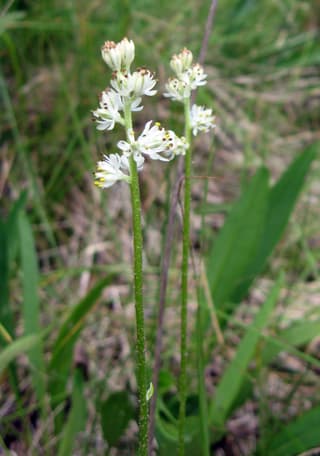
| Sticky false asphodel | Hard | Bright indirect | 1d | ✓ |
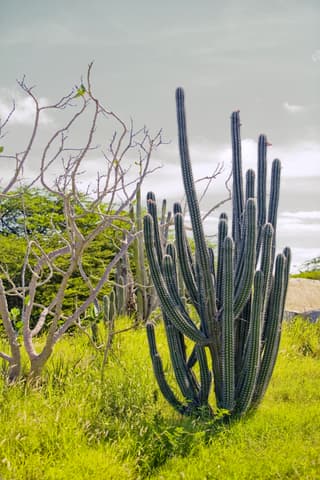
| Chilean Cacti | Easy | Direct sun | 14d | ✓ |
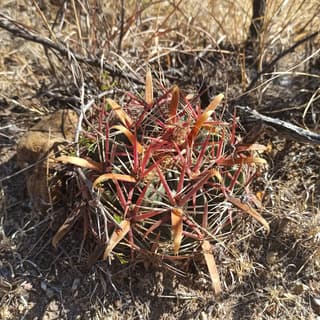
| Devils Tongue Cactus | Easy | Direct sun | 21d | ✓ |
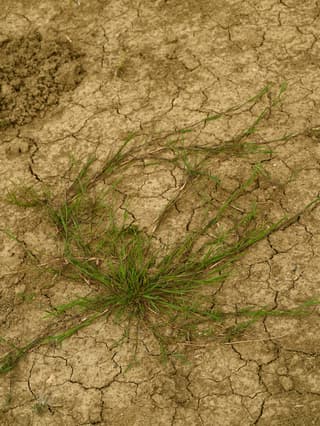
| Creeping bentgrass | Hard | Direct sun | 3d | ✓ |