Fabaceae
Common Laburnum: Medicinal Uses & Care Tips
Laburnum anagyroides
Requires full sun or partial shade. Thrives best in well-draining, nutrient-rich soil with moderate moisture. Has average water needs—water thoroughly once a week during dry periods, avoiding waterlogging. Can be pruned once a year to maintain shape and fertilized once a year with a moderate dose.
Every 7 days
Bright indirect
-20° - 30°C
40% - 65%
Categories
What is Common Laburnum?
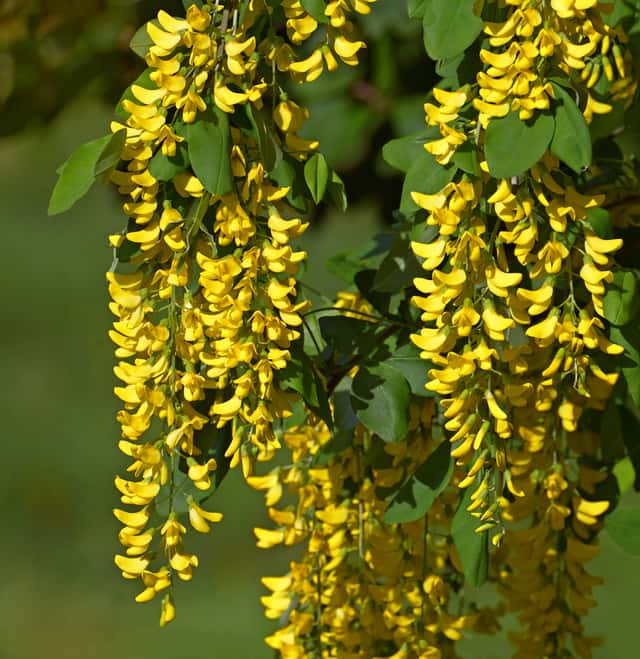
Common Laburnum (Laburnum anagyroides) is a medium-care plant from the Fabaceae family. The Common Laburnum (Laburnum anagyroides) is a small, deciduous tree native to the mountainous regions of Central and Southern Europe (the Alps, Italy, the Balkans). It is known for both its toxic content and its stunning spring bloom: in May–June, it is covered with long, pendulous clusters of fra...
Common Laburnum grows up to 7.0m, spread of 600cm, watering every 7 days, -20°C – 30°C, 40–65% humidity. It is not suitable for indoor environments and not safe for pets.
Without precautions, ingestion can cause irritation in pets. Keep out of reach of cats and dogs.
How to Care for Common Laburnum?
TLDR: Common Laburnum needs Bright indirect, watering every 7 days, and temperatures between -20-30°C with 40-65% humidity.
How Often Should You Water Common Laburnum?
During dry periods, water deeply once a week—the top layer of soil can dry out slightly before the next watering. Avoid waterlogging, as it leads to root rot. Supplemental watering is not necessary during rainy seasons.
How Much Light Does Common Laburnum Need?
Blooms best in full sun (at least 6 hours of direct sunlight daily). Tolerates partial shade but will produce fewer flowers. Afternoon shade is beneficial in hot, humid climates.
What Is the Best Soil for Common Laburnum?
Prefers well-draining, nutrient-rich soil. pH: 5.5–7.5 (from slightly acidic to neutral to slightly alkaline). Tolerates sandy, loamy, and clay soils, provided there is good drainage. Should not be planted in compacted, waterlogged soil.
What Pot Should You Use for Common Laburnum?
Not suitable for pot cultivation—it should only be planted in the ground, in a garden. Its root system spreads deeply and requires ample space.
Care Schedule
Fertilize
Every 365 days
What Is Common Laburnum and Where Does It Come From?
The Common Laburnum (Laburnum anagyroides) is a small, deciduous tree native to the mountainous regions of Central and Southern Europe (the Alps, Italy, the Balkans). It is known for both its toxic content and its stunning spring bloom: in May–June, it is covered with long, pendulous clusters of fragrant, golden-yellow flowers. All parts of the plant—roots, bark, leaves, flowers, seeds, pods—are highly poisonous; it contains the alkaloid cytisine, which can be fatal to humans, cats, dogs, horses, and goats alike. For adults, consuming just 15–20 seeds can be fatal. Despite its exceptional ornamental value, it must be kept at a safe distance from children and animals.
How to Propagate Common Laburnum?
How Big Does Common Laburnum Grow?
TLDR: Common Laburnum can reach up to 7.0m tall with Slow growth rate.
Max height
7.0m
Spread
6.0m
Growth rate
Slow
Foliage
Deciduous
Warning: Toxic Plant
This plant can be toxic if ingested. Keep out of reach of:
Plant Uses
Ornamental
Great for decoration
Medicinal
Medicinal properties
Medicinal Uses
- The alkaloid cytisine extracted from the seeds has been used in Eastern Europe since the 1960s for smoking cessation (active ingredient in Tabex®). It is a more effective nicotine addiction treatment than placebo. Traditionally, it was also used against whooping cough and asthma, but is no longer recommended without medical supervision.
Is your plant showing symptoms?
Click on the symptom to discover possible causes:
What Diseases Commonly Affect Common Laburnum?
TLDR: Common Laburnum is susceptible to 6 known diseases. Monitor regularly for early detection.
Leaf Spot
Leaf spot is a common fungal disease caused by various pathogens including Alternaria, Ascochyta, Colletotrichum, Septoria, and Venturia. It primarily affects leaves, causing discolored spots that can lead to premature leaf drop if left untreated.
Root Rot
Root rot is a serious fungal disease that affects the root system of plants, causing them to decay and die. It is primarily caused by overwatering, poor drainage, or soil-borne fungi such as Pythium, Phytophthora, Rhizoctonia, and Fusarium. The disease thrives in waterlogged conditions where roots are deprived of oxygen, making them susceptible to fungal infection.
Canker
Canker is a disease caused by various fungi and bacteria that create necrotic, sunken areas on bark of branches, stems, and trunks. Pathogens enter through wounds and natural openings, especially when plants are stressed. Canker can gradually weaken or kill branches by disrupting water and nutrient flow.
Powdery Mildew
Powdery mildew is a common fungal disease caused by various fungi species including Erysiphe, Podosphaera, Oïdium, and Leveillula. It affects over 10,000 plant species worldwide. The disease thrives in warm, dry climates with high humidity and appears as a distinctive white powdery coating on plant surfaces.
Meaning & Symbolism
In Victorian flower language, the Laburnum symbolizes fleeting beauty, lost love, and pensive sorrow. In folklore, it is considered a tree that protects against evil spirits and is planted near dwellings. J. R. R. Tolkien drew inspiration from it for the creation of the mythical tree Laurelin when writing The Silmarillion.
Compare with similar plants
| Attribute | Difficulty | Light | Watering | Pet Safe |
|---|---|---|---|---|
| Dark Fieldcap | Medium | Low light | 2d | ⚠️ |
| Azalea | Medium | Partial shade | 3d | ⚠️ |
| Bougainvillea | Medium | Direct sun | 7d | ⚠️ |
| Wild Lettuce | Medium | Direct sun | 7d | ⚠️ |



