Nephrolepidaceae
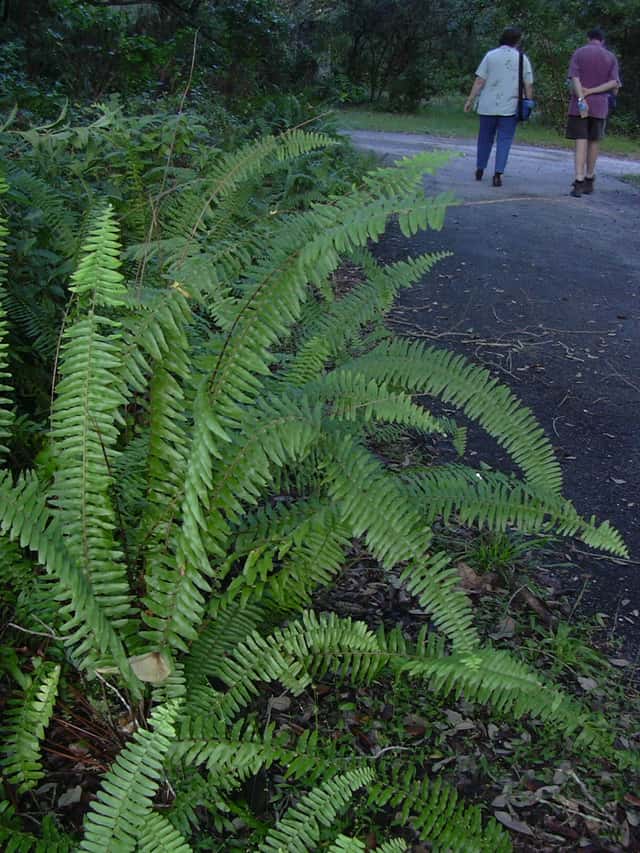
Asian Sword Fern (Nephrolepis brownii)
Nephrolepis brownii
Keep soil evenly moist, avoid direct sunlight, maintain high humidity, and keep temperatures between 15-24°C. Fertilize monthly during the growing season.
Every 7 days
Partial shade
15° - 24°C
50% - 80%
Categories
What is Asian Sword Fern?
Asian Sword Fern (Nephrolepis brownii) is a easy-care plant from the Nephrolepidaceae family. Nephrolepis brownii, commonly known as the Asian Sword Fern, is a perennial fern native to most of Southeast Asia, extending north to China and Japan, west to Sri Lanka and India, east to the Pacific Islands, and south to Australia. Its lush, arching fronds make it a popular ornamental plant for bot...
Asian Sword Fern grows up to 91cm, spread of 91cm, watering every 7 days, 15°C – 24°C, 50–80% humidity. It is suitable for indoor environments and safe for pets.
Unlike many tropical plants, Asian Sword Fern tolerates watering mistakes. Best for beginners. Unlike many popular species, Asian Sword Fern is safe to keep around pets. Without adequate drainage, root rot can develop within 14 days.
How to Care for Asian Sword Fern?
TLDR: Asian Sword Fern needs Partial shade, watering every 7 days, and temperatures between 15-24°C with 50-80% humidity.
How Often Should You Water Asian Sword Fern?
Water every 7 days, keeping the soil lightly moist. Avoid waterlogging and prefer chlorine-free water.
How Much Light Does Asian Sword Fern Need?
Prefers bright, indirect light. Avoid direct sunlight which can scorch fronds. Tolerates partial shade.
What Is the Best Soil for Asian Sword Fern?
Use well-draining substrate with peat or perlite. Ideal pH between 5.5 and 6.5.
What Pot Should You Use for Asian Sword Fern?
Ceramic or plastic pot with drainage holes. Avoid oversized pots.
Care Schedule
Fertilize
Every 30 days
Misting
Every 3 days
Repot
Every 730 days
What Is Asian Sword Fern and Where Does It Come From?
Nephrolepis brownii, commonly known as the Asian Sword Fern, is a perennial fern native to most of Southeast Asia, extending north to China and Japan, west to Sri Lanka and India, east to the Pacific Islands, and south to Australia. Its lush, arching fronds make it a popular ornamental plant for both indoor and outdoor settings.
How Big Does Asian Sword Fern Grow?
TLDR: Asian Sword Fern can reach up to 91cm tall with Medium growth rate.
Max height
91cm
Spread
91cm
Growth rate
Medium
Foliage
Evergreen
Plant Uses
Ornamental
Great for decoration
Ground Cover
Soil coverage
Is your plant showing symptoms?
Click on the symptom to discover possible causes:
What Diseases Commonly Affect Asian Sword Fern?
TLDR: Asian Sword Fern is susceptible to 9 known diseases. Monitor regularly for early detection.
Spider Mites
Spider mites are tiny arachnids (less than 1/20 inch long) related to spiders and ticks that feed on plant sap. They thrive in hot, dry conditions and can cause significant damage to ornamental and vegetable plants. During severe infestations, crop losses can reach 14% or higher as these pests disrupt vital plant processes including photosynthesis, carbon dioxide absorption, and transpiration.
Mealybugs
Mealybugs are small, soft-bodied insects covered with a white, waxy, cottony material. They are common pests of houseplants and outdoor plants in mild climates. These sap-sucking insects feed on plant tissue, causing damage, stunted growth, and can lead to plant death if left untreated. They produce sticky honeydew which attracts sooty mold.
Scale Insects
Scale insects are small sap-sucking pests that appear as brown, shell-like bumps on plant stems and leaves. There are over 25 species, divided into armored (hard) and unarmored (soft) scales. They feed by piercing plant tissue and extracting sap, which weakens the plant and can lead to yellowing, stunted growth, and even death if left untreated. They also excrete honeydew, which attracts ants and promotes sooty mold growth.
Whiteflies
Whiteflies are small, soft-bodied, winged insects closely related to aphids and mealybugs. They are moth-like in appearance, about 1/16 inch long, triangular in shape, and gray-white in color. These sap-sucking pests feed on plant tissue, causing yellowing, stunted growth, and wilting. They also excrete honeydew, which attracts ants and promotes sooty mold growth. Whiteflies can transmit serious plant viruses.
Meaning & Symbolism
Symbol of resilience and adaptability.
Fun Facts
Nephrolepis brownii is considered an invasive species in parts of North America and Hawaii.
Its fronds can reach up to 91 cm in length.
It is closely related to the famous Boston Fern (Nephrolepis exaltata).
Frequently asked questions
Is the Asian Sword Fern toxic to pets?
How often should I water the Asian Sword Fern?
What is the ideal light level?
Compare with similar plants
| Attribute | Difficulty | Light | Watering | Pet Safe |
|---|---|---|---|---|
| Field Maple | Easy | Bright indirect | 14d | ✓ |
| Silver Birch | Easy | Direct sun | 14d | ✓ |
| Common Blanketflower | Easy | Direct sun | 10d | ✓ |
| Cushion Bush | Easy | Direct sun | 14d | ✓ |





