Rosaceae
Saskatoon Serviceberry: Edible Plant
Amelanchier alnifolia
Plant in full sun to partial shade in well-draining loamy soil with a pH of 6.0–8.0. Water regularly during the first two growing seasons to establish a deep root system, then reduce to every 10–14 days or rely on natural rainfall. Fertilize lightly once a year in early spring—excess nitrogen increases susceptibility to fire blight. Prune annually after flowering to remove deadwood, crossed branches, and surplus suckers. This extremely cold-hardy shrub (zones 2a–7b) is both drought- and salt-tolerant once established, and requires minimal intervention to thrive.
Every 10 days
Bright indirect
-45° - 35°C
20% - 70%
Categories
What is Saskatoon Serviceberry?
Saskatoon Serviceberry (Amelanchier alnifolia) is a easy-care plant from the Rosaceae family. Amelanchier alnifolia, the Saskatoon serviceberry, is a long-lived deciduous shrub or small tree native to western North America, ranging from Alaska south to California and east to the Great Plains. One of the most cold-hardy woody fruiting plants in cultivation, it thrives in USDA zones 2a through...
Saskatoon Serviceberry grows up to 5.0m, spread of 300cm, watering every 10 days, -45°C – 35°C, 20–70% humidity. It is not suitable for indoor environments and safe for pets.
Unlike many tropical plants, Saskatoon Serviceberry tolerates watering mistakes. Best for beginners. Unlike many popular species, Saskatoon Serviceberry is safe to keep around pets.
How to Care for Saskatoon Serviceberry?
TLDR: Saskatoon Serviceberry needs Bright indirect, watering every 10 days, and temperatures between -45-35°C with 20-70% humidity.
How Often Should You Water Saskatoon Serviceberry?
Water newly planted shrubs deeply and regularly for the first two seasons. Once established, Saskatoon serviceberry is highly drought-tolerant and typically needs watering only every 10–14 days during dry periods. Avoid overwatering and ensure the planting site drains freely; standing water promotes root rot and Phytophthora. Mulching around the base helps retain soil moisture and moderate root temperature.
How Much Light Does Saskatoon Serviceberry Need?
Saskatoon serviceberry performs best in full sun (6 or more hours of direct sunlight daily), which maximizes berry production and the intensity of autumn colour. It tolerates partial shade (2–6 hours of sun), but fruit yield and fall colouration will be reduced. Avoid deep, persistent shade, which weakens the plant and increases disease pressure.
What Is the Best Soil for Saskatoon Serviceberry?
This adaptable shrub grows in loam, silt, or sandy soils provided drainage is good. Aim for a pH between 6.0 and 8.0; it tolerates mildly alkaline conditions well. Avoid heavy clay or waterlogged sites. Amend compacted soil with compost at planting to improve structure, and apply a 5–8 cm layer of organic mulch to conserve moisture and suppress weeds.
Care Schedule
Fertilize
Every 365 days
What Is Saskatoon Serviceberry and Where Does It Come From?
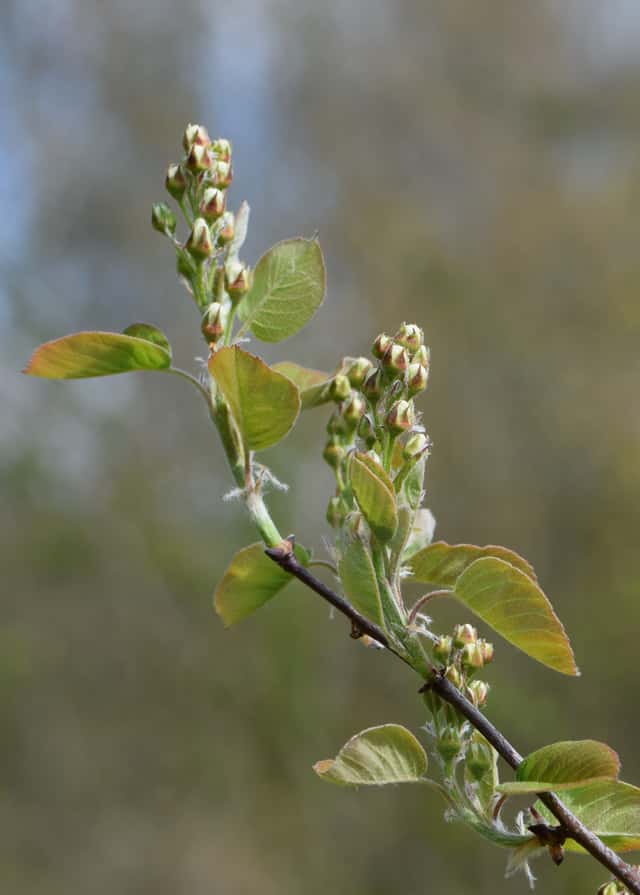
Amelanchier alnifolia, the Saskatoon serviceberry, is a long-lived deciduous shrub or small tree native to western North America, ranging from Alaska south to California and east to the Great Plains. One of the most cold-hardy woody fruiting plants in cultivation, it thrives in USDA zones 2a through 7b and tolerates temperatures as low as -45°C. Each spring it erupts in clusters of fragrant, star-shaped white flowers before the leaves fully expand—an early-season spectacle cherished by pollinators and gardeners alike. By midsummer, branches bow under generous crops of sweet, blueberry-like purple berries that have sustained Indigenous peoples for millennia, eaten fresh, dried into pemmican, or baked into pies. Come autumn, the foliage transforms to brilliant golds, oranges, and reds, extending its ornamental value through the season. Highly drought-tolerant once established, it asks for little beyond full sun, well-drained loamy soil, and occasional pruning to keep its suckering growth in check.
How to Propagate Saskatoon Serviceberry?
Seed
- 1 Collect ripe berries in early summer and macerate to extract seeds.
- 2 Clean seeds thoroughly and allow to dry briefly.
- 3 Cold-moist stratify seeds for 90–120 days at 3–5°C (e.g., in moist peat in the refrigerator).
- 4 Sow stratified seeds in spring in trays filled with moist, well-drained seed-starting mix.
- 5 Keep at 18–22°C until germination; transplant seedlings outdoors after the last frost.
Sucker Division
- 1 In early spring before bud break, locate rooted suckers at the base of the plant.
- 2 Use a sharp spade to sever the sucker from the parent root, retaining as much root as possible.
- 3 Transplant immediately to a prepared site, water well, and mulch to reduce transplant stress.
Hardwood Cutting
- 1 Take 15–20 cm cuttings of dormant wood in late autumn or early winter.
- 2 Dip cut end in rooting hormone powder.
- 3 Insert into a pot of moist sand or perlite-compost mix and overwinter in a cool, frost-free location.
- 4 Transfer to outdoor beds or larger pots once roots are established in spring.
Softwood Cutting
- 1 Take 10–15 cm tip cuttings of new growth in late spring to early summer.
- 2 Remove lower leaves and dip in rooting hormone.
- 3 Insert into moist propagation mix and maintain high humidity (e.g., under a plastic dome).
- 4 Rooting typically occurs within 4–6 weeks; pot up and harden off before planting out.
How Big Does Saskatoon Serviceberry Grow?
TLDR: Saskatoon Serviceberry can reach up to 5.0m tall with Medium growth rate.
Max height
5.0m
Spread
3.0m
Growth rate
Medium
Foliage
Deciduous
Plant Uses
Ornamental
Great for decoration
Edible
Can be consumed
Medicinal
Medicinal properties
Medicinal Uses
- Root bark infusions used by Indigenous peoples as a mild laxative and tonic
- Boiled inner cambium applied to sore eyes in traditional medicine
- Berry preparations used to aid digestion and as a general health tonic
- Astringent properties of bark used to treat cramps and stomach ailments
Culinary Uses
- Fresh berries eaten out of hand or added to fruit salads
- Made into jams, jellies, pies, crisps, and muffins
- Dried and mixed with fat and meat to make traditional pemmican
- Pressed into juice or fermented into wine
- Used as a flavourful blueberry substitute in virtually any recipe
Is your plant showing symptoms?
Click on the symptom to discover possible causes:
What Diseases Commonly Affect Saskatoon Serviceberry?
TLDR: Saskatoon Serviceberry is susceptible to 8 known diseases. Monitor regularly for early detection.
Fire Blight
Fire blight is a highly destructive and contagious bacterial disease caused by Erwinia amylovora. It primarily affects plants in the Rosaceae family, including apple, pear, quince trees, and various ornamental plants. The disease can destroy an entire orchard in a single growing season under ideal conditions, with the bacterium moving approximately 11 inches per week in new growth.
Powdery Mildew
Powdery mildew is a common fungal disease caused by various fungi species including Erysiphe, Podosphaera, Oïdium, and Leveillula. It affects over 10,000 plant species worldwide. The disease thrives in warm, dry climates with high humidity and appears as a distinctive white powdery coating on plant surfaces.
Rust
Rust is a common fungal disease caused by fungi in the order Pucciniales that affects a wide variety of plants. The disease gets its name from the characteristic orange, yellow, or reddish-brown pustules that appear on leaves, resembling metal rust. This obligate fungal parasite requires living plants to survive and can cause significant economic losses in agricultural crops.
Leaf Spot
Leaf spot is a common fungal disease caused by various pathogens including Alternaria, Ascochyta, Colletotrichum, Septoria, and Venturia. It primarily affects leaves, causing discolored spots that can lead to premature leaf drop if left untreated.
Meaning & Symbolism
Deeply woven into the heritage of Indigenous nations across North America, Saskatoon berries are a symbol of abundance, community, and the renewal of spring. Their appearance on the prairie traditionally signalled the time for celebratory harvests and the preparation of pemmican for winter. In settler cultures, the shrub came to represent resilience—thriving in some of the continent's harshest climates where little else can fruit reliably.
Compare with similar plants
| Attribute | Difficulty | Light | Watering | Pet Safe |
|---|---|---|---|---|
| Field Maple | Easy | Bright indirect | 14d | ✓ |
| Silver Birch | Easy | Direct sun | 14d | ✓ |
| Cushion Bush | Easy | Direct sun | 14d | ✓ |
| Peruvian peppertree | Easy | Direct sun | 14d | ⚠️ |





