Lamiaceae
Chaste Tree (Vitex agnus-castus): Complete Growing Guide
Vitex agnus-castus
Low-maintenance outdoor shrub. Thrives in full sun and well-drained soil. Extremely drought-tolerant once established. Prune hard in late winter to encourage vigorous spring growth and abundant flowering.
Every 14 days
Direct sun
-18° - 38°C
30% - 60%
Categories
What is Chaste Tree?
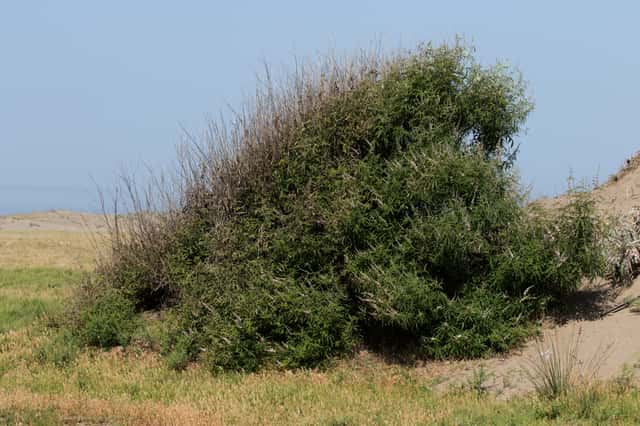
Chaste Tree (Vitex agnus-castus) is a easy-care plant from the Lamiaceae family. Vitex agnus-castus, commonly known as chaste tree or monk's pepper, is a deciduous Mediterranean shrub in the Lamiaceae family. It produces fragrant spikes of lavender-blue flowers throughout summer and fall, attracting butterflies and pollinators. Highly drought-tolerant and adaptable, it has centu...
Chaste Tree grows up to 3.0m, spread of 240cm, watering every 14 days, -18°C – 38°C, 30–60% humidity. It is not suitable for indoor environments and safe for pets.
Unlike many tropical plants, Chaste Tree tolerates watering mistakes. Best for beginners. Unlike many popular species, Chaste Tree is safe to keep around pets.
How to Care for Chaste Tree?
TLDR: Chaste Tree needs Direct sun, watering every 14 days, and temperatures between -18-38°C with 30-60% humidity.
How Often Should You Water Chaste Tree?
Water young plants regularly during establishment. Mature plants are highly drought-tolerant and often survive on rainfall alone. Avoid overwatering — waterlogged soil leads to root rot.
How Much Light Does Chaste Tree Need?
Requires full sun for best flowering. Choose a south- or west-facing position. Partial shade significantly reduces bloom production.
What Is the Best Soil for Chaste Tree?
Adapts to almost any well-drained soil: sandy, clay, loamy, or chalky. Tolerates pH 5.5–8.0. Avoid poorly drained or waterlogged sites.
What Pot Should You Use for Chaste Tree?
Outdoor border or Mediterranean garden. In containers, use a large pot with excellent drainage.
Care Schedule
Fertilize
Every 90 days
What Is Chaste Tree and Where Does It Come From?
Vitex agnus-castus, commonly known as chaste tree or monk's pepper, is a deciduous Mediterranean shrub in the Lamiaceae family. It produces fragrant spikes of lavender-blue flowers throughout summer and fall, attracting butterflies and pollinators. Highly drought-tolerant and adaptable, it has centuries of history as a medicinal herb.
How to Propagate Chaste Tree?
Seed propagation
Cold stratification improves germination rates. Keep substrate slightly moist but not wet.
- 1 Collect ripe seeds in autumn
- 2 Cold-stratify for 4-6 weeks
- 3 Sow in well-drained seed compost
- 4 Keep in bright location at 18-22°C
Materials needed:
Semi-ripe cuttings
Use current-year growth. Mist lightly to maintain humidity without waterlogging.
- 1 Take semi-ripe cuttings of 10-15 cm in summer
- 2 Remove lower leaves
- 3 Dip base in rooting hormone
- 4 Plant in moist, well-drained substrate
- 5 Keep in humid environment with indirect light
Materials needed:
How Big Does Chaste Tree Grow?
TLDR: Chaste Tree can reach up to 3.0m tall with Medium growth rate.
Max height
3.0m
Spread
2.4m
Growth rate
Medium
Foliage
Deciduous
Plant Uses
Ornamental
Great for decoration
Medicinal
Medicinal properties
Aromatic
Pleasant fragrance
Medicinal Uses
- Female hormonal regulation (PMS, menstrual irregularity)
- Relief of menopausal symptoms
- Traditional use as libido suppressant
Is your plant showing symptoms?
Click on the symptom to discover possible causes:
What Diseases Commonly Affect Chaste Tree?
TLDR: Chaste Tree is susceptible to 4 known diseases. Monitor regularly for early detection.
Root Rot
Root rot is a serious fungal disease that affects the root system of plants, causing them to decay and die. It is primarily caused by overwatering, poor drainage, or soil-borne fungi such as Pythium, Phytophthora, Rhizoctonia, and Fusarium. The disease thrives in waterlogged conditions where roots are deprived of oxygen, making them susceptible to fungal infection.
Leaf Spot
Leaf spot is a common fungal disease caused by various pathogens including Alternaria, Ascochyta, Colletotrichum, Septoria, and Venturia. It primarily affects leaves, causing discolored spots that can lead to premature leaf drop if left untreated.
Aphids
Aphids are small, soft-bodied, pear-shaped insects (1/16 to 1/8 inch long) that feed by sucking nutrient-rich sap from plants. They reproduce rapidly and can quickly weaken plants, causing distorted growth and transmitting plant viruses. Aphids come in various colors including green, black, red, yellow, brown, and gray. They secrete honeydew, a sticky substance that attracts ants and encourages sooty mold growth.
Whiteflies
Whiteflies are small, soft-bodied, winged insects closely related to aphids and mealybugs. They are moth-like in appearance, about 1/16 inch long, triangular in shape, and gray-white in color. These sap-sucking pests feed on plant tissue, causing yellowing, stunted growth, and wilting. They also excrete honeydew, which attracts ants and promotes sooty mold growth. Whiteflies can transmit serious plant viruses.
Meaning & Symbolism
Symbol of chastity and purity. Historically used by monks to suppress sexual desire — hence the name monk's pepper.
Fun Facts
Chaste tree was used by medieval monks to suppress sexual desire — earning the name monk's pepper
It can grow up to 6 metres tall when trained as a small tree
Both leaves and flowers are highly aromatic and act as a natural mosquito repellent
It is one of the few herbal plants approved by the European Medicines Agency for PMS symptoms
Frequently asked questions
How often should I water a chaste tree?
Can chaste tree be grown in a container?
When should I prune Vitex agnus-castus?
Is chaste tree toxic to pets?
What are the medicinal uses of monk's pepper?
Compare with similar plants
| Attribute | Difficulty | Light | Watering | Pet Safe |
|---|---|---|---|---|
| Field Maple | Easy | Bright indirect | 14d | ✓ |
| Silver Birch | Easy | Direct sun | 14d | ✓ |
| Cushion Bush | Easy | Direct sun | 14d | ✓ |
| Peruvian peppertree | Easy | Direct sun | 14d | ⚠️ |





