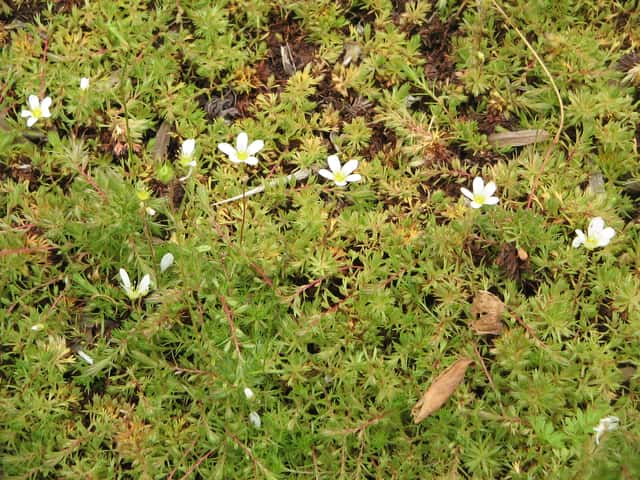
Saxifragaceae
Saxifrage: Ground Cover Plant
Saxifraga
As a genus, saxifrages are easygoing rock-garden and container plants: give them gritty, sharply drained soil, bright but not scorching light, and water only when the topsoil dries out. They resent soggy roots far more than they resent drought, so err on the side of underwatering.
Every 7 days
Partial shade
5° - 24°C
40% - 60%
Categories
What is Saxifrage?
Saxifrage (Saxifraga) is a easy-care plant from the Saxifragaceae family. Saxifraga is a large genus of roughly 440 species of low-growing, mat- or cushion-forming perennials native mainly to alpine and arctic regions of the Northern Hemisphere. Commonly called saxifrage or rockfoil, the name comes from the Latin for "stone-breaker," a nod to the way these tough little pl...
Saxifrage grows up to 50cm, spread of 40cm, watering every 7 days, 5°C – 24°C, 40–60% humidity. It is suitable for indoor environments and safe for pets.
Unlike many tropical plants, Saxifrage tolerates watering mistakes. Best for beginners. Unlike many popular species, Saxifrage is safe to keep around pets. Without adequate drainage, root rot can develop within 14 days.
How to Care for Saxifrage?
TLDR: Saxifrage needs Partial shade, watering every 7 days, and temperatures between 5-24°C with 40-60% humidity.
How Often Should You Water Saxifrage?
Let the top inch of soil dry between waterings and never let pots sit in standing water — waterlogging, not drought, is what kills most saxifrages.
How Much Light Does Saxifrage Need?
Most rockfoils prefer bright, indirect light or morning sun with afternoon shade; a few alpine cushion types tolerate full sun in cool climates.
What Is the Best Soil for Saxifrage?
Use a gritty, humus-rich, sharply draining mix (potting soil plus sand or fine grit) and mulch the crown with gravel to keep it dry.
What Pot Should You Use for Saxifrage?
A shallow unglazed terracotta pan or alpine trough with generous drainage holes suits their shallow, spreading root systems best.
Care Schedule
Fertilize
Every 60 days
Repot
Every 730 days
What Is Saxifrage and Where Does It Come From?
Saxifraga is a large genus of roughly 440 species of low-growing, mat- or cushion-forming perennials native mainly to alpine and arctic regions of the Northern Hemisphere. Commonly called saxifrage or rockfoil, the name comes from the Latin for "stone-breaker," a nod to the way these tough little plants root into rock crevices. Species range from tiny alpine cushions to trailing houseplants like strawberry saxifrage.
How to Propagate Saxifrage?
Division
- Divide congested clumps in spring or after flowering
- Replant divisions immediately in gritty soil to prevent drying out
- 1 Lift the clump
Dig up the mat in spring and gently pull it apart into rooted sections.
- 2 Replant divisions
Set each rooted piece into gritty, well-draining soil at the same depth as before.
Materials needed:
Rosette cuttings
- Take non-flowering rosettes in early summer
- Let the cut callus over for a day before inserting
- 1 Take the cutting
Remove a healthy rosette with a short stem using a clean blade.
- 2 Root the cutting
Insert into gritty, moist compost and keep in bright, indirect light until rooted.
Materials needed:
Seed
- Sow in autumn or late winter so seed gets a cold spell to break dormancy
- Surface-sow onto gritty compost as seeds need light to germinate
- 1 Sow seed
Scatter fine seed onto the surface of gritty, moist compost.
- 2 Stratify and wait
Leave pots outdoors through winter cold before germination in spring.
Materials needed:
How Big Does Saxifrage Grow?
TLDR: Saxifrage can reach up to 50cm tall with Medium growth rate.
Max height
50cm
Spread
40cm
Growth rate
Medium
Foliage
Evergreen
Plant Uses
Ornamental
Great for decoration
Ground Cover
Soil coverage
Is your plant showing symptoms?
Click on the symptom to discover possible causes:
What Diseases Commonly Affect Saxifrage?
TLDR: Saxifrage is susceptible to 4 known diseases. Monitor regularly for early detection.
Aphids
Aphids are small, soft-bodied, pear-shaped insects (1/16 to 1/8 inch long) that feed by sucking nutrient-rich sap from plants. They reproduce rapidly and can quickly weaken plants, causing distorted growth and transmitting plant viruses. Aphids come in various colors including green, black, red, yellow, brown, and gray. They secrete honeydew, a sticky substance that attracts ants and encourages sooty mold growth.
Spider Mites
Spider mites are tiny arachnids (less than 1/20 inch long) related to spiders and ticks that feed on plant sap. They thrive in hot, dry conditions and can cause significant damage to ornamental and vegetable plants. During severe infestations, crop losses can reach 14% or higher as these pests disrupt vital plant processes including photosynthesis, carbon dioxide absorption, and transpiration.
Slugs and Snails
Slugs and snails are mollusks that feed on plant tissue, causing irregular holes in leaves and damage to young seedlings. They are most active at night and in moist conditions, leaving characteristic silvery slime trails. These pests can quickly devastate gardens, especially during wet seasons.
Root Rot
Root rot is a serious fungal disease that affects the root system of plants, causing them to decay and die. It is primarily caused by overwatering, poor drainage, or soil-borne fungi such as Pythium, Phytophthora, Rhizoctonia, and Fusarium. The disease thrives in waterlogged conditions where roots are deprived of oxygen, making them susceptible to fungal infection.
Meaning & Symbolism
The genus name comes from the Latin for "stone-breaker," symbolizing resilience and quiet persistence in harsh conditions.
Compare with similar plants
| Attribute | Difficulty | Light | Watering | Pet Safe |
|---|---|---|---|---|
| Field Maple | Easy | Bright indirect | 14d | ✓ |
| Silver Birch | Easy | Direct sun | 14d | ✓ |
| Common Blanketflower | Easy | Direct sun | 10d | ✓ |
| Cushion Bush | Easy | Direct sun | 14d | ✓ |





